 January 2026 in “Physical Education Health and Social Sciences”
 This study found that integrating Lactobacillus-rich probiotic nutrition and fractional CO₂ laser therapy with clotrimazole in mucoadhesive hydrogels significantly improved clinical and structural outcomes for women with recurrent vulvovaginal candidiasis, suggesting a promising advanced therapy, though further validation in larger trials is needed.
November 2025 in “Journal of Investigative Dermatology” A new genetic mutation causing Xeroderma Pigmentosum was found in an 8-year-old girl, affecting her DNA repair.
3 citations
,
January 2023 in “Indian Dermatology Online Journal” This study reported a series of mild to moderate cutaneous adverse drug reactions following COVID-19 vaccination, predominantly after Covishield, with only one requiring hospitalization.
19 citations
,
January 2015 in “Skin appendage disorders” This study identified a new variety of central centrifugal cicatricial alopecia that includes patchy hair loss on the lateral and posterior scalp in African-American women, which could be misdiagnosed as traction alopecia without dermatoscopy and pathology.
April 2019 in “Journal of the Endocrine Society” This study analyzed the care provided to gender-dysphoric Veterans at VANCHCS and concluded that a more consistent, team-based approach could improve their treatment outcomes.
 1 citations
,
September 2025 in “Journal of Zhejiang University SCIENCE B”
1 citations
,
September 2025 in “Journal of Zhejiang University SCIENCE B” This abstract outlines the current understanding of cutaneous squamous cell carcinoma (cSCC), identifying it as the second most common non-melanoma skin cancer with risk factors like UV exposure and immunosuppression. It highlights cSCC's potential to metastasize and become fatal, affecting 2%-5% of in situ cases.
1 citations
,
January 2017 in “International journal of trichology” This case report suggests that topical diphenylcyclopropenone (DPCP) may be beneficial for treating both alopecia areata and verruca vulgaris, although it is not typically a first-line therapy.
5 citations
,
May 2008 in “Annals of saudi medicine/Annals of Saudi medicine” This case report from India observed that short-term cabergoline treatment brought clinical and biochemical remission in a 12-year-old with persistent Cushing disease after surgery and radiotherapy.
 39 citations
,
March 2009 in “Clinics in plastic surgery”
39 citations
,
March 2009 in “Clinics in plastic surgery” This review discusses the evolution and studies of injection lipolysis for fat reduction, highlighting the need for more research to ensure patient safety and treatment efficacy; it reports no new clinical results.
 77 citations
,
August 2025 in “Signal Transduction and Targeted Therapy”
77 citations
,
August 2025 in “Signal Transduction and Targeted Therapy” This review highlights the potential of extracellular vesicle-based therapies for treating various diseases, but it also notes challenges like the lack of regulatory guidelines that hinder their clinical development.
2 citations
,
June 2025 in “ACS Biomaterials Science & Engineering” This study demonstrates that encapsulating cell-free fat extract in a gelatin methacrylate hydrogel enhances flap repair by sustaining angiogenesis, reducing oxidative stress, and offering favorable biocompatibility in a murine skin flap model, thereby advancing potential clinical flap necrosis treatments.
 January 2015 in “D-Scholarship@Pitt (University of Pittsburgh)”
 This dissertation investigated barriers to clinical translation of adipose-derived mesenchymal stem cell-based vascular grafts, highlighting issues with thrombosis in diabetic patients and proposing alternative cell sources to improve applicability.
 41 citations
,
December 2008 in “Journal of the American Academy of Dermatology”
41 citations
,
December 2008 in “Journal of the American Academy of Dermatology” This review discusses fixed drug eruption (FDE) potentially linked to finasteride and emphasizes dermatologists' need to recognize its possible occurrence due to the drug's widespread use, but reports no new clinical results.
 November 2024 in “International Journal of Social health”
 This study concluded that a hair-nourishing formulation combining virgin coconut oil and 4% chilli oil significantly enhanced hair growth in white rats over a 21-day period, while also exhibiting good physical stability under varying storage conditions.
January 2022 in “Mammalian Genome” This study found that the wavy coat trait in Nakano cataract mice is polygenic, involving major and minor genes, and resembles human curly scalp hair associated with the PRSS53 gene alteration.
2 citations
,
November 2019 in “BMC urology” This study used micro-CT to visualize preputial vessel distribution in a congenital hypospadias rat model, revealing that vessels at the preputial junction with good circulation were well-suited for vascular pedicle flaps in surgery.
7 citations
,
January 2007 in “PubMed” This review discusses the use of videodermoscopy in evaluating scalp and hair disorders, highlighting its potential to improve diagnostic accuracy without the need for invasive biopsies, but notes that further prospective studies are needed.
 12 citations
,
November 2020 in “Molecules”
12 citations
,
November 2020 in “Molecules” This study found that carvone, a plant-derived compound, decreases melanin content and inhibits melanoma cell proliferation through the cAMP pathway, suggesting potential benefits for treating melanomas and other hyperpigmentation disorders.
January 2019 in “11th World congress for hair research”  January 2017 in “International journal of biomedical engineering and clinical science”
 This case report describes significant skin and oral mucosa lesions in a 19-year-old patient with cri-du-chat syndrome, highlighting their impact on her nutritional status and quality of life.
3 citations
,
October 2001 in “British Journal of Ophthalmology” This case report suggests that intralesional cidofovir successfully treated SCC without systemic toxicity, making it a potential alternative to consider alongside surgical excision.
10 citations
,
January 1994 in “Cosmetics and toiletries” This study reports on the vulnerability of hair's structural lipids to physical and chemical damage and describes properties of hair treated with a synthesized ceramide derivative.
 December 2022 in “Journal of The American Academy of Dermatology”
 The authors maintain there is a significant link between vitamin D deficiency and central centrifugal cicatricial alopecia in Black patients, and call for more research on the topic.
32 citations
,
October 2005 in “PubMed” This case study describes a 59-year-old man with scurvy, initially misdiagnosed as leukocytoclastic vasculitis, who showed rapid improvement after vitamin C supplementation; it reviews scurvy's biochemical basis, symptoms, and management.
1 citations
,
April 2013 in “Journal of Investigative Dermatology”  4 citations
,
September 2024 in “BMC Cancer”
4 citations
,
September 2024 in “BMC Cancer” In this prospective phase II clinical trial, researchers are investigating whether adding dutasteride to combined androgen blockade can improve the response rate and clinical outcomes for patients with androgen receptor-positive recurrent or metastatic salivary duct carcinoma.
 September 2025 in “Experimental & Molecular Medicine”
 This study observed that the small molecules KY19382 and KY19334 inhibited cancerous traits in human cutaneous squamous cell carcinoma cells by suppressing the Wnt/β-catenin pathway, indicating their potential as treatments for cancers involving CDK1 overexpression and diseases related to CXXC5 accumulation.
 1 citations
,
April 2022 in “The Journal of Family Practice”
1 citations
,
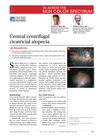
April 2022 in “The Journal of Family Practice” This report describes early and late stages of central centrifugal cicatricial alopecia in two Black women, highlighting progression from a small to a large central patch of hair loss.
January 2008 in “Central South Pharmacy” This study developed an accurate and reliable HPLC-ESI-MS method for determining candesartan levels in human plasma, useful for pharmacokinetic studies.
 26 citations
,
December 2021 in “Regenerative Biomaterials”
26 citations
,
December 2021 in “Regenerative Biomaterials” This study found that an injectable ceria-based nanocomposite hydrogel improved wound healing and epithelium regeneration, including hair follicle and adipocyte tissue formation, in full-thickness skin wound models.