7 citations
,
August 2023 in “Frontiers in Immunology” This review discusses the role of transient receptor potential channels in pathological scarification and suggests these channels as potential targets for its prevention and treatment, although it reports no new clinical findings.
1 citations
,
May 2025 in “The Journal of Dermatology” In this study, increased Treg cell activity indicated by IL-10 and IL-15 was identified as a feature of ADTA, distinguishing it from AA and potentially explaining ADTA's more favorable prognosis.
May 2023 in “The Journal of Immunology” In this study, treatment with IL-2C to expand Tregs effectively halted hair loss progression in a murine model of alopecia areata.
 201 citations
,
November 1964 in “Journal of neurophysiology”
201 citations
,
November 1964 in “Journal of neurophysiology” The cuneate nucleus has two main neuron types: relay neurons and interneurons.
 August 2022 in “bioRxiv (Cold Spring Harbor Laboratory)”
 This study found that in mice, competition for hair follicles guides the organization of follicle-innervating LTMR neurons during early development, with different neuronal subtypes showing varying adaptive responses to increased neuron populations.
 291 citations
,
April 2010 in “Gastroenterology”
291 citations
,
April 2010 in “Gastroenterology” This study identified Lgr5 and Lgr6 as receptors expressed by small populations of stem cells in various adult organs, with Lgr5+ve cells forming long-lived organoids in certain mouse models.
181 citations
,
December 2017 in “Trends in immunology” This review discusses the roles and interactions of intestinal intraepithelial lymphocytes in maintaining mucosal barrier integrity and highlights how their dysregulated responses may contribute to intestinal pathologies.
 January 2024 in “Inflammation and regeneration”
 This study identified Th22 cells as key effectors in hair regeneration driven by thymosin beta 15, suggesting they could be potential targets for hair regrowth therapies.
 11 citations
,
August 2014 in “PLoS ONE”
11 citations
,
August 2014 in “PLoS ONE” This study found that GFRα2 influences cell size but not survival or target innervation of Ret-positive low-threshold mechanoreceptors in mouse dorsal root ganglia, differing from its role in nonpeptidergic nociceptors.
13 citations
,
July 2014 in “Cell stem cell” This study identified a novel phase of stem cell quiescence, GAlert, in mice, regulated by mTORC1, that primes stem cells for injury response.
 6 citations
,
October 2012 in “Journal of Heredity”
6 citations
,
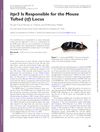
October 2012 in “Journal of Heredity” This study identified the Itpr3 gene as responsible for the tufted hair loss phenotype in the BTBR mouse strain.
 October 2023 in “bioRxiv (Cold Spring Harbor Laboratory)”
 This study found that neonatal Regulatory T cells are crucial for maintaining PPARγ signaling in hair follicles, which supports melanocyte stem cell function and skin pigmentation during early postnatal development.
 2 citations
,
May 2023 in “International Journal of Molecular Sciences”
2 citations
,
May 2023 in “International Journal of Molecular Sciences” This review discusses current knowledge about the TRPV3 ion channel's role in skin functions and diseases, highlighting its potential as a therapeutic target for pain and itch, though suitable ligands are limited.
660 citations
,
December 2011 in “Cell” This study found that distinct low-threshold mechanoreceptors innervate different hair follicle types in mice, suggesting that these follicles serve as unique mechanosensory structures in touch perception.
46 citations
,
November 2007 in “Gene Expression Patterns” This study observed that Trps1 gene expression in mice is precisely regulated in skin development, particularly during hair follicle morphogenesis, with distinct localization patterns in different cell types.
2 citations
,
August 2021 in “bioRxiv (Cold Spring Harbor Laboratory)” This study found that during wound healing, hair follicle stem cells develop an immune modulatory ability to create a protective immune suppressive niche, facilitating their survival and function amidst inflammation.
 12 citations
,
June 2019 in “The journal of pharmacology and experimental therapeutics/The Journal of pharmacology and experimental therapeutics”
12 citations
,
June 2019 in “The journal of pharmacology and experimental therapeutics/The Journal of pharmacology and experimental therapeutics” This study found that inhibiting the TRPV3 channel may significantly promote hair growth and suggests a potential therapeutic approach for hair loss and related skin diseases.
14 citations
,
January 2023 in “Nature Immunology” iNKT cells help develop and maintain healthy skin in young mice.
 6 citations
,
November 2010 in “Histochemistry and cell biology”
6 citations
,
November 2010 in “Histochemistry and cell biology” This study found that transthyretin and megalin expression in human scalp hair follicles varies significantly with the hair growth cycle, peaking during anagen and diminishing in catagen and telogen phases.
 28 citations
,
January 2010 in “Biological & pharmaceutical bulletin”
28 citations
,
January 2010 in “Biological & pharmaceutical bulletin” This study identified that rose, thyme geraniol, palmarosa, and tolu balsam essential oils activate TRPV1, with citronellol and geraniol as newly recognized agonists.
 5 citations
,
January 2018
5 citations
,
January 2018 This study optimized a screening assay to identify molecules that inhibit or enhance TRPM5 ion channel activity, which may have implications for treating dysfunctions linked to cardiac arrhythmias and diabetes.
9 citations
,
January 2015 in “Medical hypotheses” This report suggests that TCDD may alter human epidermal stem cell populations by upregulating c-Myc, potentially leading to increased stem cell turnover during chloracne development.
July 2024 in “Journal of Investigative Dermatology” Expanding regulatory T cells may help treat alopecia areata by reducing harmful immune cells.
 24 citations
,
March 2018 in “Experimental Dermatology”
24 citations
,
March 2018 in “Experimental Dermatology” This review explores the role of regulatory T cells in autoimmune skin disorders like alopecia areata and vitiligo, emphasizing unanswered questions and reporting no new experimental results.
3 citations
,
October 2024 in “International Journal of Molecular Sciences” This study found that subthermal CRET treatment increased keratinocyte proliferation and modulated cytokine production, affecting the inflammatory response in human keratinocytes through EGFR and ERK1/2/NF-κB pathways.
This review examines the potential of CAR-T cell therapy as a transformative treatment for refractory autoimmune diseases, highlighting its mechanisms, clinical challenges, and promising strategies for precision immunotherapy despite issues like complex manufacturing and antigen escape.
19 citations
,
July 1997 in “British Journal of Dermatology” This study successfully developed and characterized a monospecific monoclonal antibody, LHTric-1, that specifically localizes to the pre-cortical region of the hair follicle and can aid research on hair and nail formation.
 30 citations
,
July 2019 in “PloS one”
30 citations
,
July 2019 in “PloS one” This study found that T-regulatory cells, specifically the FOXP3 CD39 subset, were significantly reduced in both circulation and hair follicles of alopecia areata patients compared to healthy subjects, suggesting potential therapeutic targets.
 October 2023 in “IBRO neuroscience reports”
 Rat hair follicle stem cells have functional oxytocin receptors, useful for studying neuropsychiatric disorders.
44 citations
,
November 2022 in “Frontiers in Immunology” This review discusses the role of toll-like receptors in cancer treatment, providing an overview of pre-clinical studies and clinical trials on TLR-targeted therapies and noting the challenges and future prospects.