January 2015 in “Dermatología Venezolana” This review details the use of trichoscopy for analyzing hair and scalp structures to differentiate between types of alopecia but does not report new clinical results.
February 2023 in “Materials today bio” In this study, researchers developed a promising transdermal agent using Triton X-100-modified polyethyleneimine that successfully delivered genetic material to hair follicle cells in mice, potentially alleviating hair loss due to androgenetic alopecia by promoting cell proliferation and inhibiting apoptosis.
12 citations
,
May 2010 in “Journal of Clinical Oncology” This study found that MK-5108 is well tolerated at high doses as monotherapy in cancer patients, showing stable disease and some antitumor activity, particularly in combination with docetaxel.
26 citations
,
May 1991 in “Clinical and experimental dermatology” In this study, oral etretinate resulted in increased hair length and loss of beading in a childhood monilethrix case, while the scalp's keratosis pilaris persisted.
 10 citations
,
February 2008 in “International Journal of Andrology”
10 citations
,
February 2008 in “International Journal of Andrology” This study found that a 400-mg dose of oral testosterone with dutasteride increases serum testosterone levels for 8–10 hours in hypogonadal men, with the nanomilled formulation unaffected by food, suggesting a practical twice-daily therapy option.
 June 2026 in “Journal of health economics and outcomes research”
 In this study, researchers found that ritlecitinib 50 mg offered a lower cost per responder than baricitinib 2 or 4 mg at both 24 and 52 weeks for treating severe alopecia areata, suggesting potential implications for reimbursement or formulary decisions.
2 citations
,
July 2023 in “Water” In this study, the genotoxic effects of the 2020 harmful algal bloom event were linked to specific toxic algal groups affecting Tradescantia plants, making Trad-SHM and Trad-MN tests suitable for evaluating HABs' toxic potential.
 June 2026 in “Frontiers in Immunology”
 In this case report, a 57-year-old man with severe atopic dermatitis, vitiligo, and alopecia areata showed rapid and significant improvement after treatment with the JAK1 inhibitor upadacitinib, suggesting its potential as an effective monotherapy for these co-existing conditions when conventional therapies fail.
 11 citations
,
April 2021 in “Advanced synthesis & catalysis”
11 citations
,
April 2021 in “Advanced synthesis & catalysis” This study reports that the dye peri-xanthenoxanthene (PXX) can act as an efficient photocatalyst for various radical reactions, including complex dual catalytic processes and the synthesis of an investigational drug intermediate.
March 2003 in “中華皮膚科醫學雜誌” This report describes a patient with trichothiodystrophy exhibiting both specific hair abnormalities and developmental delay, contributing to the understanding of this rare disorder's clinical presentation.
February 2016 in “PubMed” This review discusses testosterone replacement therapy, highlighting that most studies report no increased myocardial infarction risk when the therapy is properly administered with controlled hormone levels; it calls for careful consideration despite insurance coverage challenges.
 7 citations
,
June 2010 in “Journal of The American Academy of Dermatology”
7 citations
,
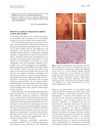
June 2010 in “Journal of The American Academy of Dermatology” This paper reports a single case of lichenoid cutaneous sarcoidosis that was unresponsive to standard treatments but showed marked improvement with the administration of oral tranilast.
 August 2016 in “Journal of Investigative Dermatology”
 This study found that among men unresponsive to finasteride for androgenic alopecia, 56.25% showed significant hair improvement after six months of dutasteride treatment with reasonable adverse effects.
 July 2026 in “Dermatology Practical & Conceptual”
 This study found that while both microneedling-assisted methotrexate and triamcinolone acetonide treatments led to improvements in recalcitrant alopecia areata, methotrexate-treated areas had significantly better outcomes in terms of SALT score reduction, patient satisfaction, and relapse rates, suggesting its superior short-term efficacy.
May 2011 in “Psychiatric News” This article provides regulatory updates, legal briefs, and industry news, reporting no new clinical findings.
 February 2021 in “IP Indian journal of clinical and experimental dermatology”
 This report presents a rare case of trichoadenoma occurring in the vulva, adding to the limited instances documented in medical literature.
September 2015 in “Photodiagnosis and Photodynamic Therapy”  May 2026 in “Frontiers in Medicine”
 This study concluded that combining the Shumin treatment instrument with oral doxycycline provides better clinical outcomes for rosacea than combining red light therapy with doxycycline, while both regimens improved quality-of-life scores and reduced Demodex counts.
13 citations
,
July 2012 in “International Journal of Trichology” In this study, the varied phenotype of trichothiodystrophy was highlighted, with findings of distinctive hair shaft abnormalities and a wide range of multisystem issues, including neurologic and urologic disorders.
36 citations
,
June 2003 in “The journal of small animal practice/Journal of small animal practice” This case report describes a domestic shorthaired cat with pituitary-dependent hyperadrenocorticism treated with trilostane, which improved clinical signs, but the cat later succumbed to renal failure due to a fungal urinary tract infection.
3 citations
,
June 2018 in “Internal Medicine” In this study, a patient with Cronkhite-Canada syndrome complicated by severe sepsis and disseminated intravascular coagulation was successfully treated using combined therapies, including recombinant human soluble thrombomodulin, despite the absence of a standard treatment regimen for CCS.
1 citations
,
August 2024 in “Journal of Cosmetic and Laser Therapy” This study found that intralesional vitamin D3 achieved similar effectiveness to triamcinolone acetonide for treating patchy alopecia areata but was associated with fewer adverse effects and higher patient satisfaction.
4 citations
,
November 1999 in “PubMed” This article presents five family cases of monilethrix and reports that neither vitamins nor desquamative ointments are effective treatments, although symptoms may spontaneously regress over time.
January 2019 in “Dermatologica Sinica” This study observed that dutasteride treatment led to improvement in acne vulgaris among two male patients with androgenetic alopecia, suggesting its potential as a treatment option for concurrent conditions.
 1 citations
,
February 2022 in “Clinical, Cosmetic and Investigational Dermatology”
1 citations
,
February 2022 in “Clinical, Cosmetic and Investigational Dermatology” In this study, researchers found that the thyroxine receptor agonist TDM10842 accelerated the onset of anagen, a hair growth phase, in C3H mice, potentially through activation of the Wnt/beta-catenin and Hedgehog pathways, with Pclaf playing a key role in this process.
 May 2023 in “The journal of investigative dermatology/Journal of investigative dermatology”
 This study found that baricitinib can counteract the cytokine-driven reduction of the enzyme PADI1 in human keratinocytes, which may help improve skin barrier function in atopic dermatitis by enabling epidermal differentiation.
 24 citations
,
May 1982 in “Biochemical Pharmacology”
24 citations
,
May 1982 in “Biochemical Pharmacology” These drugs cause hair growth without affecting testosterone or adrenal hormones.
13 citations
,
April 2024 in “JAAD Case Reports” This review discusses current treatments for discoid lupus erythematosus and highlights anifrolumab as a promising option for difficult cases, but no new clinical results are reported.
 June 2023 in “jurnal veteriner”
 In this study, Typhonium flagelliforme leaf-ethanolic extract combined with natural interferon was observed to stabilize body weight, inhibit tumor growth, and reduce mitosis, angiogenesis, and certain protein expressions in carcinogen-induced tumors in female mice, suggesting potential antitumor effects.
The authors concluded that capecitabine and high-dose toremifene may be an effective treatment option for patients unable to undergo anthracycline or taxane therapies, based on one woman's cancer management.