This chapter reviews nanocarriers for acne therapy, highlighting their ability to reduce lesions and inflammation while improving the safety and effectiveness of treatment, though no new clinical results are reported.
96 citations
,
December 2015 in “JAMA dermatology” This article discusses the potential of topical ruxolitinib as a treatment for alopecia universalis and acknowledges the need for alternatives to systemic JAK inhibitors due to the risk of serious side effects.
 24 citations
,
April 2007 in “European Journal of Pharmaceutics and Biopharmaceutics”
24 citations
,
April 2007 in “European Journal of Pharmaceutics and Biopharmaceutics” This study found that artocarpin delivered via alginate/chitosan microparticles effectively suppressed the growth of hamster flank organs compared to artocarpin in solution form, without significant systemic effects.
 16 citations
,
October 1994 in “The Journal of Steroid Biochemistry and Molecular Biology”
16 citations
,
October 1994 in “The Journal of Steroid Biochemistry and Molecular Biology” Two non-steroidal antiandrogens, RU 58841 and RU 56187, form a common metabolite at different rates, which may influence their effects; RU 56187 could be used for prostate cancer treatment and RU 58841 for acne treatment.
 12 citations
,
October 2016 in “Anais Brasileiros de Dermatologia”
12 citations
,
October 2016 in “Anais Brasileiros de Dermatologia” This review discusses the increasing reports of frontal fibrosing alopecia, a form of scarring alopecia, and its potential link to autoimmune disorders, but reports no new clinical results.
 February 2026 in “Journal of Drugs in Dermatology”
 This systematic review discusses various topical, oral, injectable, and non-pharmacological treatments for androgenetic alopecia, examining both current and emerging therapeutic options in addressing this common form of hair loss.
 August 2022 in “Dermatology Online Journal”
 Oral and topical tofacitinib can effectively treat severe hair loss with minimal side effects.
 19 citations
,
November 2011
19 citations
,
November 2011 This review discusses the topical use of systemic drugs for cutaneous disorders and reports a lack of strong evidence from randomized controlled trials, highlighting the need for larger comparative effectiveness studies.
 16 citations
,
June 2021 in “Journal of Dermatological Treatment”
16 citations
,
June 2021 in “Journal of Dermatological Treatment” This study reported that while topical minoxidil exhibits hair regrowth in androgenetic alopecia, oral minoxidil 5 mg/day was more effective than topical forms after six months, with low doses also potentially effective for women and other hair loss types.
 November 2024 in “Journal of Drugs in Dermatology”
 This article highlights the need for a comprehensive review of injectable minoxidil for hair loss, as existing treatments primarily focus on topical and oral forms of the medication.
 65 citations
,
November 2016 in “Journal of The American Academy of Dermatology”
65 citations
,
November 2016 in “Journal of The American Academy of Dermatology” This article reviews various types of primary cicatricial alopecias and emphasizes the importance of accurate diagnosis to improve management strategies, particularly detailing remaining lymphocytic forms and expanding on neutrophilic and mixed types.
 48 citations
,
January 2017 in “Skin Pharmacology and Physiology”
48 citations
,
January 2017 in “Skin Pharmacology and Physiology” This study found that polymeric nanoparticles may effectively deliver finasteride topically to hair follicles, potentially improving alopecia treatment with fewer side effects than oral forms.
 39 citations
,
January 2012 in “International Journal of Trichology”
39 citations
,
January 2012 in “International Journal of Trichology” This study found that topical melatonin solution was associated with positive effects on hair density and reduction in hair loss for androgenetic alopecia, with good tolerability reported in several clinical trials.
 3 citations
,
October 2009 in “Iranian Journal of Basic Medical Sciences”
3 citations
,
October 2009 in “Iranian Journal of Basic Medical Sciences” This study suggests that the methanol extract of Buxus wallichiana has promising antioxidant properties and may promote hair growth, with varying effectiveness depending on the dosage and application form.
 April 2025 in “Journal of Pioneering Medical Science”
 This study concluded that oral and topical minoxidil have similar overall benefits in treating androgenetic alopecia, but topical minoxidil improved hair density more and had fewer adverse effects.
 September 2022 in “Polish Hyperbaric Research”
 This study analyzed 57 medicinal and cosmetic preparations available in Poland for treating alopecia, finding that finasteride is the most common active ingredient, with many products being in tablet or shampoo form and categorized as prescription drugs and cosmetics.
 14 citations
,
January 2015 in “Skin appendage disorders”
14 citations
,
January 2015 in “Skin appendage disorders” This case report details two women with female pattern hair loss who experienced severe scalp allergic contact dermatitis from minoxidil, one due to the active ingredient and the other due to the vehicle.
 11 citations
,
July 2020 in “Journal of Cosmetic Dermatology”
11 citations
,
July 2020 in “Journal of Cosmetic Dermatology” This study found that a 1% Sandalore® solution reduced hair shedding and improved hair volume and anagen phase duration in women with telogen effluvium over 24 weeks, compared to placebo.
 4 citations
,
May 2019 in “PubMed”
4 citations
,
May 2019 in “PubMed” This study reported that the expression of sulfotransferase enzymes in hair follicles remained stable during treatment with topical minoxidil, indicating consistent metabolic activity throughout the treatment period.

This study reviews female hair loss conditions with a focus on diagnosis and treatment. It highlights female pattern hair loss as the most common form and emphasizes the need for personalized therapy, including topical minoxidil and, when appropriate, antiandrogen treatments.
 September 2025 in “Journal of the American Academy of Dermatology”
 Low-dose oral minoxidil may be a promising alternative to topical minoxidil for hair loss.
 January 2024 in “Brazilian Journal of Hair Health”
 Combining low-level laser therapy with topical corticosteroids effectively improved Lichen Planopilaris symptoms.

This study observed that 70.2% of patients with androgenetic alopecia at a dermatologic clinic used complementary and alternative medicine, with topical applications being the most common form.
 January 2022 in “Clinical, Cosmetic and Investigational Dermatology”
 This study reports promising results for alopecia universalis treatment using a combination of systemic methotrexate and low-dose corticosteroids with topical minoxidil, though monitoring for side effects is necessary.
 January 2024 in “Skin appendage disorders”
 This study compared the effectiveness of topical finasteride, oral finasteride, and topical minoxidil over 12 months in postmenopausal women with androgenetic alopecia, exploring their therapeutic effects on this population. Results are not reported in the abstract.
 December 2023 in “Azerbaijan Pharmaceutical and Pharmacotherapy J”
 This study formulated a minoxidil-loaded submicron emulsion-based topical gel, which demonstrated effective in vitro release, ex vivo permeation, and stability, suggesting it may offer a targeted treatment approach for alopecia compared to traditional methods.
 101 citations
,
March 1987 in “Journal of The American Academy of Dermatology”
101 citations
,
March 1987 in “Journal of The American Academy of Dermatology” Minoxidil solution helps hair regrowth in alopecia areata, with 5% being more effective.
36 citations
,
March 1989 in “British journal of dermatology/British journal of dermatology, Supplement” In this study, the authors compared topical diphencyprone and tretinoin gel for treating alopecia totalis and universalis, but the abstract does not report any definitive clinical results.
 14 citations
,
October 2020 in “Natural Products and Bioprospecting”
14 citations
,
October 2020 in “Natural Products and Bioprospecting” This review discusses current topical treatments, natural products, and complementary therapies for androgenetic alopecia, but it reports no new clinical results.
 8 citations
,
October 2015 in “Asian Journal of Chemistry”
8 citations
,
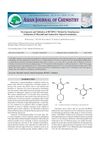
October 2015 in “Asian Journal of Chemistry” A new method was created to accurately measure minoxidil and aminexil in hair loss treatments.