 222 citations
,
September 2016 in “JCI insight”
222 citations
,
September 2016 in “JCI insight” This research overview highlights that although JAK inhibitors show promise as potential treatments for alopecia areata based on recent insights into the disease mechanism, their efficacy has not yet been thoroughly evaluated in a systematic manner.
 41 citations
,
December 2015 in “JAMA Dermatology”
41 citations
,
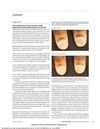
December 2015 in “JAMA Dermatology” Tofacitinib citrate improved nail dystrophy and pain in patients with alopecia universalis without causing side effects.
 37 citations
,
January 2016 in “Drug design, development and therapy”
37 citations
,
January 2016 in “Drug design, development and therapy” This review discusses the use of tofacitinib as a treatment for plaque psoriasis, highlighting its efficacy and safety in clinical trials, but notes unresolved questions regarding long-term safety.
 3 citations
,
May 2023 in “International Journal of Molecular Sciences”
3 citations
,
May 2023 in “International Journal of Molecular Sciences” In this study, researchers observed that phospholipid-calcium carbonate hybrid nanoparticles effectively delivered Tofacitinib citrate topically, which significantly inhibited hair follicle apoptosis and promoted hair growth in a mouse model of chemotherapy-induced alopecia, compared to a traditional Tofacitinib solution.
January 2025 in “International Journal of Pharmaceutics” In this study, gelatin-coated transferosomes were developed to deliver tofacitinib specifically to hair follicles, resulting in 80% hair regrowth in alopecia areata patients with recalcitrant lesions after 12 weeks of treatment.
November 2024 in “Advances in Pharmacology and Pharmacy” This study validated a UV-spectrophotometric method for accurately detecting Minoxidil and Tofacitinib citrate concentrations in bulk and gel formulations for alopecia areata, showing high recovery rates and indicating the method's suitability for routine analysis.
 September 2023 in “International Journal of Applied Pharmaceutics”
 This study found that a topical gel containing Minoxidil and Tofacitinib citrate showed promise for treating alopecia areata, with formulation F5 demonstrating effective drug release and stability in evaluations.
 April 2016 in “Journal of the American Academy of Dermatology”
 This study found that in a tertiary academic institution, nearly 1 in 5 dermatology consults were for drug-related skin reactions, with antibiotics frequently identified as the culprits.
 14 citations
,
November 2016 in “Annals of Internal Medicine”
14 citations
,
November 2016 in “Annals of Internal Medicine” Tofacitinib, an arthritis drug, helped hair growth in alopecia universalis but long-term safety needs more research.
January 2018 in “Figshare” This study found that both ruxolitinib and tofacitinib were effective in promoting hair regrowth for patients with severe alopecia areata, with no significant difference in efficacy and relapse rate between them, and both were well tolerated throughout the treatment.
June 2014 in “Dermatology Times E-News” An arthritis drug helped a person with severe hair loss regrow their hair.
 April 2025 in “Frontiers in Immunology”
 This case report describes significant therapeutic effects from Tofacitinib Citrate Sustained-Release Tablets in a patient with Alopecia Areata, while highlighting the economic burden of long-term treatment.
 51 citations
,
June 2016 in “Journal of the European Academy of Dermatology and Venereology”
51 citations
,
June 2016 in “Journal of the European Academy of Dermatology and Venereology” In this study, tofacitinib treatment was associated with significant hair regrowth in two patients with alopecia universalis over eight months, with minimal adverse effects reported.
 8 citations
,
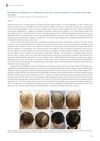
May 2017 in “Singapore Medical Journal”
8 citations
,
May 2017 in “Singapore Medical Journal” A Korean woman with complete hair loss regrew her hair after taking tofacitinib, with no side effects.
 78 citations
,
March 2017 in “JAMA Dermatology”
78 citations
,
March 2017 in “JAMA Dermatology” Tofacitinib helped regrow hair in people with severe alopecia, but side effects occurred and benefits stopped after treatment ended.
 49 citations
,
May 2018 in “Journal of the American Academy of Dermatology”
49 citations
,
May 2018 in “Journal of the American Academy of Dermatology” This letter discusses the limited treatment options for pediatric alopecia areata and the lack of controlled studies for therapies like systemic and off-label immunosuppressive drugs, without reporting new clinical results.
 37 citations
,
October 2017 in “Clinical and Experimental Dermatology”
37 citations
,
October 2017 in “Clinical and Experimental Dermatology” This article discusses the potential of oral tofacitinib as a treatment for atopic dermatitis, alopecia areata, and vitiligo, without presenting new clinical results.
 March 2023 in “PARIPEX INDIAN JOURNAL OF RESEARCH”
 This study found that prolonged tofacitinib treatment in adult Indian patients with moderate-to-severe alopecia areata was associated with a high regrowth rate, which varied with factors like age at disease onset and treatment duration.
 185 citations
,
June 2014 in “Journal of Investigative Dermatology”
185 citations
,
June 2014 in “Journal of Investigative Dermatology” This case report describes complete hair regrowth in a patient with alopecia universalis and improved psoriasis after treatment with the oral Janus kinase inhibitor, tofacitinib.
 70 citations
,
April 2016 in “Experimental Dermatology”
70 citations
,
April 2016 in “Experimental Dermatology” In this study, oral tofacitinib treatment led to significant hair regrowth and changes in skin and blood biomarkers in a patient with alopecia areata.
 28 citations
,
December 2017 in “Journal of Investigative Dermatology Symposium Proceedings”
28 citations
,
December 2017 in “Journal of Investigative Dermatology Symposium Proceedings” This review summarizes findings on the long-term use of tofacitinib for severe alopecia areata, reporting its potential as a promising treatment option.
 January 2024 in “International Journal of Dermatology Venereology and Leprosy Sciences”
 This literature review indicates that tofacitinib, both orally and topically, holds promise as a safe and effective treatment for various dermatological conditions in pediatric patients, though its use requires careful consideration of its benefits and risks.
 238 citations
,
November 2016 in “Journal of The American Academy of Dermatology”
238 citations
,
November 2016 in “Journal of The American Academy of Dermatology” In this study, tofacitinib was reported to improve scalp hair regrowth in patients with severe alopecia areata, alopecia totalis, and alopecia universalis, showing a higher response in alopecia areata.
 139 citations
,
November 2016 in “Journal of the American Academy of Dermatology”
139 citations
,
November 2016 in “Journal of the American Academy of Dermatology” In this retrospective review, tofacitinib treatment was associated with clinically significant hair regrowth in most adolescent patients with alopecia areata, though limitations suggest further studies are needed to confirm these findings.
 130 citations
,
February 2018 in “Journal of Investigative Dermatology”
130 citations
,
February 2018 in “Journal of Investigative Dermatology” This study found that tofacitinib led to ≥50% hair regrowth in eight out of twelve patients with moderate to severe alopecia areata, suggesting a potential benefit for using JAK inhibitors in treating this condition.
 79 citations
,
September 2018 in “Dermatologic therapy”
79 citations
,
September 2018 in “Dermatologic therapy” This study found that treatment with oral tofacitinib, alone or with other therapies, was associated with clinical improvement in most patients with recalcitrant lichen planopilaris.
 54 citations
,
September 2019 in “Journal of the European Academy of Dermatology and Venereology”
54 citations
,
September 2019 in “Journal of the European Academy of Dermatology and Venereology” This study found that tofacitinib shows reasonable effectiveness for treating alopecia areata with mild adverse effects, although more large-scale randomized trials are needed to fully assess its safety and efficacy.
 44 citations
,
October 2017 in “Journal of the American Academy of Dermatology”
44 citations
,
October 2017 in “Journal of the American Academy of Dermatology” In this study, tofacitinib monotherapy was effective in achieving hair regrowth in over half of Korean patients with moderate-to-severe and refractory alopecia areata, though treatment discontinuation typically led to hair loss recurrence.
 39 citations
,
April 2016 in “Case Reports in Dermatology”
39 citations
,
April 2016 in “Case Reports in Dermatology” This study observed initial hair regrowth in a businessman with alopecia areata universalis treated with tofacitinib, but the effect diminished, leading to renewed hair loss.
 27 citations
,
September 2017 in “Archives of Dermatological Research”
27 citations
,
September 2017 in “Archives of Dermatological Research” In this study, topical tofacitinib significantly increased hair regrowth in mice compared to minoxidil or vehicle, potentially due to elevated VEGF levels and reduced inflammation.