January 2013 in “Journal of Tissue Engineering and Reconstructive Surgery” This study found that inserting isolated hair follicle units into engineered dermis promoted differentiation and maturation of tissue-engineered skin, maintaining hair follicle morphology and generating skin appendages like sebaceous glands.
 38 citations
,
December 2012 in “Journal of Cutaneous Pathology”
38 citations
,
December 2012 in “Journal of Cutaneous Pathology” This review discusses the significance of elastic tissue staining in dermatopathology, particularly for diagnosing primary elastic tissue disorders and other skin conditions, but reports no new clinical results.
January 2014 in “Journal of Tissue Engineering and Reconstructive Surgery” This study found that rabbit hair follicle stem cells, combined with electro-spun nano silk fibers, successfully constructed a tissue-engineered urethra, suggesting potential for future in vivo repair studies.
 April 2017 in “The journal of investigative dermatology/Journal of investigative dermatology”
 This study found that Quantitative Mass Spectrometry Imaging offers precise localization and quantification of active compounds in skin tissues, demonstrating benefits over traditional LC-MS in drug penetration studies.
2 citations
,
January 2016 This study established methods to isolate, culture, and expand rat hair follicle stem cells, which showed good proliferation and could serve as a cell source for tissue-engineered applications.
 February 2024 in “Advanced Science”
 This study highlights that a novel radially aligned nanofiber scaffold with dual growth factor gradients significantly enhances wound healing, promoting cell migration, epidermal regeneration, and angiogenesis, ultimately leading to improved wound closure, immune regulation, and tissue remodeling compared to other groups.
January 2017 in “DR-NTU (Nanyang Technological University)” This study observed that keratin sponges showed comparable biocompatibility to a commercial positive control in mice, but keratin gels had slightly inferior biocompatibility.
 90 citations
,
June 2006 in “The American Journal of Dermatopathology”
90 citations
,
June 2006 in “The American Journal of Dermatopathology” This review outlines the classification, histopathologic presentation, and pathogenetic concepts of scarring and nonscarring alopecias, reporting no new clinical results and emphasizing the need for clinicopathologic correlation.
 33 citations
,
December 2004 in “Differentiation”
33 citations
,
December 2004 in “Differentiation” In this study, mouse amnion epithelium was successfully transformed into skin and hair follicles when associated with hair-forming dermis, revealing the necessity of specific influences for follicle formation.
 32 citations
,
March 2014 in “PLOS ONE”
32 citations
,
March 2014 in “PLOS ONE” This study demonstrates that FMOD deficiency in mice alters TGF-β ligand and receptor expression during wound healing stages, leading to delayed wound closure and increased scar size.
5 citations
,
February 2022 in “Animals” This study found that electric shaving was the most effective and safest method for preoperative hair removal in mice, compared to depilatory cream and sodium sulfide, which negatively affected wound healing.
 September 2017 in “Journal of Investigative Dermatology”
 This study found that their novel 3D-imaging method, ASAXA-μCT, identified shrinkage of sweat glands as a key factor in skin aging, which leads to dermal defects, decreased elasticity, and increased wrinkling and sagging.
 17 citations
,
January 2014 in “Annals of Dermatology”
17 citations
,
January 2014 in “Annals of Dermatology” This study observed that using serial sectioning and d-PAS staining improved detection of Malassezia folliculitis, notably in lesions on the trunks of male patients.
6 citations
,
February 2019 in “Journal of dermatology” This report details a rare case of favus in Japan, identifying Trichophyton schoenleinii in a 63-year-old woman through DNA sequencing, who was successfully treated with oral terbinafine and topical luliconazole.
 2 citations
,
September 2023 in “Curēus”
2 citations
,
September 2023 in “Curēus” This study reported that topical spironolactone improved lid margin vascularity, corneal fluorescein staining, and disease severity scores in patients with ocular graft-versus-host disease, suggesting a potential therapeutic role by enhancing corneal lipid production with minimal adverse effects.
 1 citations
,
August 2018 in “Journal of Investigative Dermatology”
1 citations
,
August 2018 in “Journal of Investigative Dermatology” This study found that Muse cells retained their pluripotency and ability to differentiate into various cell types even after being cryopreserved multiple times.
 18 citations
,
May 2013 in “Journal of The American Academy of Dermatology”
18 citations
,
May 2013 in “Journal of The American Academy of Dermatology” This study concludes that elastic tissue staining is the most reliable method for identifying scarring patterns in alopecia biopsy specimens, and polarized microscopy may provide specific insights for nonscarring alopecia.
 September 2022 in “bioRxiv (Cold Spring Harbor Laboratory)”
 This study applied a new RGB trichrome stain to human skin samples, revealing distinct structural staining in normal tissues and potential proteoglycan-rich zones in hair follicles.
 1 citations
,
November 2002 in “Journal of dermatology”
1 citations
,
November 2002 in “Journal of dermatology” This study investigated the histogenetic relationship between basal cell carcinoma and hair follicles, revealing specific staining patterns of a monoclonal antibody in different skin tissues.
 86 citations
,
March 2018 in “ACS Biomaterials Science & Engineering”
86 citations
,
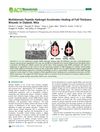
March 2018 in “ACS Biomaterials Science & Engineering” This study found that MDP hydrogel significantly accelerated wound healing and improved tissue formation in diabetic mice compared to a standard clinical hydrogel and control buffer.
This study found that fluorescent antibody staining effectively differentiated between normal and tumor cells, with observed differences potentially linked to protein composition and developmental factors.
 7 citations
,
July 2005 in “Journal of Dermatological Science”
7 citations
,
July 2005 in “Journal of Dermatological Science” This study identified a gene transcript overexpressed in dermal papilla cells, showing strong similarity to a mouse gene associated with adipose tissue in bombesin receptor subtype-3-deficient mice.
 21 citations
,
March 2018 in “Experimental Dermatology”
21 citations
,
March 2018 in “Experimental Dermatology” This practical guide introduces methods to study human dermal white adipose tissue but does not report new clinical results, emphasizing available techniques and staining protocols.
December 2016 in “Chin J Anat Clin” This study successfully improved methods for isolating, culturing, and purifying rat hair follicle stem cells, demonstrating their high purity, strong proliferation, and potential for adipogenic and osteogenic differentiation in vitro, which could support advancements in tissue engineering.
August 1994 in “American Journal of Veterinary Research” In this study, monoclonal antibody B72.3 showed selective immunoreactivity to specific types of normal canine epithelial cells, primarily those involved in mucin production.
 14 citations
,
February 2020 in “Scientific reports”
14 citations
,
February 2020 in “Scientific reports” This study found that telocytes in human scalp tissue were located around hair follicles and glands and may be involved in skin regeneration and homeostasis.
54 citations
,
May 1994 in “Veterinary Pathology” This study found widespread localization of parathyroid hormone-related protein in normal and cancerous canine tissues, suggesting a potential physiological role as a paracrine or autocrine factor.
 10 citations
,
June 2018 in “Journal of visualized experiments”
10 citations
,
June 2018 in “Journal of visualized experiments” This study demonstrated that lactate dehydrogenase activity is notably high in quiescent hair follicle stem cells within mouse skin using a specific enzymatic activity assay.
10 citations
,
October 2012 in “Andrology” In this case study, researchers observed that steroidogenesis from adrenal androgens in prostate cancer tissues may explain progression in a 74-year-old man with low circulating testosterone.
 November 2022 in “The journal of investigative dermatology/Journal of investigative dermatology”
 This study found that Imaging Mass Cytometry effectively visualizes multiple biomarkers in alopecia areata, enhancing analysis of immune cell and tissue interactions in hair pathology.