 April 2018 in “Journal of Investigative Dermatology”
 This study found that plasma cardiac troponin I levels were highest in subjects with alopecia areata, potentially indicating increased heart remodeling and a need for close cardiovascular monitoring in these individuals.
 June 2023 in “Fundamental & clinical pharmacology”
 This research highlights that while JAK inhibitors are effective for various inflammatory conditions, studies raise concerns about increased risks of venous and arterial thromboembolism, and cancer, particularly with tofacitinib and baricitinib, leading to European guidelines recommending caution in high-risk patients.
 9 citations
,
September 2017 in “Nanoscale Research Letters”
9 citations
,
September 2017 in “Nanoscale Research Letters” This study found that combining TIMP-1 with graphene oxide promoted skin tissue regeneration in rats and provided sustained release of TIMP-1 over 40 days.
14 citations
,
March 2023 in “Bioengineering” In this retrospective study at Lausanne University Hospital, 61% of 48 patients with tendinopathies reported favorable outcomes after a single standardized autologous PRP injection, while 36% needed two, and effectiveness was unrelated to platelet concentration, activity level, age, or gender.
 June 2020 in “Journal of Investigative Dermatology”
 This study found that platelet-derived growth factor secretion in PRP therapy for alopecia is highly variable between patients, which may contribute to inconsistent clinical responses.
 18 citations
,
April 2021 in “PLOS ONE”
18 citations
,
April 2021 in “PLOS ONE” This systematic review found that most level I/II clinical studies on platelet-rich plasma therapy have focused on musculoskeletal injuries, but inconsistent reporting of PRP composition complicates comparisons across medical specialties.
 December 2023 in “PubMed”
 This study found that both single- and double-spin PRP preparation methods significantly increased thrombocyte counts and improved hair parameters in males with androgenetic alopecia, with the single-spin method showing a more significant increase in thrombocyte count.
1 citations
,
September 2024 in “Frontiers in Cell and Developmental Biology” This study found that platelet-rich fibrin provides more sustained therapeutic effects than platelet-rich plasma in inhibiting apoptosis and enhancing proliferation and migration of human endometrial stromal cells.
 16 citations
,
July 2002 in “Australasian Journal of Dermatology”
16 citations
,
July 2002 in “Australasian Journal of Dermatology” This case report illustrates the risk of skin necrosis in patients with high antiphospholipid antibody levels after stopping anticoagulation therapy, highlighting the necessity for careful monitoring.
 March 2002 in “Clin-Alert”
 In 2002, various drugs caused serious side effects, including vitamin B12 deficiency, heart issues, blindness, hypersexuality, allergic reactions, blood clotting problems, pupil dilation, capillary leak syndrome, muscle breakdown, hepatitis, skin reactions, and lupus.
39 citations
,
January 2021 in “BioMed Research International” This review explores the variability in platelet-rich plasma therapy outcomes across different medical applications, attributing disparities to inconsistent blood processing methods, and it reports no new clinical results.
48 citations
,
January 2008 in “European Neurology” This study demonstrated that acute thallium poisoning primarily manifests with gastrointestinal issues, polyneuropathy, and dermatological changes, and treatments like hemoperfusion and hemodialysis may improve symptoms.
49 citations
,
November 2016 in “Frontiers in Pharmacology” This study found that over 26% of patients using Tripterygium wilfordii Hook F experienced adverse events, highlighting the need for better strategies to manage these risks.
This study found significant variability in the production and use of platelet-rich plasma and related products in Brazil, highlighting the need for regulatory measures to ensure safety.
April 2007 in “The Journal of Urology” Finasteride reduces bleeding risk during prostate surgery.
 34 citations
,
March 2012 in “Circulation”
34 citations
,
March 2012 in “Circulation” This article discusses bridging anticoagulation for patients interrupting warfarin for surgery and highlights the need for the BRIDGE randomized trial to address current uncertainties about its effectiveness and safety.
26 citations
,
November 2022 in “European journal of medical research” This review discusses the potential of nanoparticles to modify angiogenesis processes for therapeutic applications and reports no new clinical results, highlighting challenges and future prospects in treating angiogenesis-related diseases.
 1 citations
,
October 2022 in “Molecular therapy”
1 citations
,
October 2022 in “Molecular therapy” This study found that betibeglogene autotemcel significantly improved transfusion independence in 89% of patients with transfusion-dependent beta-thalassemia, although the high cost and manufacturing challenges may limit widespread adoption.
2 citations
,
July 2023 in “Vrach” In this review, researchers reported that plasma therapy, specifically PRP therapy, shows a high regenerative potential with low toxicity and beneficial effects like immunomodulation and soft tissue remodeling, suggesting its recommendation for broader clinical use based on most studies.
 16 citations
,
February 2018 in “BMC Genomics”
16 citations
,
February 2018 in “BMC Genomics” This paper reviews genome-based personalized medicine developments using Web services for analyzing SNPs in reproductive potential but reports no new clinical findings.
 May 2021 in “Clinical Endoscopy”
 This study found that adding platelet-rich plasma to standard treatment reduced rebleeding in patients with peptic ulcer bleeding compared to additional epinephrine injections.
 1 citations
,
November 2025 in “International Journal of Clinical Pharmacy”
1 citations
,
November 2025 in “International Journal of Clinical Pharmacy” This study confirms known risks of cladribine and reveals potential new safety concerns, emphasizing the need for careful monitoring for early acute toxicity.
June 2025 in “British Journal of Dermatology” This case report details a probable severe adverse event associated with ritlecitinib for alopecia areata, highlighting risks of pulmonary emboli, infection, atrial fibrillation, and acute kidney injury despite an absence of known risk factors.
May 2004 in “Biochimica et Biophysica Acta (BBA) - Molecular Basis of Disease” This study found that dietary vitamin E influenced gene expression in rat livers, altering genes related to metabolism, coagulation, and steroid processing, and confirmed its effects on related biological endpoints.
 2 citations
,
September 2015 in “Journal of the Egyptian Women's Dermatologic Society (Print)”
2 citations
,
September 2015 in “Journal of the Egyptian Women's Dermatologic Society (Print)” Different centrifugation speeds change the quality of platelet-rich plasma.
 12 citations
,
March 2018 in “Bioengineering”
12 citations
,
March 2018 in “Bioengineering” This review discusses the use of non-transfusional hemocomponents in surgical procedures for tissue regeneration and reports no new empirical findings.
November 2023 in “Applied sciences” This study found that platelet dry powder can be mass-produced from pig blood by adding calcium chloride, resulting in a stable material with high growth factor concentrations, which could enhance supply for industrial product development.
45 citations
,
February 2011 in “IOP Conference Series Materials Science and Engineering” This study developed a sensor that effectively measures Tl+ cation in solutions with a wide dynamic range and low detection limit, responding linearly within the concentration range 1.0 × 10⁻⁸ to 1.0 × 10⁻¹M.
 3 citations
,
May 2011 in “Journal of the American Academy of Dermatology”
3 citations
,
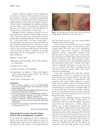
May 2011 in “Journal of the American Academy of Dermatology” This case report describes a 54-year-old woman who developed hypertrichosis around a leg ulcer while using PGE1 ointment, suggesting a potential side effect of the treatment.