 April 2024 in “Chemical engineering journal”
 In this study, a novel injectable hydrogel with antibacterial and hemostatic properties showed promise in promoting the healing of MRSA-infected skin wounds.
 June 2024 in “International Journal for Research in Applied Science and Engineering Technology”
 This study aimed to formulate and evaluate a herbal hair gel using flax seed and aloe vera for promoting hair development and combating dandruff, finding that one formulation maintained long-term stability and antifungal efficacy.
August 2024 in “Journal of Drug Delivery Science and Technology” In this study, the researchers reported that minoxidil-loaded transfersomes using a cyclodextrin strategy significantly increased drug stability, skin permeation, and hair regrowth in a mouse model of androgenetic alopecia compared to traditional formulations and commercial tinctures.
September 2024 in “Sasambo Journal of Pharmacy” This study formulated and tested a pomegranate leaf shampoo with antifungal properties, identifying an optimal composition of 5.5% SLS and 15.5% cocamide DEA, showing good foam stability, appropriate pH, and viscosity in lab tests.
 May 2026 in “Zenodo (CERN European Organization for Nuclear Research)”
 This study evaluated a polyherbal hair conditioner containing Custard Apple, Hibiscus, Fenugreek, Curry Leaves, Aloe vera, and Rose Water, finding it had satisfactory physicochemical properties and no irritation, suggesting it may be a safe and economical alternative to synthetic conditioners.
September 2025 in “International Journal of Cosmetic Science” This study found that a 0.5% cationic guar gum and 0.5% anionic surfactant formulation formed stable coacervates with improved adhesion and coverage on damaged hair, suggesting it may enhance the effectiveness of hair conditioning products compared to other ratios.
28 citations
,
October 2023 in “Trends in biotechnology”  December 2023 in “Journal of molecular structure”
 This study found that hair membrane fluidity is low in the cuticle but high in the cortex and medulla, with treatments like ionic surfactants and oleic acid increasing fluidity in hydrated hair; however, dehydration significantly reduces fluidity throughout the hair.
 July 2026 in “International Journal of Aquatic Research and Environmental Studies”
 In this experimental study, researchers developed and optimized metformin-loaded mucoadhesive microspheres for sustained anti-hyperglycemic and anticancer activity, demonstrating high entrapment efficiency, enhanced α-amylase and α-glucosidase inhibition, improved cytotoxicity against breast cancer cells, and promising stability.
 November 2025 in “Zenodo (CERN European Organization for Nuclear Research)”
 This review examined natural hair gels, incorporating an experimental polyherbal gel, and reported that these formulations possess multifunctional benefits for hair health, while also highlighting the importance of product safety and potential for innovative delivery systems.
18 citations
,
January 2024 in “Regenerative Biomaterials” This study developed and tested a new injectable hydrogel for chronic diabetic wounds, reporting significant improvements in wound healing through enhanced angiogenesis, epithelization, and reduction of inflammation and infection in animal models.
August 2024 in “Repozitorij Farmaceutsko-biokemijskog fakulteta (Sveučilišta u Zagrebu)” This study reports that a carbopol gel formulation with melatonin shows potential for extended drug release and biocompatibility in dermal applications due to its favorable bio-pharmaceutical properties.
June 2026 in “Virtual and Physical Prototyping” This study introduced a high-viscosity epoxy photoresist to enhance the fabrication of complex microstructures with monolithic integration and mechanical stability, enabling advancements in two-photon 3D printing for creating functional micro-mechanical devices.
5 citations
,
January 2019 in “Research journal of pharmacy and technology” In this study, a hair tonic formulated from a 10% water fraction of Angiopteris evecta extract was reported to be stable and promote hair growth in rabbits, showing equal or greater efficacy compared to a synthetic minoxidil control, while being safe and non-irritating.
5 citations
,
April 2024 in “Science China Materials”  March 2026 in “International Journal of Pharmaceutics and Drug Analysis”
 In this study, researchers developed a polyherbal emulgel for topical use in managing rheumatoid arthritis and found that formulation F3 provided optimal drug release and stability, indicating it may be an effective alternative with improved patient compliance.
July 2025 in “Carbohydrate Polymers” This study investigated the extracellular polysaccharides from the edible green alga Parachlorella sp. BX1.5, finding that they have potential applications in cosmetics and health products due to their stability, antioxidant properties, and effects on hair growth in mice.
1 citations
,
January 2013 in “PubMed” In this study, treating hair with thioglycolic acid was found to alter disulfide bond patterns in keratin-associated proteins, shifting them from an ellipsoidal to a near-spherical shape.
5 citations
,
August 2016 in “International Journal of Cosmetic Science” In this in-vitro study, researchers found that shampoo-induced coacervates structurally resemble cationic polymers and contain anionic surfactants that may stimulate the scalp upon exposure to water.
 5 citations
,
January 2018
5 citations
,
January 2018 This study optimized a screening assay to identify molecules that inhibit or enhance TRPM5 ion channel activity, which may have implications for treating dysfunctions linked to cardiac arrhythmias and diabetes.
 14 citations
,
August 2018 in “Journal of Pharmaceutical and Biomedical Analysis”
14 citations
,
August 2018 in “Journal of Pharmaceutical and Biomedical Analysis” This study found that finasteride maintained chemical and physical stability in various excipient mixtures, which may guide the development of stable topical delivery systems.
 28 citations
,
April 2008 in “Journal of Inclusion Phenomena and Macrocyclic Chemistry”
28 citations
,
April 2008 in “Journal of Inclusion Phenomena and Macrocyclic Chemistry” This study identified a weak interaction between minoxidil and ß-cyclodextrin in solution, forming an inclusion complex with a 1:1 molar ratio.
 March 2026 in “World Journal of Biology Pharmacy and Health Sciences”
 This study developed and evaluated a polyherbal hair oil containing natural ingredients, finding that formulation F3 displayed optimal physicochemical properties and stability, suggesting its potential as a natural alternative to synthetic hair care products.
 22 citations
,
March 1932 in “Journal of the American Medical Association”
22 citations
,
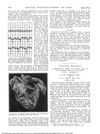
March 1932 in “Journal of the American Medical Association” This report describes eleven cases of thallium poisoning in individuals who consumed tortillas made from barley mixed with thallium sulphate, leading to symptoms including tingling, abdominal pain, vomiting, and limb weakness.
 January 2020 in “International Journal of Herbal Medicine”
 This study concluded that freeze-dried and natural forms of a hair growth promoter derived from traditional recipes have mostly similar chemical constituents.
1 citations
,
April 2022 in “Crystal Growth & Design”  April 2026 in “Zenodo (CERN European Organization for Nuclear Research)”
 This study found that cationic surfactant-based conditioning systems significantly improve hair combability by forming a stable low-friction film on hair surfaces, reducing friction and enhancing sensory performance compared to standard systems, as confirmed by both instrumental and sensory evaluations.
 December 2024 in “Biomedical & Pharmacology Journal”
 In this study, researchers developed and assessed two polyherbal hair tonic formulations, finding that Hair Tonic A containing 10% white tea extract improved hair thickness, manageability, and anti-frizz properties, particularly for blonde and black hair, while demonstrating greater stability compared to Hair Tonic B.
1 citations
,
February 2025 in “International Journal For Multidisciplinary Research” This study developed and validated a simple, accurate, and sensitive HPTLC method for estimating minoxidil and aminexil in topical solutions, demonstrating effective separation and linear measurement of these compounds with %RSD under 2% and high regression coefficients.
December 2025 in “Molecular Pharmaceutics” In this study, researchers developed a coamorphous form of tadalafil and finasteride, showing improved solubility and dissolution in vitro, with results successfully translated in vivo in rats. They reported reasonable stability, suggesting this form could serve as a therapeutic alternative to the current marketed combination.