 March 2016 in “Aktualʹnì pitannâ farmacevtičnoï ì medičnoï nauki ta praktiki”
 This study found that the gelatinous minoxidil 1% shampoo demonstrated thixotropic properties and mechanical stability, suggesting predictable long-term consistency and effective distribution on the scalp.
 1 citations
,
December 2016 in “Vìsnik farmacìï”
1 citations
,
December 2016 in “Vìsnik farmacìï” This study found that a gel base with 0.2% potassium sorbate, 5% glycerin, and other specified components has optimal properties for use in telogen effluvium treatments.
 4 citations
,
July 2023 in “Legume Research - An International Journal”
4 citations
,
July 2023 in “Legume Research - An International Journal” This review integrated findings on the nutritional, pharmacological, and techno-functional properties of Leucaena seeds, highlighting their potential benefits and challenges for human nutrition, particularly due to the presence of the antinutrient mimosine, which can cause adverse effects.
 2 citations
,
January 2024 in “Pakistan Journal of Life and Social Sciences (PJLSS)”
2 citations
,
January 2024 in “Pakistan Journal of Life and Social Sciences (PJLSS)” This study examines the use of emulgel-based systems as drug delivery vehicles for hydrophobic medications, noting their potential benefits in dermatological applications due to properties like easy spreadability, non-greasy texture, and prolonged shelf life.
This study found that a 2% minoxidil cream for androgenous alopecia maintained optimal rheological properties for consistent application and long-term stability.
 January 2026 in “Saudi Journal of Medical and Pharmaceutical Sciences”
 In this study, researchers developed mango pectin-based hair gels for traction alopecia in black women, finding the gels exhibited beneficial properties for hair and good stability, suggesting potential as phytocosmetic treatments without common adverse effects.
 November 2025 in “Saudi Journal of Medical and Pharmaceutical Sciences”
 In this study, researchers developed and tested hair gels using pectin from mango and coconut oil as a potential natural treatment for traction alopecia in black women, reporting stability in some formulations and rheological properties that may support their use in innovative phytocosmetics.

This study developed O/W hair mask emulsions with collagen hydrolysate, keratin, and natural oils, reporting that they are stable, physiologically acceptable for skin, creamy, non-greasy, and hydrophilic, with properties suitable for cosmetic applications in hair care.
5 citations
,
January 2022 in “Asian Journal of Pharmaceutical and Clinical Research” In this review, the authors highlight that emulgels, a combination of gel and emulsion, provide an effective topical drug delivery system for hydrophobic drugs, offering benefits like controlled release and versatility in treating various dermatological conditions.
 8 citations
,
December 2021 in “Military Medical Science Letters”
8 citations
,
December 2021 in “Military Medical Science Letters” This review highlights the potential of nanoemulgel as a promising drug delivery system for lipophilic drugs, but presents no new experimental results; it discusses composition, preparation methods, and applications.
 40 citations
,
August 2014 in “Journal of Nanoparticle Research”
40 citations
,
August 2014 in “Journal of Nanoparticle Research” This study found that biologically synthesized silver nanoparticle gel demonstrated excellent wound healing efficacy in rats, surpassing both marketed formulations and ionic silver.
 34 citations
,
October 2014 in “European journal of pharmaceutics and biopharmaceutics”
34 citations
,
October 2014 in “European journal of pharmaceutics and biopharmaceutics” This study found that adapalene-loaded solid lipid microparticles may enhance targeted drug delivery into sebum due to their similarity to sebum components, although both this formulation and a standard cream showed equivalent follicular penetration.
130 citations
,
December 2022 in “Antioxidants” This review discusses the antioxidant activity of natural polysaccharides, highlighting their potential applications in areas like drug delivery and tissue engineering, but reports no new experimental findings.
 18 citations
,
March 2014 in “Drug Development and Industrial Pharmacy”
18 citations
,
March 2014 in “Drug Development and Industrial Pharmacy” This study evaluated new aqueous gel formulations of minoxidil without irritants and found that the calcium alginate gel showed the best performance in terms of drug release and skin permeation.
 16 citations
,
August 2014 in “Colloids and surfaces. B, Biointerfaces”
16 citations
,
August 2014 in “Colloids and surfaces. B, Biointerfaces” This study found that hydrophobic lipid-coated silica nanoparticles penetrated deeper into human stratum corneum compared to their hydrophilic counterparts, highlighting the influence of surface polarity on skin penetration.
 1 citations
,
December 2023 in “Annals of Phytomedicine An International Journal”
1 citations
,
December 2023 in “Annals of Phytomedicine An International Journal” In this review, the researchers discuss how nanoemulgel overcomes the limitations of lipophilic phytomolecules by improving their bioavailability, penetration, and therapeutic efficacy, making it a promising nanocarrier for the treatment of various health conditions.
 June 2023 in “International Journal for Research in Applied Science and Engineering Technology”
 This research highlights the potential of emulgel as an advanced topical drug delivery system, offering improved efficacy for hydrophobic medications in treating dermatological conditions and a range of ailments with its dual release control mechanism of gel and emulsion.
 January 2026 in “Indus journal of bioscience research.”
 In this study, Hibiscus rosa-sinensis extract was used to formulate and evaluate herbal cosmetic creams for their antioxidant properties, stability, and effectiveness. The formulations demonstrated strong antioxidant potential, stability under various conditions, and favorable cosmetic qualities, suggesting HRS as a beneficial ingredient in skincare products.
 86 citations
,
March 2018 in “ACS Biomaterials Science & Engineering”
86 citations
,
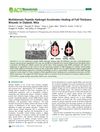
March 2018 in “ACS Biomaterials Science & Engineering” This study found that MDP hydrogel significantly accelerated wound healing and improved tissue formation in diabetic mice compared to a standard clinical hydrogel and control buffer.
 68 citations
,
March 2019 in “Advanced Healthcare Materials”
68 citations
,
March 2019 in “Advanced Healthcare Materials” This review assesses the benefits and limitations of various supramolecular hydrogels, including polymeric and peptide-based types, for wound healing, but reports no new clinical results.
 12 citations
,
April 2015 in “InTech eBooks”
12 citations
,
April 2015 in “InTech eBooks” Platelet Rich Plasma (PRP) shows promise for tissue repair and immune response, but more research is needed to fully understand it and optimize its use.
 9 citations
,
July 2017 in “Journal of Drug Delivery Science and Technology”
9 citations
,
July 2017 in “Journal of Drug Delivery Science and Technology” This study suggests that a microemulsion formulation of Minoxidil effectively enhances drug delivery through hair follicles, showing significant follicular response alterations in an alopecia model.
 3 citations
,
January 2023 in “Journal of Pharmaceutical Negative Results”
3 citations
,
January 2023 in “Journal of Pharmaceutical Negative Results” This study reports that fluconazole emulgel formulations, using jojoba oil and liquid paraffin, showed effective drug release and improved characteristics for treating skin diseases compared to traditional oral formulations.
 April 2026 in “Journal of Pharmaceutical Innovation”
 In this study, the researchers developed and optimized a curcumin nanocrystal gel to enhance skin permeability, reporting improved dissolution properties and antiproliferative effects on cell lines, suggesting it as a promising topical delivery system.
 January 2026 in “Frontiers in Cell and Developmental Biology”
 This review discusses the molecular mechanisms and clinical applications of autologous platelet-derived products for TMJ regeneration, but reports no new clinical results.
 September 2024 in “International Journal of Pharmaceutical Quality Assurance”
 This review outlines the potential of nanoemulsion-based hydrogels (nanoemulgels) for enhanced topical and transdermal drug delivery in treating skin disorders, highlighting their ability to improve therapeutic efficacy, control drug release, and boost patient compliance.
April 2024 in “International Journal For Multidisciplinary Research” This review discusses the potential benefits of using natural permeation enhancers to improve transdermal drug penetration in formulations like emulgel, a promising topical delivery system for hydrophobic drugs.
 April 2026 in “Microsystems & Nanoengineering”
 This study developed HA-gel-dex hydrogels with enhanced ECM-like properties and functionality, showing promise for 3D bioprinting, tissue repair, and as wound dressings due to improved cell interaction, cytocompatibility, antimicrobial synergy, and wound healing in mice compared to traditional ECM bio-inks.
 81 citations
,
July 2011 in “Lasers in Medical Science”
81 citations
,
July 2011 in “Lasers in Medical Science” This study found that using a low-level laser comb led to hair regrowth in a mouse model of alopecia areata, while sham-treated mice showed no hair regrowth.
 47 citations
,
July 2014 in “European Journal of Pharmaceutics and Biopharmaceutics”
47 citations
,
July 2014 in “European Journal of Pharmaceutics and Biopharmaceutics” This study concluded that polymeric nanoparticles effectively targeted hair follicles for drug delivery, but the organogel formulation did not enhance their penetration into the hair shaft.