April 2023 in “Journal of Investigative Dermatology” In this study, researchers developed a mouse model of scarring alopecia and observed significant reductions in CD200R expression in affected skin, potentially linking this signaling pathway to immune attacks on hair follicles and suggesting new treatment targets for scarring hair loss.
 January 2026 in “Food Science and Human Wellness”
 This study found that oral administration of Flammulina velutipes polysaccharide reduced tumor volume and improved survival in mice by modulating macrophage polarization and enhancing antitumor immune responses.
 176 citations
,
August 2015 in “The journal of allergy and clinical immunology/Journal of allergy and clinical immunology/The journal of allergy and clinical immunology”
176 citations
,
August 2015 in “The journal of allergy and clinical immunology/Journal of allergy and clinical immunology/The journal of allergy and clinical immunology” This study identified a distinct cytokine activation signature in alopecia areata, involving TH2, TH1, IL-23, and IL-9/TH9 pathways, suggesting potential targeting strategies similar to those in psoriasis and atopic dermatitis.
 9 citations
,
May 2005 in “Expert Review of Clinical Immunology”
9 citations
,
May 2005 in “Expert Review of Clinical Immunology” This article examines anticytokine therapies for autoimmune diseases, highlighting the potential of anti-interferon-γ as a universal treatment for certain conditions and noting varying effectiveness of tumor necrosis factor-α inhibitors.
 17 citations
,
June 2018 in “Frontiers in Physiology”
17 citations
,
June 2018 in “Frontiers in Physiology” This study found that acellular dermal matrix scaffolds may facilitate full-thickness skin wound healing by promoting a pro-regenerative immune response through M2 macrophage polarization via the Lamtor1 pathway.
 1 citations
,
October 2025 in “Nano Research”
1 citations
,
October 2025 in “Nano Research” In this study, researchers developed a dissolvable microneedle patch combining HA-TEMPO and Portulaca oleracea L.-derived nanoparticles, which effectively reduced oxidative stress and inflammation in an atopic dermatitis model while restoring immune balance, suggesting a promising treatment strategy.
 4 citations
,
September 2021 in “Frontiers in allergy”
4 citations
,
September 2021 in “Frontiers in allergy” This review discusses the shared biological mechanisms between allergy and autoimmunity, emphasizing pruritus as a central symptom in psychophysiological dermatoses, and reports no new clinical results.
 August 2025 in “Dermatology and Therapy”
 This study conducted a meta-analysis of gene expression data from alopecia areata patients, identifying 5109 differentially expressed genes and highlighting enriched pathways like JAK-STAT signaling, providing insights into the disease's pathogenesis and potential treatment targets.
58 citations
,
July 2018 in “Journal of Allergy and Clinical Immunology” Alopecia areata severity is linked to increased TH1 and TH2 activity.
 31 citations
,
February 2014 in “Inflammation Research”
31 citations
,
February 2014 in “Inflammation Research” This study found that reduced expression of CD200R1 on monocyte-derived macrophages in rheumatoid arthritis patients was significantly associated with higher disease severity and an imbalance in Th17/Treg cells.
1 citations
,
April 2023 in “World Journal of Urology” In this study, researchers found that using a 5-α reductase inhibitor may reduce inflammation-related cytokines associated with T-helper cell 1 and T-helper cell 2 in prostate tissues after surgery, but it did not affect those related to Th17 cells.
22 citations
,
August 2021 in “Frontiers in medicine” This study found that monocytes/macrophages with a pro-inflammatory M1-like phenotype may play a crucial role in the pathogenesis of hidradenitis suppurativa, suggesting potential therapeutic targets.
 21 citations
,
November 2022 in “Frontiers in immunology”
21 citations
,
November 2022 in “Frontiers in immunology” This article reviews sebaceous immunobiology and highlights the complex role of sebaceous glands and sebocytes in skin barrier function and inflammation, particularly in acne pathogenesis, but reports no new results.
50 citations
,
December 2005 in “European Journal of Immunology” This study found that a specific mutation in the mouse RXRalpha gene significantly impacts immune responses and causes hair loss and skin cysts.
3 citations
,
September 2025 in “Frontiers in Immunology” This review discusses the complex role of immune disturbances and the JAK-STAT pathway in alopecia areata, noting the success of JAK inhibitors in treatment, while highlighting ongoing debates and challenges in targeting other pathways like IL-17 and TNF-α.
1 citations
,
January 2025 in “Genes & Diseases” This review highlights that T cells are crucial in regulating hair follicle regeneration and their disruption can lead to alopecia, providing insights into hair disorders related to T cell immune balance and hair follicle regeneration.
3 citations
,
October 2025 in “Biomedicines” This review of seborrheic dermatitis highlights the role of complex immunoinflammatory processes in its pathogenesis and discusses emerging treatments, such as PDE4 inhibitors, JAK inhibitors, and microbiome-targeted therapies, which may benefit patients with severe or treatment-resistant forms, according to the authors.
 1 citations
,
June 2023 in “Cells”
1 citations
,
June 2023 in “Cells” This review highlights exosomes as a promising treatment for skin damage from UV light, infrared radiation, burns, and disorders due to their anti-inflammatory properties, ability to induce macrophage polarization, and acceleration of skin repair and regeneration.
January 2026 in “Journal of Dermatological Science” This study suggests that DcR3 can reprogram macrophages towards a reparative state, enhancing wound healing and hair follicle regeneration, making it a potential target for treating chronic wounds and alopecia.
January 2025 in “SSRN Electronic Journal” This study developed a bioinspired hydrogel (BD@HH6) that exhibited strong antimicrobial and antioxidant properties, accelerated wound healing in mice by promoting angiogenesis and reducing inflammation, and represents a potential new approach for managing chronic wound infections without relying on antibiotics.
In this study, PDLLA treatment in middle-aged mice was observed to enhance hair growth by increasing macrophage M2 polarization and hair follicle stem cell proliferation, potentially rejuvenating the skin's microenvironment and offering a novel approach for age-related hair loss.

In this study, botulinum toxin type A injections reduced the severity of treatment-resistant scalp psoriasis in more patients compared to placebo over a 12-week period.
67 citations
,
February 2022 in “International Journal of Molecular Sciences” This study developed a nanofiber wound dressing combining ciprofloxacin and tetracycline hydrochloride, which demonstrated strong antibacterial activity against E. coli and S. aureus and showed good biocompatibility with human skin fibroblast cells, indicating significant potential for wound healing applications.
2 citations
,
May 2025 in “Frontiers in Immunology” This study explores the regulatory effects of ursolic acid on macrophage function and suggests potential for developing new anti-inflammatory and immunomodulatory drugs, though further research is needed for clinical applications.
 May 2024 in “European Journal of Immunology”
 This review discusses the potential of targeting Coenzyme A metabolism to restore metabolic balance, reduce chronic inflammation, and enhance immune function, particularly by modulating Vitamin B5 pathways involved in Th17-mediated inflammation and CD8-dependent anti-tumor immunity.
118 citations
,
April 2020 in “Stem Cell Research & Therapy” This study found that adipose-derived mesenchymal stromal cell secretome, particularly when preconditioned with IFNγ, significantly influences cell motility and anti-inflammatory responses, enhancing its potential as a regenerative therapy.
 27 citations
,
August 2015 in “Journal of Investigative Dermatology”
27 citations
,
August 2015 in “Journal of Investigative Dermatology” This study found that sex bias exists in dermatological research, with 60% of articles not reporting the sex of cells or animals and a disproportionate use of male cells and animals when known.
 1 citations
,
October 2023 in “Life science alliance”
1 citations
,
October 2023 in “Life science alliance” This study observed that pantethine, a vitamin B5 precursor, attenuates tumor growth in immunocompetent mice by enhancing antitumor immunity, but its effect is limited by immune cell exhaustion over time.
 June 2026 in “Frontiers in Immunology”
 This review synthesizes both traditional and emerging molecular mechanisms of tissue remodeling across different organs, aiming to establish a theoretical basis for precision interventions in pathological conditions, according to the authors.
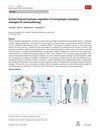
This review highlights that surface mechanical regulation can program macrophage behavior through specific mechanical cues on material surfaces, potentially advancing immunotherapies and regenerative medicine by enabling precise control over macrophage functions.