Search
for
Sort by
Research
180-210 / 1000+ results
research 1454 Identification of Fetuin A as a potential modulator of scar formation
In this study, injecting Fetuin A into embryonic mouse wounds led to scar formation, suggesting the protein may play a role in scar development by promoting collagen production.
research Alopecia frontal fibrosante. Valoración diagnóstica y terapéutica
Early diagnosis of frontal fibrosing alopecia is crucial to prevent permanent hair loss.
research Multi-omics analysis unveils the role of cancer-associated fibroblasts in cutaneous squamous cell carcinoma
This study provides a detailed cellular atlas of cutaneous squamous cell carcinoma, indicating that different fibroblast subtypes play roles in tumor progression and suppression, with potential biomarkers identified for HPV-related tumor growth.
research Prescription and Over-the-Counter Medications Tool Kit
This article presents a toolkit created by the FTA to help transit agencies manage employees' use of medications that could impact public safety, but it reports no new results.

research Frontal Fibrosing Alopecia: Update and Review of Challenges and Successes
This review discusses the various treatment options for frontal fibrosing alopecia but reports no definitive results, as no treatment has proven effective in halting hairline recession or promoting hair growth.

research Topical tofacitinib for patients with lichen planopilaris and/or frontal fibrosing alopecia
This source discusses that while oral JAK inhibitors are used for treating lichen planopilaris and frontal fibrosing alopecia, they carry significant risk of adverse events; two cases showed promising results using tofacitinib cream as a safer topical alternative.
research The Suppression Effects of Fat Mass and Obesity Associated Gene on the Hair Follicle-Derived Neural Crest Stem Cells Differentiating into Melanocyte by N6-Methyladenosine Modifying Microphthalmia-Associated Transcription Factor
The FTO gene hinders stem cells in hair follicles from becoming pigment cells.
research Effect of PTPN22, FAS/FASL, IL2RA and CTLA4 genetic polymorphisms on the risk of developing alopecia areata: A systematic review of the literature and meta-analysis
This study suggests that the T allele of the SNP rs2476601 in the PTPN22 gene may increase the risk of alopecia areata, although further studies are necessary to validate this finding across different populations.

research Oral isotretinoin combined with topical clobetasol 0.05% and tacrolimus 0.1% for the treatment of frontal fibrosing alopecia: a randomized controlled trial
This study found that combining oral isotretinoin with topical treatments was more effective than topical treatments alone for improving frontal fibrosing alopecia symptoms, despite some side effects.
research Extra-follicular cutaneous manifestations of frontal fibrosing alopecia
This review discusses the non-follicular skin manifestations of frontal fibrosing alopecia and how they affect diagnosis and treatment, but reports no new clinical results.

research Improvement of Psoriasis, Psoriatic Arthritis, and Alopecia Universalis during Treatment with Tofacitinib: A Case Report
This case report suggests that JAK inhibitors like tofacitinib may effectively treat alopecia in patients with complex cases involving both rheumatological and dermatological conditions.

research Successful Treatment of Refractory Alopecia Areata Universalis and Psoriatic Arthritis, But Not of Plaque Psoriasis with Tofacitinib in a Young Woman
In this case report, tofacitinib was associated with new hair growth on psoriasis lesions after three months of treatment.
research COMPARISON OF CLINICAL EFFICACY OF TOFACITINIB VERSUS METHOTREXATE IN SEVERE ALOPECIA AREATA, ALOPECIA TOTALIS, AND ALOPECIA UNIVERSALIS: A RANDOMIZED CONTROLLED TRIAL
This study found that among adults with severe alopecia areata, alopecia totalis, or alopecia universalis, oral tofacitinib was more effective than methotrexate in reducing hair loss over a 12-week period, though long-term safety and efficacy remain unestablished.
research A retrospective analysis of efficacy and safety of intralesional triamcinolone injections in the treatment of frontal fibrosing alopecia either as monotherapy or as a concomitant therapy
In this study, intralesional triamcinolone acetonide injections were associated with halting the progression of frontal fibrosing alopecia in female patients and showed minimal adverse effects, but the efficacy as sole therapy remains unclear pending further trials.
research Decision letter: Arabidopsis formin 2 regulates cell-to-cell trafficking by capping and stabilizing actin filaments at plasmodesmata
This study found that the Arabidopsis thaliana protein Formin 2 localizes to plasmodesmata and is crucial for regulating their permeability by anchoring actin filaments, which affects virus susceptibility.

research Frontal fibrosing alopecia: A multicenter review of 355 patients
The study suggests hormonal factors may play a role in Frontal Fibrosing Alopecia and that treatments like oral antiandrogens and steroids could be beneficial.
research Oral Tofacitinib in Refractory Pediatric Alopecia Areata
This study reported that six out of seven pediatric patients with refractory patchy alopecia areata experienced significant hair regrowth after one month of oral tofacitinib treatment, suggesting it may be an effective and safe option, although larger studies are needed to evaluate long-term safety.
research Facial Feminization Surgery/Gender Confirming Facial Surgery: Background and State of the Art
This review discusses changes and advancements in facial feminization surgery, detailing various aspects of the field but reporting no new clinical results; the authors highlight ongoing innovations and challenges.

research Frontal fibrosing alopecia: a retrospective clinical review of 62 patients with treatment outcome and long-term follow-up
This study found that early intervention and treatment with intralesional triamcinolone acetonide may stabilize hairline recession in patients with frontal fibrosing alopecia, although further research is needed for definitive treatment guidelines.
research Recurrent MBTPS2 variant c.970+5G>A in IFAP syndrome: a mutational hotspot
In this study, researchers identified a recurrent MBTPS2 splice-site variant as a mutational hotspot in IFAP syndrome across diverse families, with phenotype severity suggesting the influence of additional modifiers.

research Effectiveness of Tofacitinib in Pre-adolescent Alopecia Areata: A Retrospective Case Series and Literature Review
This study observed that oral tofacitinib was effective and safe for treating alopecia areata in paediatric patients, with 82% of pre-adolescent participants experiencing hair regrowth and 64% showing significant improvement in their hair loss severity scores.

research Response of alopecia areata of the beard to oral tofacitinib
This study suggests that oral tofacitinib may be an effective treatment for beard regrowth in men with alopecia areata of the beard, with a strong correlation observed between beard and scalp hair regrowth.

research Finasteride-mediated hair regrowth and reversal of atrophy in a patient with frontal fibrosing alopecia
This case report describes a patient with frontal fibrosing alopecia experiencing significant hair regrowth and reversal of cutaneous atrophy after treatment with the 5α-reductase inhibitor finasteride.
research Anabolic effect of dihydrotestosterone in testicular feminization syndrome
In this study, patients with testicular feminization syndrome showed limited anabolic responsiveness to dihydrotestosterone, potentially due to reduced affinity of nuclear receptor sites for androgenic steroids rather than defective testosterone conversion.
research Association of frontal fibrosing alopecia and contact allergens in everyday skincare products in Hispanic females: a case-control study
Increased sunscreen use may be linked to frontal fibrosing alopecia in Hispanic females.
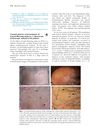
research Unusual patterns of presentation of frontal fibrosing alopecia: A clinical and trichoscopic analysis of 98 patients
In this study, trichoscopy consistently identified typical findings of frontal fibrosing alopecia, revealing three unusual clinical patterns in 18.4% of patients, which may aid in the differential diagnosis when clinical presentations are atypical.
research Characteristics and Outcomes of Patients on Tofacitinib for Alopecia Areata or Rheumatoid Arthritis: A Retrospective Cohort Study
This study found that patients with rheumatoid arthritis taking tofacitinib had higher rates of serious adverse events compared to those with alopecia areata, highlighting the need for careful assessment when using it off-label for alopecia areata.
research TAZ enhances the activity of the AKT signaling pathway to promote adipogenesis of gADSCs
This study found that TAZ promotes adipogenesis in goat adipose-derived mesenchymal stem cells by enhancing PI3K/AKT pathway activity, with overexpression boosting adipocyte formation and knockdown inhibiting it.
research Frontal fibrosing alopecia: a pathology on the rise
This case study reports successful treatment of frontal fibrosing alopecia with daily 2.5mg finasteride in a 77-year-old woman.