 February 2021 in “Journal of the Korean Society of Cosmetology”
 This study found that applying castor oil to damaged hair increased tensile strength and decreased absorbance, indicating improvements in hair texture.
1 citations
,
January 2024 in “Journal of Cosmetic Dermatology” In this study, JAUN soap was found to improve skin conditions, such as moisture, elasticity, and cleansing effectiveness, without adverse reactions, suggesting its potential as a safe and effective ingredient for functional cosmetics.
 April 2023 in “Journal of Investigative Dermatology”
 This review discusses randomized trials on PRP and laser therapy for vitiligo, acne scars, and skin rejuvenation, finding combination therapy may yield clinical improvements but calls for more diverse studies.
 87 citations
,
March 2000 in “American Journal of Clinical Dermatology”
87 citations
,
March 2000 in “American Journal of Clinical Dermatology” Alpha-hydroxy acids, like glycolic acid, safely improve skin issues and work on all skin types.
 3 citations
,
April 2011 in “Expert Review of Dermatology”
3 citations
,
April 2011 in “Expert Review of Dermatology” This review discusses the use of mesotherapy, highlighting its popularity and the lack of large, randomized controlled trials, and advises cautious use.
 1 citations
,
December 2025 in “Frontiers in Pharmacology”
1 citations
,
December 2025 in “Frontiers in Pharmacology” This review outlines the biological effects of various placental extracts, noting their reported antioxidant, anti-inflammatory, and immunomodulatory activities, but highlights that the relationship between these effects and the extracts' specific contents remains unclear.
 January 2026 in “Forum Dermatologicum”
 This review concluded that LED-based photobiomodulation is generally safe and effective for certain dermatologic conditions, though consumer devices often show less efficacy compared to professional systems.
 November 2025 in “Journal of Ayurveda and Integrated Medical Sciences”
 This study evaluated an herbal hair dye made from plant-based ingredients, finding it stable, non-toxic, and effective in providing lasting color, improving hair texture, and reducing hair fall, making it a viable and eco-friendly alternative to chemical dyes.

This study found that grafting an autologous cultured epithelial sheet improved both scarring and skin texture in four patients with acne-associated scar contracture three months post-treatment, suggesting the technique might effectively treat difficult acne scars by metabolizing excess collagen.
 September 2024 in “International Journal of Research and Review”
 This study found that Wiesbaden Dilution 30C significantly reduced hair fall in 76.66% of Telogen Effluvium patients, with 23 out of 30 experiencing notable improvement and new hair growth without adverse effects.
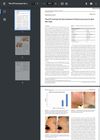 October 2023 in “Skin research and technology”
 This study evaluated the effectiveness of a 675 nm laser device on facial acne scars in patients with darker skin types, finding that 67% reported excellent improvement and 33% reported good improvement, with significant enhancements in skin texture and appearance after five treatments.
July 2023 in “AESTHETIC OROFACIAL SCIENCE” This article reviews the use of polydioxanone (PDO) threads for facial rejuvenation and reports no new clinical findings, highlighting their safety and potential for natural, durable results.
 May 2026 in “Zenodo (CERN European Organization for Nuclear Research)”
 In this study, researchers formulated and evaluated an herbal hair smoothing cream containing natural ingredients like aloe vera and coconut oil, reporting significant improvements in hair smoothness, softness, shine, and manageability without irritation, suggesting it as a safer alternative to traditional hair straightening products.
 51 citations
,
November 2018 in “JAMA Dermatology”
51 citations
,
November 2018 in “JAMA Dermatology” This study found that participant self-assessments suggested greater improvement in the texture and wrinkles of facial skin treated with PRP compared to normal saline, though dermatologist ratings showed no significant difference.
 3 citations
,
August 2013 in “International journal of research in Ayurveda and pharmacy”
3 citations
,
August 2013 in “International journal of research in Ayurveda and pharmacy” This study assessed the effects of the poly herbal formulation Hairbac, reporting significant improvements in hair texture, density, and loss among females with diffuse hair fall, with no adverse effects noted.
11 citations
,
March 2018 in “Journal of cosmetic and laser therapy” In this study, pneumatic injections of non-cross-linked hyaluronic acid were associated with improvements in skin texture, pores, wrinkles, and transepidermal water loss in healthy female volunteers.
 July 2026 in “Innovations in Pharmaceutical Sciences & Care”
 In this case report, a 31-year-old man with frontal hairline recession saw a marked improvement in hair density and scalp appearance after undergoing six mesotherapy sessions alongside twice-daily application of 5% minoxidil, attributed to the treatment protocol combining nutrients, bioactives, and topical minoxidil.
16 citations
,
March 2023 in “Clinical Cosmetic and Investigational Dermatology” This study demonstrated that regular use of LactoSporin cream for 10 weeks significantly reduced wrinkles and fine lines in healthy female participants, although improvements in skin elasticity and hydration were not significantly better than placebo when measured by certain instruments.
 May 2025 in “Journal of Ayurveda and Integrated Medical Sciences”
 In this phase 3 clinical trial, participants taking Vedistry Amla + Tablets for hair concerns experienced significant reductions in hair fall and improvements in hair texture, strength, and scalp health over three months, with stable laboratory parameters and increased Vitamin D and antioxidant levels.
September 2018 in “Journal of Society of Cosmetic Chemists of Japan” This study found that applying a solution containing oil-soluble vitamin C to damaged hair improved hair cuticle condition and water repellency, suggesting a new cosmetic function beyond its known skin whitening effects.
June 2021 in “European journal of medical and health sciences” This study reported that over 85% of patients with androgenic alopecia experienced very positive outcomes from platelet-rich plasma injections, showing improvements in hair mass and texture.
 May 2026 in “Zenodo (CERN European Organization for Nuclear Research)”
 This study found that a formulated herbal hair smoothing cream using ingredients like aloe vera and coconut oil improved hair texture, such as smoothness and shine, without irritation, offering a safer alternative to conventional products.
 November 2022 in “The journal of investigative dermatology/Journal of investigative dermatology”
 This study found that applying ivermectin 1% cream significantly improved both visible symptoms like erythema and invisible symptoms such as stinging, burning, and dryness in rosacea patients over a period of at least 16 weeks.
5 citations
,
August 2022 in “Mediators of Inflammation” This study found that combining pulsed dye laser with pingyangmycin improved treatment efficacy, scar repair, skin condition, and patient satisfaction in treating post-acne hyperplastic scars, compared to laser alone, without increasing adverse reactions.
9 citations
,
July 2019 in “Journal of cosmetic dermatology” This pilot study suggests that topical PRP may improve facial rejuvenation, with observed enhancements in collagen production and skin architecture over 8 weeks.
6 citations
,
October 2023 in “Clinical Cosmetic and Investigational Dermatology” This study found that combining ultrapulsed fractional CO2 laser with bovine basic fibroblast growth factor significantly improved acne scars more effectively and safely compared to laser therapy alone.
 November 2024 in “American Journal of Biomedical Science & Research”
 This abstract does not provide study results but outlines that acne is influenced by factors like androgens, sebum production, abnormal keratinization, and inflammatory reactions involving lymphocytes, macrophages, and neutrophils.

This review suggests that injectable platelet-rich fibrin therapy shows promise for improving hair density in androgenetic alopecia and enhancing facial skin texture and elasticity, but larger studies are needed to confirm its effectiveness.

This case study presented by the researchers describes the effective use of topical calcipotriene ointment in treating a 6-year-old girl with en coup de sabre scleroderma, resulting in normalization of the sclerotic skin, hair regrowth, and improved pigmentation.
June 2026 in “Journal of Cosmetic Dermatology” This study found that a topical 5% phenytoin solution, applied twice daily for 16 weeks, significantly improved total hair count and hair density in men with androgenetic alopecia, with mild and transient side effects observed.