This study found that the Arabidopsis cation chloride cotransporter (CCC1) is crucial for regulating pH and processes in the trans-Golgi-network/early endosome, impacting plant growth and stress responses.
9 citations
,
January 2015 in “Medical hypotheses” This report suggests that TCDD may alter human epidermal stem cell populations by upregulating c-Myc, potentially leading to increased stem cell turnover during chloracne development.
This study found that prophylactically administering amotosalen-treated allogeneic donor T cells at transplantation significantly improved immune reconstitution and protection against murine cytomegalovirus infection without inducing graft-versus-host disease.
 88 citations
,
August 2019 in “Nature communications”
88 citations
,
August 2019 in “Nature communications” In this study, researchers identified a specific T cell receptor associated with carbamazepine-induced severe cutaneous adverse reactions, demonstrating its potential for therapeutic development in patients with the HLA-B*15:02 genotype.
January 2025 in “Open Veterinary Journal” This case series reports that electrochemotherapy with intravenous bleomycin effectively resolved cutaneous mast cell tumors in four cats, showing no tumor recurrence during follow-up, except for new lesions in one cat, and minimal local toxicity.
July 2024 in “Journal of Investigative Dermatology” Targeting TCR-Vβ2 in cutaneous T cell lymphoma shows promise for safer, more specific treatment.

In this study, researchers analyzed over 5,000 T cells per sample using scRNA+TCR-seq technology and found that dual TCR Tregs are present in high proportions across various mouse tissues, showing unique TCR pairing patterns, V(D)J usage, and mRNA expression compared to single TCR Tregs.
22 citations
,
August 2020 in “Cells” This review discusses the role of TGM3 in skin and hair follicle biology, human tumor pathology, and genetic abnormalities, and reports no novel results; the authors highlight its potential as a cancer diagnostic biomarker.
9 citations
,
February 2023 in “Medicine” This review discusses the potential of traditional Chinese medicine to relieve clinical symptoms in cases of CCS and emphasizes the need for further large-scale, long-term studies to verify these effects.
 March 2024 in “Cytologia”
 In this study, researchers observed that melatonin-mediated LncRNA MTC in Liaoning cashmere goat skin fibroblasts enhances cell proliferation by interacting with the GSTM1 protein, affecting its complex formation with ASK1 and thereby inhibiting apoptosis, which may be relevant for improving cashmere growth.
288 citations
,
January 2001 in “Journal of Biological Chemistry” In this study, the disruption of Gh/tissue transglutaminase in mice did not affect viability but reduced thymocyte viability and fibroblast adhesion, suggesting its role in cell stabilization and extracellular matrix interactions.
April 2019 in “The journal of investigative dermatology/Journal of investigative dermatology” This study in mice suggests that defects in hair follicles with mesenchymal TSC2 disruption may result from an impaired TGFβ1 response, indicating a potential novel treatment approach for tuberous sclerosis complex.
This study introduced the C-CAT, a new assessment tool for central centrifugal cicatricial alopecia, and found that established treatments improved symptoms in most patients over six months.
1 citations
,
September 2025 in “Pediatric Dermatology” This systematic review reported that habit reversal training showed the most consistent benefit for treating pediatric trichotillomania, while evidence for pharmacological treatments and alternative therapies like N-acetylcysteine remains insufficient, highlighting the need for early behavioral intervention and further research into standardized treatment protocols.
April 2020 in “Journal of the Endocrine Society” This study suggests that hair cortisol measurement could serve as an alternative diagnostic method for Cushing’s disease, showing acceptable concordance with urinary free cortisol despite differing evaluated periods.
45 citations
,
March 1997 in “Journal of Investigative Dermatology” TCDD changes skin gene expression and may harm skin health.
35 citations
,
September 2011 in “The Journal of Dermatology” This article discusses the trichoscopic diagnosis of temporal triangular alopecia, but reports no new clinical results.
 June 2024 in “Journal of Clinical Oncology”
 In this retrospective study, combining TACE with Donafenib showed promising results as a first-line treatment for Chinese patients with unresectable hepatocellular carcinoma, yielding a median progression-free survival of 12.8 months and a one-year overall survival rate of 87.5%, along with a favorable safety profile.
 39 citations
,
May 2004 in “Clinics in Dermatology”
39 citations
,
May 2004 in “Clinics in Dermatology” This article reviews treatment options for cutaneous T-cell lymphoma, including skin-directed therapies and aggressive treatments for advanced cases, but reports no new clinical results.
 4 citations
,
March 2018 in “Journal of labelled compounds & radiopharmaceuticals”
4 citations
,
March 2018 in “Journal of labelled compounds & radiopharmaceuticals” In this study, researchers developed a new prostate cancer imaging agent, a [99m Tc]tricarbonyl complex derived from finasteride, which demonstrated high radiochemical purity and significant uptake in the prostate of a rat model, suggesting its potential for noninvasive prostate cancer imaging.
 2 citations
,
June 2016 in “PubMed”
2 citations
,
June 2016 in “PubMed” This case study reports successful treatment of an 11-year-old girl's trichotillomania with cognitive behavioral therapy, mild topical treatments, and supportive parental involvement, without psychopharmacologic intervention.
 January 2026 in “Cell and Tissue Biology”
 The researchers reported that administration of the antioxidant compound TS-13 in mice with chemotherapy-induced alopecia accelerated hair regrowth, although it did not fully prevent chemotherapy-related hair loss, suggesting TS-13 may aid in managing hair loss without negating the cancer treatment's effectiveness.
 September 2009 in “European Urology Supplements”
 Cone beam computed tomography can allow for smaller safety margins around the target area in prostate cancer radiation treatment if used for ongoing treatment checks.
 13 citations
,
June 2012 in “Journal of Dermatological Case Reports”
13 citations
,
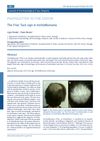
June 2012 in “Journal of Dermatological Case Reports” This report describes an 8-year-old male with trichotillomania, confirmed by trichoscopy showing characteristic hair damage and patterns.
In this study, introducing the rat OTC gene into spf-ash mice led to increased OTC activity and normalized hair growth and biochemical markers like urinary orotic acid and serum citrulline, partially correcting the symptoms of OTC deficiency.
4 citations
,
February 2024 in “Frontiers in Cardiovascular Medicine” The study observed that Tai Chi and Wuqinxi, when combined with antihypertensive medication, might be particularly effective in lowering systolic and diastolic blood pressure, respectively, suggesting they could be prioritized as treatment options.
This study found that the Arabidopsis cation chloride cotransporter CCC1 is critical for regulating pH in the trans-Golgi network/early endosome, impacting plant growth and stress response.
62 citations
,
December 1941 in “Experimental biology and medicine” In this study, phenylthiocarbamide intake was associated with hair graying in rats, while switching to tap water led some rats to regain their original fur color, suggesting dietary factors influence pigmentation.
21 citations
,
May 2014 in “Toxicological Sciences” This study found that skin exposure to toluene diisocyanate in mice creates immune-recognition reservoirs in the skin's stratum corneum and hair follicles, potentially leading to sensitization and allergic reactions.
 18 citations
,
February 2022 in “Cell Death Discovery”
18 citations
,
February 2022 in “Cell Death Discovery” In this study, researchers found that hair follicle-derived mesenchymal stem cells, modified to overexpress extracellular matrix protein 1, significantly improved liver function and reduced liver damage in cirrhotic mice by inhibiting hepatic stellate cell activation and TGF-β/Smad signaling.