4 citations
,
August 2025 in “Frontiers in Immunology” This review explores how mesenchymal stem cells and their extracellular vesicles may treat various skin diseases by modulating immune responses and promoting healing, though further clinical trials are needed to confirm their safety and efficacy in practice.
 5 citations
,
June 2022 in “Frontiers in immunology”
5 citations
,
June 2022 in “Frontiers in immunology” This study observed that expanding regulatory T cells in the skin of mice with alopecia areata did not reverse the condition, indicating that additional immunotherapy may be necessary.
This study found that innate lymphoid cells-type 1 (ILC1) can induce alopecia areata by disrupting hair follicle immune privilege without the involvement of classical CD8+ T cells.
This study found that innate lymphoid cells-type 1 (ILC1lc) can induce alopecia areata (AA) by disrupting hair follicle immune privilege and causing hair follicle dystrophy and regression in both ex vivo and in vivo settings.
 40 citations
,
March 2019 in “Nature Communications”
40 citations
,
March 2019 in “Nature Communications” This study found that deleting Stim1 and Stim2 in mature T regulatory cells disrupts Ca 2+ signaling, preventing their differentiation and leading to severe autoimmune disorders in mice.
18 citations
,
February 2023 in “eLife” This study indicates that innate lymphoid cells-type 1 may provoke alopecia areata by disrupting hair follicle immune privilege and inducing characteristic lesions, challenging the view that alopecia areata is purely an autoantigen-dependent, T cell-driven condition.
 4 citations
,
July 2025 in “Frontiers in Immunology”
4 citations
,
July 2025 in “Frontiers in Immunology” This study explored peripheral blood immune dysregulation in alopecia areata through single-cell analyses, identifying systemic changes linked to disease severity and key signaling roles for monocytes, NK cells, and memory T cells, suggesting potential therapeutic targets.
 1 citations
,
March 2024 in “Signal transduction and targeted therapy”
1 citations
,
March 2024 in “Signal transduction and targeted therapy” In this review, researchers explored the multifaceted role of NF-κB signaling in various biological processes and diseases, including its interactions with other pathways, and discussed possible therapeutic approaches targeting this pathway for treating conditions like cancer, autoimmune disorders, and COVID-19.
 August 2024 in “International Journal of Molecular Sciences”
 The study investigated immune cell patterns around the hair follicle infundibulum in androgenetic alopecia, revealing significant differences in immune signatures between patients with AGA and control donors, specifically noting an enrichment of CD4 cells in the patient group.
This study found that ILC1-like cells can induce alopecia areata symptoms in both ex vivo human hair follicles and in vivo mouse models, challenging the view that alopecia areata is solely CD8+ T cell-driven.
14 citations
,
January 2023 in “Nature Immunology” iNKT cells help develop and maintain healthy skin in young mice.
 130 citations
,
November 2017 in “Frontiers in Immunology”
130 citations
,
November 2017 in “Frontiers in Immunology” This review explores recent findings on regulatory T cells, focusing on their unique functions in non-lymphoid tissues and new mechanisms of action, but presents no original clinical results.
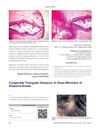 13 citations
,
January 2011 in “International Journal of Trichology”
13 citations
,
January 2011 in “International Journal of Trichology” CTA is often mistaken for AA but doesn't respond to steroids and may require hair transplantation.

In this study, researchers observed that dysregulated innate lymphoid cells type 1, alongside CD8+ T cells, may contribute to the pathogenesis of alopecia areata by affecting hair follicle health.
 1 citations
,
January 2025 in “American Journal of Translational Research”
1 citations
,
January 2025 in “American Journal of Translational Research” This study found that PPARα agonists provided protective effects in mouse models of alopecia areata by promoting early reversal of the condition and inhibiting T effector cell function, indicating potential therapeutic value for this inflammatory condition.
 June 2022 in “bioRxiv (Cold Spring Harbor Laboratory)”
 This study provides evidence that innate lymphoid cells-type 1 can induce alopecia areata in human hair follicles, challenging the view that it is solely a CD8+ T cell-driven autoimmune disease.
 January 2024 in “Asthma Allergy Immunology”
 This review examines the role of innate lymphoid cells in allergic diseases and the influence of an allergic microenvironment on their plasticity, without reporting new clinical outcomes.
 489 citations
,
November 2021 in “Signal Transduction and Targeted Therapy”
489 citations
,
November 2021 in “Signal Transduction and Targeted Therapy” This review discusses the composition, activation, and regulation of the JAK/STAT pathway and highlights its role and inhibitors in various diseases, but reports no new experimental results.
27 citations
,
February 2023 in “Frontiers in Cell and Developmental Biology” This review discusses the expanded understanding of WNT10B's role in various tissues and diseases over the past decade, emphasizing its genetic correlations and potential therapeutic implications, but reports no new clinical results.
 4 citations
,
May 2025 in “npj Parkinson s Disease”
4 citations
,
May 2025 in “npj Parkinson s Disease” This study identified peripheral myeloid cells as the earliest dysregulated immune cells in PINK1 KO mice with Parkinson’s-like symptoms following intestinal infections, suggesting that PINK1 regulates gut immune functions linked to early Parkinson’s disease mechanisms.
 4 citations
,
January 2024 in “Scientific Reports”
4 citations
,
January 2024 in “Scientific Reports” Pumpkin seeds may help expel parasites, but findings are retracted.
 1 citations
,
January 2025 in “Frontiers in Pharmacology”
1 citations
,
January 2025 in “Frontiers in Pharmacology” This review discusses the therapeutic and pharmacological potential of total glucosides of paeony in dermatological treatment and notes the need for more rigorous scientific studies.
 271 citations
,
May 2019 in “Cells”
271 citations
,
May 2019 in “Cells” This review discusses the therapeutic potential of MSC-derived secretomes for treating degenerative and inflammatory diseases, reporting no new clinical results but highlighting their proposed mechanisms and advantages over direct MSC transplantation.
 124 citations
,
October 2019 in “Frontiers in Immunology”
124 citations
,
October 2019 in “Frontiers in Immunology” This review discusses the role of the JAK-STAT pathway in autoimmune skin diseases and suggests potential therapeutic benefits of JAK inhibitors, but reports no new experimental results.
 January 2011 in “International Journal of Trichology”
 The document concludes that doctors should recognize congenital triangular alopecia to avoid unnecessary treatments, as it does not respond to steroids like alopecia areata does.
 471 citations
,
October 2012 in “Cellular and Molecular Life Sciences”
471 citations
,
October 2012 in “Cellular and Molecular Life Sciences” This review discusses the roles of key developmental signaling pathways in mammalian skin repair compared to skin development, and suggests these insights could lead to better wound healing therapies, but it reports no new findings.
 88 citations
,
August 2019 in “Nature communications”
88 citations
,
August 2019 in “Nature communications” In this study, researchers identified a specific T cell receptor associated with carbamazepine-induced severe cutaneous adverse reactions, demonstrating its potential for therapeutic development in patients with the HLA-B*15:02 genotype.
 46 citations
,
December 2010 in “The journal of investigative dermatology/Journal of investigative dermatology”
46 citations
,
December 2010 in “The journal of investigative dermatology/Journal of investigative dermatology” This study found that Acvr1b signaling is crucial for both hair follicle development and cycling in mice, with the genetic disruption leading to hair loss and a thickened epidermis.
 35 citations
,
October 2017 in “Signal Transduction and Targeted Therapy”
35 citations
,
October 2017 in “Signal Transduction and Targeted Therapy” This study found that fibromodulin significantly reduces scar formation and boosts scar strength in rodent and porcine models, suggesting potential for FMOD-based therapies in cutaneous wound repair.
 32 citations
,
March 2014 in “PLOS ONE”
32 citations
,
March 2014 in “PLOS ONE” This study demonstrates that FMOD deficiency in mice alters TGF-β ligand and receptor expression during wound healing stages, leading to delayed wound closure and increased scar size.