46 citations
,
November 2007 in “Gene Expression Patterns” This study observed that Trps1 gene expression in mice is precisely regulated in skin development, particularly during hair follicle morphogenesis, with distinct localization patterns in different cell types.
September 2025 in “OPAL (Open@LaTrobe) (La Trobe University)” This study found that Ang1 improved survival and proliferation in human follicle dermal papilla cells under DHT-induced stress, suggesting potential as a therapeutic candidate for androgenetic alopecia.
 6 citations
,
October 2012 in “Journal of Heredity”
6 citations
,
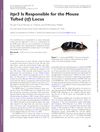
October 2012 in “Journal of Heredity” This study identified the Itpr3 gene as responsible for the tufted hair loss phenotype in the BTBR mouse strain.
 13 citations
,
August 2020 in “Frontiers in Cell and Developmental Biology”
13 citations
,
August 2020 in “Frontiers in Cell and Developmental Biology” This study found that Twist1 and Tcf4 synergistically regulate the hair follicle induction ability of dermal papilla cells by forming a complex with β-catenin, enhancing their biological properties.
 38 citations
,
January 2016 in “Cell Death and Disease”
38 citations
,
January 2016 in “Cell Death and Disease” This review discusses the role of the TCL1 transgenic mouse model in understanding chronic lymphocytic leukemia biology and highlights the importance of exploring new pathogenetic and therapeutic targets.
 June 2021 in “bioRxiv (Cold Spring Harbor Laboratory)”
 This study discovered that the gene Tfap2b identifies a melanocyte stem cell population in zebrafish, essential for regenerating melanocytes with multi-fate potential into adult pigment cells.
July 2024 in “Journal of Investigative Dermatology” PH-762 shows promise in treating skin cancer by effectively targeting and silencing PD-1 in tumors with minimal side effects.
3 citations
,
October 1994 in “Journal of Dermatological Science” This study developed a novel monoclonal antibody, TYHF-1, which specifically reacts with hair keratins but not with epidermal keratins or various other tissue cells.
14 citations
,
February 2022 in “The Journal of clinical investigation/The journal of clinical investigation” This study found that the development of Merkel cell carcinoma from hair follicles in mice can be driven by in vivo reprogramming with ATOH1 and relies on p53 loss for progression.
14 citations
,
November 2024 in “International Journal of Molecular Sciences” This review summarizes existing evidence on how YAP and TAZ proteins are activated in epidermal keratinocytes and their role in coordinating with other signaling molecules to control transcription and influence epidermal cell fate, highlighting their importance beyond the Hippo pathway.
52 citations
,
June 1991 in “Journal of Virology” In this study, researchers found that the ability of hamster polyomavirus to cause lymphoid tumors in Syrian hamsters may be linked to its association with the tyrosine kinase p59fyn.
 5 citations
,
January 2018
5 citations
,
January 2018 This study optimized a screening assay to identify molecules that inhibit or enhance TRPM5 ion channel activity, which may have implications for treating dysfunctions linked to cardiac arrhythmias and diabetes.
5 citations
,
October 2022 in “Biology” This study found that CAP1 plays a significant role in reducing ammonium toxicity in Arabidopsis thaliana by promoting shoot growth and maintaining reactive oxygen species homeostasis.
 April 2023 in “Cancer research”
 This study suggests that KRTAP2-3 may serve as a novel biomarker to identify cells in the polyaneuploid cancer cell state, which is linked to therapy resistance and poor prognosis in prostate cancer.
 76 citations
,
June 2018 in “EMBO Reports”
76 citations
,
June 2018 in “EMBO Reports” This study demonstrates that YAP and TAZ are essential for initiating basal and squamous cell carcinomas in mice, and suggests targeting these pathways could be beneficial for treating skin cancers.
24 citations
,
December 2016 in “Stem Cell Research & Therapy” This study found that P311 triggers transdifferentiation of epidermal stem cells into myofibroblast-like cells via TGFβ1/Smad signaling during wound healing.
January 2017 in “Seoul National University Open Repository (Seoul National University)” This study found that the N-terminal fragment of AIMP1 enhances hair growth and proliferation of hair follicle stem cells in mice, suggesting its potential as a therapeutic peptide for hair loss treatment.
 September 2025 in “Frontiers in Medicine”
 This study found that angiopoietin-1 significantly reduces apoptosis and promotes proliferation in human follicle dermal papilla cells under DHT-induced stress, suggesting its potential as a therapeutic candidate for androgenetic alopecia.
 January 2024 in “OPAL (Open@LaTrobe) (La Trobe University)”
 In this study, researchers explored various aspects of the TRPV3 ion channel, including its novel mechanosensitivity to shear stress, and identified novel agonists while investigating how repeated stimulation affects TRPV3 activity, but found no evidence of GPCRs sensitizing the channel.
39 citations
,
April 2019 in “The journal of immunology/The Journal of immunology” This study found that Malt1, particularly its protease activity, plays a crucial role in maintaining Treg cell function and homeostasis, with its inactivation leading to autoimmune diseases and altered immune responses in mice.
 1 citations
,
February 2022 in “bioRxiv (Cold Spring Harbor Laboratory)”
1 citations
,
February 2022 in “bioRxiv (Cold Spring Harbor Laboratory)” This study found that a specific fragment of AIMP1 secreted by hair follicle stem cells can stimulate dermal papilla cells and promote hair regrowth.
19 citations
,
July 1997 in “British Journal of Dermatology” This study successfully developed and characterized a monospecific monoclonal antibody, LHTric-1, that specifically localizes to the pre-cortical region of the hair follicle and can aid research on hair and nail formation.
 January 2024 in “Wiadomości Lekarskie”
 This study reports that Abelson Interactor 1 (ABI1) regulates androgen receptor transcription in prostate cancer, identifying it as a potential target for new therapies addressing treatment resistance.
 December 2023 in “The journal of investigative dermatology/Journal of investigative dermatology”
 In a mouse model study, researchers observed that the absence of MCPIP1 in myeloid cells decreased susceptibility to chemically induced skin papillomas but caused significant hair loss and skin pigmentation changes, suggesting a role for MCPIP1 in skin carcinogenesis and follicle integrity.
 May 2023 in “The journal of investigative dermatology/Journal of investigative dermatology”
 This study found that baricitinib can counteract the cytokine-driven reduction of the enzyme PADI1 in human keratinocytes, which may help improve skin barrier function in atopic dermatitis by enabling epidermal differentiation.
 4 citations
,
October 2022 in “International Journal of Molecular Sciences”
4 citations
,
October 2022 in “International Journal of Molecular Sciences” In this study, Thy-1 was observed to play a critical role in wound healing in mice, particularly influencing vascular dynamics and blood perfusion during the healing process.
 February 2024 in “Planta”
 This study found that TRM21 acts as a positive regulator of flavonoid biosynthesis at the translational level in Arabidopsis, leading to changes in root hair growth and a decrease in flavonoid content when TRM21 is mutated.
 174 citations
,
April 2005 in “The American journal of pathology (Print)”
174 citations
,
April 2005 in “The American journal of pathology (Print)” This study found that TRPV1 activation in human scalp hair follicles inhibited hair shaft elongation, suppressed proliferation, and induced apoptosis, suggesting TRPV1 as a potential target for managing hair growth and epithelial disorders.
 May 2012 in “CRC Press eBooks”
 Some patients on anti-TNF drugs experience a type of hair loss called TAIAPA.
 11 citations
,
June 2017 in “Journal of cell science”
11 citations
,
June 2017 in “Journal of cell science” In this study, researchers found that AGD1 is crucial for membrane recruitment during root hair development in Arabidopsis thaliana, with its pleckstrin homology domain essential for targeting specific plasma membrane regions.