 24 citations
,
October 2022 in “Revista Brasileira de Farmacognosia”
24 citations
,
October 2022 in “Revista Brasileira de Farmacognosia” This review discusses the pharmacological actions of mangiferin and the potential of delivery carriers to overcome its limitations, but reports no new clinical results.
 24 citations
,
January 2013 in “Indian Journal of Dermatology, Venereology and Leprology”
24 citations
,
January 2013 in “Indian Journal of Dermatology, Venereology and Leprology” This review examines hormonal influences on acne development and available hormonal therapies but reports no new clinical results.
 22 citations
,
March 2009 in “Journal of Natural Medicines”
22 citations
,
March 2009 in “Journal of Natural Medicines” This study found that Erica multiflora extract promotes hair growth by enhancing dermal papilla cell activity and shifting hair follicles from the telogen to the anagen phase in both in vitro and in vivo models.
 15 citations
,
October 2012 in “InTech eBooks”
15 citations
,
October 2012 in “InTech eBooks” Niosomes are a promising and effective way to deliver drugs through the skin.
 5 citations
,
February 2020 in “European Food Research and Technology”
5 citations
,
February 2020 in “European Food Research and Technology” This study provides a detailed profile of bioactive polyphenols in various parts of the baobab fruit, highlighting its potential as a health-promoting food or supplement.
 5 citations
,
January 2018 in “Springer eBooks”
5 citations
,
January 2018 in “Springer eBooks” Acne in dark skin is influenced by environmental factors and can lead to hyperpigmentation, with various treatment options available.
 5 citations
,
May 2017 in “Current Opinion in Pediatrics”
5 citations
,
May 2017 in “Current Opinion in Pediatrics” This review found that hormonal therapies, including FDA-approved combined oral contraceptive pills and spironolactone, are effective and well-tolerated treatments for acne vulgaris in adolescents with or without endocrine disorders, providing alternative options to antibiotics.
 5 citations
,
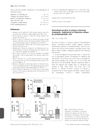
June 2015 in “British Journal of Dermatology”
5 citations
,
June 2015 in “British Journal of Dermatology” This article discusses the role of lysophosphatidic acid-induced histamine release in generalized pruritus among patients with primary sclerosing cholangitis and reports no new clinical results.
 4 citations
,
January 2022 in “Current pharmaceutical design”
4 citations
,
January 2022 in “Current pharmaceutical design” This review discusses the benefits and applications of microsponges delivery systems in drug delivery, particularly for topical treatments, and reports no new clinical findings.
 3 citations
,
May 1980 in “American Journal of Nursing”
3 citations
,
May 1980 in “American Journal of Nursing” Scalp tourniquets did not significantly prevent hair loss from chemotherapy.
 2 citations
,
March 2024 in “International Journal of experimental research and review”
2 citations
,
March 2024 in “International Journal of experimental research and review” This study found that more than 14% of idiopathic recurrent early pregnancy loss cases were associated with chromosomal heteromorphisms, predominantly 9qh+, suggesting a genetic component in these unexplained cases.
 2 citations
,
January 2023 in “International Journal of Dermatology Research”
2 citations
,
January 2023 in “International Journal of Dermatology Research” This study reported that C. procera leaf extracts showed antifungal activity against several dermatophytes, with ethanol extracts demonstrating slightly greater efficacy than aqueous extracts.
 2 citations
,
January 2021 in “Our Dermatology Online”
2 citations
,
January 2021 in “Our Dermatology Online” This study reported that alopecia areata mostly affects young Black African males, with very few associated pathologies observed in this population.
 1 citations
,
June 2025 in “International Journal of Plant and Environment”
1 citations
,
June 2025 in “International Journal of Plant and Environment” This study found that nickel oxide nanoparticles synthesized using Alternanthera sessilis extract may have potential as antimicrobial, antifungal, and dye-removal agents.
 1 citations
,
July 2024 in “International Journal of Biological Research”
1 citations
,
July 2024 in “International Journal of Biological Research” This study found that a high percentage of pediatric sickle cell disease patients have parents from medium-high socioeconomic status, indicating that the educational background of parents did not influence the disease's prevalence.
 1 citations
,
December 2022 in “Türk tarım - gıda bilim ve teknoloji dergisi”
1 citations
,
December 2022 in “Türk tarım - gıda bilim ve teknoloji dergisi” This review discusses the diversification of tea products and their associated health benefits, highlighting the economic challenges faced by tea-producing countries and the global marketing strategies of the tea industry, but reports no new experimental findings.
 June 2026 in “Open Access Research Journal of Biology and Pharmacy”
 This study used molecular docking simulations to identify approved drugs, including Bedaquiline and Telmisartan, with potential to treat Onchocerca volvulus infections by inhibiting key protein targets, suggesting these drugs could be repurposed for onchocerciasis treatment with further validation.
 March 2026 in “Journal of Community Genetics”
 In this narrative review, the authors found that stigma related to oculocutaneous albinism in Africa is primarily driven by socio-cultural beliefs and structural inequities, affecting individuals' health, education, and psychosocial well-being, with interventions needed to dispel myths and provide specialized healthcare and support.
 March 2025 in “Journal of Pakistan Association of Dermatologists”
 In this randomized clinical trial, the authors reported that after 12 weeks, 5% dapsone gel was more effective than 1% clindamycin phosphate gel in treating mild to moderate acne vulgaris, showing efficacy in 78.2% of patients compared to 52.7% with clindamycin.
 November 2024 in “IP Indian Journal of Clinical and Experimental Dermatology”
 In this study, researchers found that cutaneous hyperpigmentation is a primary dermatological manifestation in patients with Graves' disease, with certain treatments like carbimazole and propranolol being statistically associated with skin symptoms.
 October 2024 in “International Journal of Research in Ayurveda and Pharmacy”
 This review investigates Jeemuta Bhringadi Taila, an Ayurvedic herbal oil formulation, exploring traditional claims of its benefits for hair health, skin issues, and other ailments by examining its ingredients and available scientific research, aiming to assess its relevance in modern healthcare.
 March 2024 in “Frontiers in genetics”
 This review discusses the insights gained from single-cell RNA sequencing of fibroblasts in various cancers and wound healing, highlighting differences in gene expression and novel interactions.
 January 2024 in “Indian Journal of Animal Research”
 In this study, Nerium oleander extract demonstrated high effectiveness in killing Sarcoptes scabiei var. cuniculi mites in vitro, achieving up to 100% mortality in 8 hours, suggesting potential as a therapeutic method for scabies in rabbits.
 May 2023 in “Journal of complementary medicine & alternative healthcare”
 The authors concluded that Ayurveda's concepts of eight undesired body types, such as hereditary obesity and albinism, align with modern genetic understanding, suggesting these traits have genetic predispositions as originally mentioned in ancient Indian medical texts.
 December 2021 in “International research journal of pharmacy”
 This study evaluated the physicochemical properties of Neelibhringadi keratailam and found significant variations in market samples compared to a prepared sample, indicating potential quality control issues.
 March 2021 in “Indian Journal of Case Reports”
 This case report describes a young adult female with late-stage Vogt-Koyanagi-Harada disease featuring panuveitis, retinal detachment, hearing loss, alopecia, and vitiligo, who was successfully treated in a hospital.
 October 2016 in “Elsevier eBooks”
 This article reviews the most common skin diseases worldwide and reports no new clinical findings.
 April 2007 in “Nature Clinical Practice Urology”
 Finasteride lowers PSA levels about the same whether taken at 1 mg or 5 mg daily.
 May 2006 in “Women's Health Medicine”
 This review examines the causes, assessment, and treatments of hirsutism and highlights the need for future research in managing this condition but presents no new research findings.

This review discusses the mechanisms of cell death in skin-associated processes and highlights potential therapeutic opportunities for targeting cell death to treat inflammatory skin diseases, but reports no new clinical results.