 4 citations
,
June 2015 in “Journal of Genetics/Journal of genetics”
4 citations
,
June 2015 in “Journal of Genetics/Journal of genetics” This abstract reports funding sources for ongoing research and does not present any study results.
2 citations
,
July 2021 in “UNC Libraries” This study suggests that residues Val-889 and Arg-752 in the androgen receptor's steroid binding domain are crucial for NH2-/carboxyl-terminal interaction, affecting receptor stability and function.
 101 citations
,
April 1994 in “Baillière's clinical endocrinology and metabolism”
101 citations
,
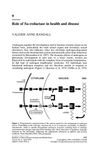
April 1994 in “Baillière's clinical endocrinology and metabolism” This review discusses the role of 5α-reductase enzymes in androgen action and related disorders, noting that their specific inhibitory drugs show promise for conditions like benign prostatic hypertrophy; it reports no new clinical results.
 8 citations
,
March 2002 in “Archiv Der Pharmazie”
8 citations
,
March 2002 in “Archiv Der Pharmazie” In this study, 4-(4-(phenylaminocarbonyl)benzoyl) benzoic acid exhibited the strongest inhibitory activity against the human type 2 steroid 5α-reductase isozyme among the compounds tested.
 45 citations
,
February 2005 in “Steroids”
45 citations
,
February 2005 in “Steroids” This study reported that certain newly synthesized steroidal derivatives showed stronger inhibitory activity against the 5α-reductase enzyme than finasteride in hamsters, suggesting their potential as enzyme inhibitors.
49 citations
,
September 2015 in “Psychoneuroendocrinology” This study suggests that the 5α-reductase inhibitor finasteride modulates sensorimotor gating in rats by affecting D1 and D3 receptors, but not D2 receptors, with varying effects based on genetic strain.
64 citations
,
June 1995 in “Steroids” This review discusses biochemical studies on 5 alpha-reductase and its inhibitors, comparing IC50 and Ki values for various compounds, but reports no new experimental results.
193 citations
,
June 2007 in “The Plant Journal” This study found that the GhDET2 gene plays a crucial role in cotton fiber initiation and elongation, suggesting that modifying brassinosteroid biosynthesis may enhance fiber quality or yield.
21 citations
,
January 2006 in “Hormone Research in Paediatrics” In this case study, a girl with hereditary vitamin D resistant rickets had a novel mutation in the VDR gene that affected hair cycling without causing total alopecia, suggesting ligand-independent VDR function in hair cycling.
 57 citations
,
February 1983 in “The Journal of clinical endocrinology and metabolism/Journal of clinical endocrinology & metabolism”
57 citations
,
February 1983 in “The Journal of clinical endocrinology and metabolism/Journal of clinical endocrinology & metabolism” This study found that pubic skin fibroblasts respond to androgens, increasing 5α-reductase activity via an androgen receptor-mediated mechanism, suggesting its potential as a marker of androgen action in vitro.
 January 2015 in “Current Opinion in Endocrinology, Diabetes and Obesity” October 2016 in “Letters in Drug Design & Discovery”
  30 citations
,
July 2019 in “Endocrinology”
30 citations
,
July 2019 in “Endocrinology” This review discusses how the HSD3B1(1245C) genotype may impact androgen physiology and the progression of castration-resistant prostate cancer, and does not report new experimental results.
124 citations
,
January 1996 in “Dermatology” This article reviews the biochemical properties of 5 alpha-reductase isoforms and highlights the limited dermatological use of inhibitors like finasteride, especially for type 1 isozyme-targeting agents, while suggesting further clinical exploration.
November 2025 in “Journal of Investigative Dermatology” TEDAR is crucial for skin cell differentiation and barrier formation.
22 citations
,
June 2002 in “Journal of Medicinal Chemistry” This study found that several synthesized compounds were potent inhibitors of human steroid 5alpha-reductase type 2 and reduced prostate weights in treated rats, with compound 15 showing promise for potency in humans.
 53 citations
,
June 1993 in “Proceedings of the National Academy of Sciences of the United States of America”
53 citations
,
June 1993 in “Proceedings of the National Academy of Sciences of the United States of America” This study identified LY191704 as a specific noncompetitive inhibitor of human 5 alpha-reductase type 1, which may be useful in treating endocrine disorders related to DHT overproduction.
 4 citations
,
January 2017 in “Journal of pediatric endocrinology & metabolism/Journal of pediatric endocrinology and metabolism”
4 citations
,
January 2017 in “Journal of pediatric endocrinology & metabolism/Journal of pediatric endocrinology and metabolism” This study identified two distinct VDR gene mutations among Lebanese families with hereditary vitamin D-resistant rickets, noting varied treatment responses and promising outcomes despite severe phenotypes.
 April 2016 in “Journal of Investigative Dermatology”
 This study suggests that dsRNA may enhance KRT9 expression in palm and sole skin through β-catenin signaling, potentially linking mechanical damage to specific skin features and certain skin conditions.
8 citations
,
June 2017 in “Steroids” This study evaluated novel steroid compounds for their ability to inhibit 5α-reductase, showing that compound 16a significantly reduced rat prostate weight more than epristeride and exhibited excellent in vitro inhibitory potency, indicating its potential as a lead candidate for further benign prostatic hyperplasia drug research.
July 2026 in “Journal of Enzyme Inhibition and Medicinal Chemistry” This review discusses the evolution of Cereblon ligands in PROTAC technology, highlighting chemical innovations that may enhance drug-likeness and applicability in protein degradation, while noting challenges and future research directions.
January 2006 in “Chinese Journal of Dermatology” This study suggests that polymorphisms in the androgen receptor gene's GGC repeat and the combined CAG-GGC triplet repeats are associated with androgenetic alopecia among Han men in Eastern China.
 5 citations
,
March 2019 in “Journal of lipid research”
5 citations
,
March 2019 in “Journal of lipid research” This study reports new fluorogenic ceramidase substrates and highlights RBM14C24:1 as an efficient substrate for neutral ceramidase, while RBM15C18:1 is the best probe for measuring ACER1 and ACER2 activities, potentially aiding high-throughput screening for ceramidase inhibitors.
47 citations
,
September 2002 in “Journal of Bone and Mineral Research” This study found that a specific VDR amino acid substitution in children with hereditary vitamin D-resistant rickets disrupts ligand binding and gene activation but does not impair hair follicle development.
28 citations
,
November 2004 in “Endocrinology” This study by Gao et al. reports that two nonsteroidal selective androgen receptor modulators, S1 and S4, demonstrated tissue-selective actions in rats, suppressing prostate growth while maintaining muscle growth without altering hormone levels.
 20 citations
,
January 2003 in “Chemical and Pharmaceutical Bulletin”
20 citations
,
January 2003 in “Chemical and Pharmaceutical Bulletin” This study reports that five new progesterone derivatives demonstrated inhibitory activity against the 5α-reductase enzyme and binding affinity for the androgen receptor in an in vitro hamster model.
39 citations
,
February 2011 in “The Prostate/The prostate” This study found that methylation of the 5-AR 2 promoter region may lead to low or absent 5-AR 2 protein expression in some human adult prostate tissues.
This study found that in sleep-deprived rats, increased 5α-reductase expression and activity in the prefrontal cortex contributed to psychosis- and mania-like symptoms, which finasteride ameliorated in a dose-dependent manner.
 1 citations
,
November 1995 in “Postgraduate medical journal”
1 citations
,
November 1995 in “Postgraduate medical journal” This article presents a case of 5-alpha-reductase deficiency in a Saudi individual, reporting no new research findings.