September 2018 in “The Journal of Urology” This review discusses FAERS data on 5-alpha reductase inhibitors and their potential implications for post-finasteride syndrome, but it does not report any new clinical results.
January 2006 in “Benzina: Revista d'excepcions culturals” This study observed that new trienone compounds consistently showed higher 5alpha-reductase inhibitory activity compared to corresponding dienones across various biological models.
17 citations
,
April 2006 in “Brain Research” This study found that stimulation with certain neurotransmitters and hormones suggests the involvement of 5α-reduced neurosteroids in glial cell differentiation in rat C6 glioma cells.
January 1978 in “Enlighten: Theses (The University of Glasgow)” This study investigated various compounds inhibiting testosterone 5alpha-reductase for potential treatment of benign prostatic hyperplasia, finding that heparin and progesterone demonstrated inhibitory effects under specific conditions.
69 citations
,
August 1988 in “Journal of Investigative Dermatology” 37 citations
,
August 2011 in “Journal of Bone and Mineral Research” This study reported a case of hereditary vitamin D–resistant rickets caused by a single heterozygous missense mutation in the VDR gene, showing dominant-negative effects and reduced response to 1,25-dihydroxyvitamin D3.
8 citations
,
March 2011 in “Endocrine” In this study, researchers identified a novel p.R50X mutation in the vitamin D receptor gene, linked to hereditary vitamin D-resistant rickets in two siblings.
 17 citations
,
February 2019 in “Journal of steroid biochemistry and molecular biology/The Journal of steroid biochemistry and molecular biology”
17 citations
,
February 2019 in “Journal of steroid biochemistry and molecular biology/The Journal of steroid biochemistry and molecular biology” This study found that manipulating AKR1D1 expression in human liver cells effectively regulates glucocorticoid clearance and receptor activation, highlighting its role in liver-specific steroid hormone regulation.
March 2010 in “The Journal of Urology” This study demonstrated that methylation of the 5-alpha reductase type 2 (5-AR2) promoter is linked to reduced expression of the 5-AR2 protein, possibly explaining resistance to Finasteride in some BPH patients.
14 citations
,
July 2016 in “Journal of Endocrinology” This study observed that equine epididymis mainly expresses the type 1 isoform of 5α-reductase and effectively converts progesterone and testosterone to DHP and DHT, while finasteride and dutasteride inhibited this activity.
 55 citations
,
March 1990 in “The Journal of Clinical Endocrinology and Metabolism”
55 citations
,
March 1990 in “The Journal of Clinical Endocrinology and Metabolism” This study found that finasteride decreased plasma dihydrotestosterone levels and altered steroid metabolism, similar to the profile of male pseudohermaphrodites with inherited 5a-reductase deficiency.
 6 citations
,
June 2018 in “Journal of pediatric endocrinology & metabolism/Journal of pediatric endocrinology and metabolism”
6 citations
,
June 2018 in “Journal of pediatric endocrinology & metabolism/Journal of pediatric endocrinology and metabolism” In this study, eight patients with hereditary vitamin D-resistant rickets who share a specific VDR mutation showed improved clinical symptoms except alopecia after up to 11 years of treatment.
27 citations
,
February 2005 in “Journal of Cellular Biochemistry” This study found that rat male costochondral chondrocytes, unlike female chondrocytes, respond to testosterone through metabolism to dihydrotestosterone, which shows a maturation-state dependent effect in male growth plate cells.
 13 citations
,
January 2005 in “Chemical and Pharmaceutical Bulletin”
13 citations
,
January 2005 in “Chemical and Pharmaceutical Bulletin” This study reported that newly synthesized progesterone derivatives significantly reduced prostate weight in testosterone-treated hamsters, with 5alpha-reductase inhibitory activity dependent on the size of the substituent at C-17.
 20 citations
,
September 2005 in “Endocrinology”
20 citations
,
September 2005 in “Endocrinology” This study identified novel selective androgen receptor modulators with enhanced in vivo pharmacological activity through structure-activity relationship analysis in castrated rats.
 57 citations
,
May 2014 in “Molecular Phylogenetics and Evolution”
57 citations
,
May 2014 in “Molecular Phylogenetics and Evolution” This study utilized a sequence-structure alignment approach to improve the characterization of Class A Rhodopsin GPCR superfamily, including orphan and unclassified receptors, through evolutionary analysis.
 1 citations
,
November 2008 in “Acta crystallographica”
1 citations
,
November 2008 in “Acta crystallographica” This study reports the crystallization of the human androgen receptor's ligand-binding domain with nonsteroidal ligands, which may aid in understanding the differences in binding compared to steroidal ligands.
4 citations
,
January 2006 in “PubMed” This study found that finasteride-induced DHT deficiency altered estrogen receptor expression in the epididymis, potentially destabilizing its function.
 January 2003 in “Humana Press eBooks”
 This review discusses the roles of dihydrotestosterone in fetal development and adult diseases, reporting no new clinical results; the authors emphasize the potential of 5α-reductase inhibitors for treatment.
 13 citations
,
August 2007 in “Bioorganic & medicinal chemistry letters”
13 citations
,
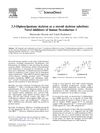
August 2007 in “Bioorganic & medicinal chemistry letters” This study developed a new competitive 5alpha-reductase inhibitor with an IC(50) of 0.84 microM using a novel chemical structure.

This review summarizes the proposed model that describes how different shapes of 1alpha,25(OH)2D3 ligands interact with the vitamin D receptor to mediate genomic and rapid responses in cells.
 11 citations
,
December 2018 in “Assay and Drug Development Technologies”
11 citations
,
December 2018 in “Assay and Drug Development Technologies” This review highlights the challenges in screening for steroid 5 alpha-reductase inhibitors and discusses significant variability in the effectiveness of finasteride and dutasteride, calling for standardized testing methods to develop safer, more specific inhibitors from herbal preparations.
 196 citations
,
May 2001 in “The journal of investigative dermatology/Journal of investigative dermatology”
196 citations
,
May 2001 in “The journal of investigative dermatology/Journal of investigative dermatology” This study found that SZ95 sebocytes and HaCaT keratinocytes exhibit distinct enzyme expressions and activities, implicating their different roles in androgen metabolism and homeostasis in vitro.
 24 citations
,
July 2017 in “Structure”
24 citations
,
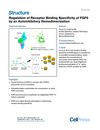
July 2017 in “Structure” In this study, researchers found that ligand homodimerization controls the receptor binding specificity of the FGF9 subfamily, preventing off-target activation of FGFR "b" isoforms.
19 citations
,
March 2010 in “Steroids” This study found that specific steroids, particularly 5 and 7b, decreased growth of prostate and seminal vesicles and bound to the androgen receptor, showing comparable pharmacological activity to finasteride.
This review discusses finasteride's use in manipulating neuroactive steroid levels and its potential effects on behavior, reporting preclinical evidence and clinical observations but providing no new experimental results.
11 citations
,
October 2002 in “The Journal of Clinical Endocrinology & Metabolism” This study found that prepubertal Hispanic girls with idiopathic premature adrenarche did not show differences in 5 alpha-reductase or 11 beta-hydroxysteroid dehydrogenase activities compared to controls.
 10 citations
,
February 2008 in “Photochemistry and photobiology”
10 citations
,
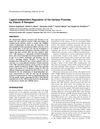
February 2008 in “Photochemistry and photobiology” This study suggests that the vitamin D receptor and hairless gene may directly regulate each other via a transcriptional mechanism, potentially explaining phenotypic similarities between atrichia and VDRRIIa rickets.
13 citations
,
January 2015 in “Steroids” This study generated a pharmacophoric model for both isoforms of steroidal 5α-reductase using 6-azasteroids, providing a structural framework for designing new inhibitors.
 12 citations
,
February 1998 in “Gene”
12 citations
,
February 1998 in “Gene” This study identified two high sulfur protein genes, B2E and B2F, in rats, which are expressed in hair cortical cells during anagen and contribute to hair fiber production.