 49 citations
,
January 2004 in “Journal of steroid biochemistry and molecular biology/The Journal of steroid biochemistry and molecular biology”
49 citations
,
January 2004 in “Journal of steroid biochemistry and molecular biology/The Journal of steroid biochemistry and molecular biology” This review discusses the development and selectivity of 5 alpha-reductase inhibitors, particularly non-steroidal ones, and reports no new clinical trial results.
 January 2020 in “Nihon Yakuri Gakkai nenkai yoshishu”
 This study suggests that 5α-reductase-mediated metabolism of progesterone contributes to the differentiation of endometrial stromal cells, potentially influencing progesterone levels and promoting cell differentiation.
 3 citations
,
January 2022 in “Precision medicine and clinical omics”
3 citations
,
January 2022 in “Precision medicine and clinical omics” This study reports that using molecular docking methods, beta-sitosterol and stigmasterol from Serenoa repens were identified as potential natural inhibitors of the 5AR1 enzyme, which could serve as novel treatments for androgenetic alopecia based on their inhibitory action observed in a laboratory setting.
May 2018 in “KU ScholarWorks (The University of Kansas)” This study found that in animal models of Tourette syndrome, stress-induced tic-like behaviors and sensorimotor gating deficits were reduced by finasteride, suggesting a role for neurosteroids like allopregnanolone.
1 citations
,
October 2024 in “JCEM Case Reports” In this case report, a patient with pseudovaginal perineoscrotal hypospadias due to 5α-reductase deficiency presented gender dysphoria, and after genomic sequencing confirmation, injectable testosterone undecanoate treatment successfully developed desired male secondary sexual characteristics.
 63 citations
,
November 1999 in “British journal of dermatology/British journal of dermatology, Supplement”
63 citations
,
November 1999 in “British journal of dermatology/British journal of dermatology, Supplement” This study observes the expression of mRNA for androgen receptor, 5α‐reductase, and 17β‐hydroxysteroid dehydrogenase in human dermal papilla cells.
 12 citations
,
June 2019 in “Psychoneuroendocrinology”
12 citations
,
June 2019 in “Psychoneuroendocrinology” This study found that in rodent models, the ability of D1 dopamine receptor activation to impair sensory gating is facilitated by 5α-reductase type 1, which produces allopregnanolone.
 November 2023 in “ACS Omega”
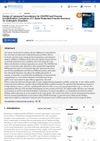
 This study reported that a novel cationic liposome formulation for delivering encapsulated Cas9 protein and sgRNA successfully decreased SRD5α2 mRNA expression by 29.7% in vitro, suggesting a potential alternative treatment option for conditions like prostate cancer and benign prostatic hyperplasia without current drug side effects.
 5 citations
,
July 2022 in “Orphanet journal of rare diseases”
5 citations
,
July 2022 in “Orphanet journal of rare diseases” This study found that RSPO1 mutations in patients with a 46XX disorder of sexual development contribute to impaired skin integrity and increased risk of squamous cell carcinoma in areas subject to friction.
51 citations
,
July 2013 in “Brain Research” Testosterone needs to be converted to DHT to reduce stress response in male rats.
 November 2022 in “Journal of the Endocrine Society”
 This case report highlights a novel NR5A1 gene variant associated with a severe 46,XY disorder of sex development, stressing the importance of genetic screening in similar cases.
12 citations
,
November 2024 in “Plants” This study found that the phytosterols β-sitosterol, stigmasterol, and campesterol have low-to-negligible inhibitory activity against steroidal 5α-reductase type 2 compared to the synthetic inhibitor dutasteride, with β-sitosterol showing the highest activity among the tested phytosterols.
 1 citations
,
January 2013 in “MedChemComm”
1 citations
,
January 2013 in “MedChemComm” This study characterized the SARM PF-05314882, finding it demonstrates anabolic activity in rats with minimal effects on the prostate, seminal vesicles, and luteinizing hormone levels.
March 2021 in “Medico-Legal Update” In this study, no significant change in androgen receptor gene expression was found in females with recurrent spontaneous abortion, but a mutant genotype may offer some protection against the condition.
April 2026 in “The Journal of Steroid Biochemistry and Molecular Biology”  237 citations
,
December 2001 in “Urology”
237 citations
,
December 2001 in “Urology” This review discusses the role of 5α-reductase in prostate development and BPH, and reports no new clinical results; ongoing trials are exploring dual isozyme inhibitors for improved treatment efficacy.
 38 citations
,
October 2014 in “Current Opinion in Endocrinology, Diabetes and Obesity”
38 citations
,
October 2014 in “Current Opinion in Endocrinology, Diabetes and Obesity” This review discusses the clinical and molecular history of 5-alpha reductase deficiency, highlighting its role in male sexual differentiation and potential therapeutic applications, but reports no new research outcomes.
3 citations
,
August 2010 in “Letters in Drug Design & Discovery” 129 citations
,
January 2004 in “Journal of medicinal chemistry” This study synthesized nonsteroidal ligands as second-generation androgen receptor agonists and identified three compounds with significant anabolic activity and moderate to minimal androgenic activity in vivo.
8 citations
,
March 2012 in “Mass spectrometry letters” This study observed that the isotope-dilution GC-MS technique can assess 5α-reductase activity more effectively than conventional methods in rat liver S9 fractions, particularly at low testosterone levels.
64 citations
,
March 2008 in “Neuropsychopharmacology” 227 citations
,
January 1998 in “Journal of biological chemistry/The Journal of biological chemistry” This study suggests that the residues Val-889 and Arg-752 in the androgen receptor steroid binding domain are crucial for the intermolecular interaction necessary for receptor dimerization and function.
 November 2012 in “Endocrine Practice”
 This review outlines the physiological roles of 5a-reductases and highlights the need for further research to better understand their function and minimize adverse effects from their inhibitors used in treatment.
 August 2025 in “ACS Omega”
 This study synthesized and evaluated hydroxycinnamate derivatives for their ability to inhibit human SRD5A1, finding that three compounds showed significant inhibitory activity and low cytotoxicity. Compound 10a notably reduced SRD5A1 protein expression in cells, suggesting potential for nonsteroidal treatment of androgen-related conditions.
26 citations
,
September 2005 in “Pharmacology Biochemistry and Behavior” This study found that inhibiting the 5alpha-reductase 2 pathway in male rats affects brain sexual differentiation and leads to reproductive changes, including increased pre-implantation loss despite unchanged copulatory potential.
 4 citations
,
September 2010 in “Medical Hypotheses”
4 citations
,
September 2010 in “Medical Hypotheses”  8 citations
,
January 1991 in “European Urology”
8 citations
,
January 1991 in “European Urology” This study found that the 5α-steroid metabolite profile in men with inherited 5α-reductase deficiency is similar to those taking the drug finasteride, suggesting the gene affects multiple steroid substrates.
December 2022 in “Scientific Reports” This study found that caffeic acid amide derivative, compound 4, effectively inhibited steroid 5α-reductase type 1 in vitro, suggesting potential for development as a treatment for androgenic alopecia.
August 2025 in “OPAL (Open@LaTrobe) (La Trobe University)” This study found that hydroxycinnamate derivatives, especially a compound named 10a, effectively inhibited SRD5A1 activity and protein expression in cell assays, suggesting potential for treating androgen-related conditions.
 68 citations
,
April 2002 in “Journal of Alternative and Complementary Medicine”
68 citations
,
April 2002 in “Journal of Alternative and Complementary Medicine” This study suggests that botanical 5AR inhibitors like Serenoa repens and β-sitosterol may improve symptoms of androgenetic alopecia, with 60% of treated subjects showing improvement compared to placebo.