305 citations
,
March 2008 in “AJP Endocrinology and Metabolism” This article reviews the regulation and roles of spermidine/spermine-N(1)-acetyltransferase (SSAT) in polyamine metabolism and its potential as a target in cancer and other diseases, without reporting new experimental results.
128 citations
,
December 2006 in “Journal of Biological Chemistry” This study found that overexpression of the enzyme spermidine/spermine N1-acetyltransferase in mice was associated with increased fat oxidation and a leaner phenotype, while knock-out mice exhibited increased fat accumulation.
124 citations
,
July 1997 in “Journal of Biological Chemistry” This study found that overexpression of an enzyme in transgenic mice led to distorted polyamine levels, resulting in permanent hair loss and female infertility.
 61 citations
,
July 2011 in “PLOS ONE”
61 citations
,
July 2011 in “PLOS ONE” This study provides the first direct evidence that spermidine can stimulate hair growth and modulate human epithelial stem cell biology in cultured human hair follicles.
54 citations
,
February 2002 in “Carcinogenesis” This study suggests that activation of polyamine catabolism in K6-SSAT transgenic mice may significantly increase skin tumor development and progression to carcinomas following chemical induction.
54 citations
,
May 2001 in “Journal of Investigative Dermatology” This study suggests that increased putrescine levels may disrupt normal hair follicle development in transgenic mice, leading to hair loss and altered skin structure, yet these mice appear more resistant to skin tumorigenesis.
43 citations
,
February 1999 in “Biochemical Journal” This study found that transgenic mice overexpressing the SSAT gene under a metallothionein promoter suffered delayed hair loss and were highly sensitive to polyamine analogues, which led to significant liver changes and mortality.
37 citations
,
February 2005 in “Journal of Investigative Dermatology” This research suggests that defects in keratinocyte differentiation due to putrescine accumulation in SSAT transgenic mice lead to skin changes and hair loss, and reducing putrescine can promote hair regrowth.
 20 citations
,
January 2021 in “GeroScience”
20 citations
,
January 2021 in “GeroScience” This study found that administering spermidine to aged mice for six months significantly reduced various age-related conditions, including brain, heart, kidney, liver issues, and hair loss, possibly due to decreased telomere attrition.
13 citations
,
July 2015 in “Archives of dermatological research” This study found that the spermidine analog N1-methylspermidine prolonged hair follicle growth and decreased inflammation and oxidative stress in cultured hair follicles, suggesting potential relevance for treating inflammatory scalp diseases.
13 citations
,
March 1999 in “Biochemical Journal” In this study, transgenic mice overexpressing the SSAT gene were highly sensitive to polyamine analogues, leading to severe liver changes and high mortality rates after treatment.
 8 citations
,
October 2017 in “Dermatology practical & conceptual”
8 citations
,
October 2017 in “Dermatology practical & conceptual” This study found that a spermidine-based nutritional supplement increased the number of anagen phase hair follicles in healthy humans, suggesting potential benefits for hair loss conditions.
 3 citations
,
June 2011 in “EFSA Journal”
3 citations
,
June 2011 in “EFSA Journal” This review evaluates health claims regarding spermidine's contribution to normal hair growth and finds no evidence to support a cause-and-effect relationship.
3 citations
,
April 2002 in “Animal Science” This study found that intradermal spermidine injections stimulated cell proliferation and increased fibre length growth rate in wool follicles of Merino lambs, without significantly affecting fibre diameter.
2 citations
,
November 2017 in “Histochemistry and Cell Biology” This study observed varying levels of polyamines in different compartments of rat hair follicles, indicating their potential involvement in hair growth, especially in the matrix and inner root sheath layers.
2 citations
,
May 2006 in “Journal of Separation Science” This study describes a capillary GC method for accurately measuring spermidine levels in hair lotions, confirming its precision and specificity for this application.
 1 citations
,
December 2011 in “EFSA Journal”
1 citations
,
December 2011 in “EFSA Journal” This opinion from the EFSA Panel concludes that the health claim regarding spermidine prolonging the anagen phase of the hair cycle does not meet regulatory criteria as it is related to disease treatment.
October 2025 in “Physiologia” In this exploratory in vitro study, treatment with spermidine increased cell viability and altered gene expression in human epidermal keratinocytes, suggesting potential benefits to cellular health and function, though effects on mitochondrial markers were not significant.
 January 2025 in “MEDS Public Health and Preventive Medicine”
 In this study, oral spermidine supplementation was found to significantly prolong the hair follicle anagen phase and reduce hair loss, with effects persisting three months after treatment in healthy participants, suggesting potential therapeutic benefits for hair loss conditions.
 July 2012 in “EFSA supporting publications”
 This technical report from the European Food Safety Authority responds to comments on its previous scientific opinion regarding a health claim about spermidine and hair growth, reporting no new experimental results.
19 citations
,
March 2016 in “Frontiers in Plant Science” This study identified that spermidine-mediated activation of eIF5A by hypusination plays a significant role in Arabidopsis thaliana growth, flowering time, stress adaptation, and development, including changing root and aerial architecture.
91 citations
,
July 2004 in “Journal of Biological Chemistry” This study found that overexpression of the enzyme SSAT in a mouse model significantly reduced prostate tumor size and progression, suggesting it could be a promising strategy against prostate cancer.
42 citations
,
February 1996 in “Journal of Investigative Dermatology” This study found that spermidine, a polyamine, plays an essential role in hair growth in sheep follicles, while spermine is not required for normal follicle function.
 30 citations
,
July 2010 in “Experimental Dermatology”
30 citations
,
July 2010 in “Experimental Dermatology” This article reviews the role of polyamines in hair follicle growth and discusses potential therapeutic applications but provides no new clinical results.
 12 citations
,
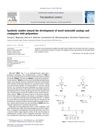
February 2010 in “Tetrahedron Letters”
12 citations
,
February 2010 in “Tetrahedron Letters” This article describes the synthesis of novel polyamine-modified minoxidil analogs and conjugates to potentially enhance minoxidil's biological activity, selectivity, and water solubility, but reports no new biological results.
 10 citations
,
June 2001 in “Annals of neurology”
10 citations
,
June 2001 in “Annals of neurology” This study reports that patients with Alzheimer's disease have increased levels of polyamines in their hair.
2 citations
,
January 2020 Certain dietary supplements can improve hair health.
 2 citations
,
January 2014 in “Hair therapy & transplantation”
2 citations
,
January 2014 in “Hair therapy & transplantation” This review explores the molecular controls of hair follicle cycling and highlights the challenge of developing effective treatments for common hair disorders without providing new clinical results.
January 2011 in “Archivio Istituzionale della Ricerca (Universita Degli Studi Di Milano)” This study found that a combination of spermidin, rutine, and zeaxantine effectively reduced staurosporin-induced apoptosis in cultured hair follicle dermal papilla cells, potentially preventing the regression phase in the hair follicle cycle.
 July 2016 in “Journal of Investigative Dermatology”
 This article introduces an online quiz by the Journal of Investigative Dermatology, connecting its questions to findings from a specific JID article, and it reports no new results.