5 citations
,
November 2005 This review discusses the applications of confocal laser scanning microscopy in visualizing fluorescent compounds within the skin, noting its potential for tracking drug carriers and enhancing penetration studies, but reports no new results.
 September 2017 in “Journal of Investigative Dermatology Symposium Proceedings”
 This review discusses the clinical features of hypopigmented mycosis fungoides in primary cutaneous T cell lymphoma and reports no new clinical results.
9 citations
,
March 2023 in “GeroScience” 1 citations
,
March 2023 in “Pharmaceutics” This study found that PBMCsec has anti-fibrotic effects on mouse and human skin scars by regulating pro-fibrotic gene expression and inhibiting myofibroblast differentiation and elastic fiber breakdown.
1 citations
,
January 2026 in “JDDG Journal der Deutschen Dermatologischen Gesellschaft” In this study, LC-OCT was used to distinguish between subtypes of scarring alopecia, laying the groundwork for further hypotheses and future research in larger and longitudinal studies to examine treatment responses.
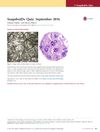 August 2016 in “Journal of Investigative Dermatology”
 This quiz based on a Journal of Investigative Dermatology article reports no new clinical results but serves as an educational tool for diagnosing scalp conditions, including scalp psoriasis and psoriatic alopecia.
1 citations
,
January 2024 in “Clinical Cosmetic and Investigational Dermatology” This case report discusses a 58-year-old female diagnosed with oral lichen sclerosus, an extremely rare form of the disorder, which improved following treatment with topical and intralesional corticosteroids, highlighting the importance of recognizing this rare condition in the oral mucosa.
 June 2024 in “British Journal of Dermatology”
 In this prospective observational study of 96 dermatomyositis patients, 47 showed scalp involvement, with significant symptoms like scalp inflammation, itching, and hair loss linked to myositis-specific antibodies. The study highlighted unique dermatopathological features in the scalp and emphasized the considerable morbidity caused by scalp dermatomyositis.
 April 2017 in “Journal of Investigative Dermatology”
 In this study, HPH-15, a newly synthesized compound, demonstrated potential in reducing skin fibrosis in a mouse model by targeting underlying pathogenic mechanisms and exhibited a good safety profile, warranting further clinical trials for fibrotic skin disorders like systemic sclerosis.
 December 2013 in “Praxis medica”
 In this study, a strong correlation was found between the scores of two dermatology-specific quality of life instruments, DLQI and Skindex-16, suggesting they can provide complementary insights for assessing patients with skin diseases.
September 2021 in “Journal of the American Academy of Dermatology” This study found that reported stress and hair growth changes related to facial/body hair excess or scalp hair loss differ among ethnic gender minority groups, with black and other ethnic respondents experiencing more stress compared to Caucasians, particularly in relation to facial/body hair excess.
April 2005 in “Journal of Investigative Dermatology” This compilation reviews multiple dermatologic studies, reporting findings such as the lack of a psoriasis-susceptibility allele in cluster 17, and highlighting a mouse model for studying hair follicle formation, among others.
December 2025 in “ILDS-DEV”  10 citations
,
January 2003 in “Journal der Deutschen Dermatologischen Gesellschaft”
10 citations
,
January 2003 in “Journal der Deutschen Dermatologischen Gesellschaft” In this study, hydroxychloroquine treatment in patients with scleromyxoedema led to complete or partial remission of skin symptoms and improved mobility, though it did not affect paraproteinaemia.
 August 2018 in “Journal of the American Academy of Dermatology”
 Reflectance confocal microscopy helped diagnose and manage a woman's hair loss without needing a biopsy.
 7 citations
,
August 2015 in “Dermatologic Surgery”
7 citations
,
August 2015 in “Dermatologic Surgery” This study found that cross beam laser is a reliable tool for assessing scalp laxity in hair restoration surgery, with results comparable to the Mayer elasticity scale.
 14 citations
,
November 1963 in “The journal of investigative dermatology/Journal of investigative dermatology”
14 citations
,
November 1963 in “The journal of investigative dermatology/Journal of investigative dermatology” This article reviews the identification and characterization of soluble proteins in horny tissues such as calluses and psoriatic scales, but reports no new clinical results.
 April 2019 in “Journal of Investigative Dermatology”
 This study reported that in mycosis fungoides and Sezary syndrome, there is male predominance and younger age of presentation in early-stage disease, with significant data collection efforts supporting biomarker identification.
7 citations
,
April 2021 in “Journal of Lower Genital Tract Disease” This study concluded that erosive lichen sclerosus is a distinct subtype marked by red patches on hairless skin, while ulcerated lichen sclerosus typically results from trauma in uncontrolled dermatosis.
2 citations
,
February 2018 This study found that Raman spectroscopy has potential for detecting biophysical differences in basal cell carcinoma compared to normal skin structures, supporting its future use in Mohs surgery.
 December 2025 in “Philippine Journal of Internal Medicine”
 This case report describes a 45-year-old woman with an SLE-SSc overlap syndrome who experienced significant improvement in symptoms after tailored immunosuppressive therapy including prednisone and mycophenolate mofetil.
5 citations
,
May 2001 in “Proceedings of SPIE, the International Society for Optical Engineering/Proceedings of SPIE” This study developed a double-wavelength laser scanning microphotometer to measure hair shaft and follicle absorbance, improving spatial resolution and reducing light scattering effects in vitro.
October 2025 in “Clinical and Experimental Pediatrics” In this case report and literature review, researchers identified a novel mutation in the CLDN1 gene linked to neonatal ichthyosis-sclerosing cholangitis syndrome and found that its phenotype varies widely, suggesting a multidisciplinary approach is crucial for management.
 December 2023 in “Clinical, cosmetic and investigational dermatology”
 This study found that combining dermoscopy with reflectance confocal microscopy is more sensitive and specific than using either method alone for assessing vitiligo disease activity and treatment response. Additionally, specific characteristics observed via these techniques correlated with either good or poor treatment outcomes.
 2 citations
,
January 2006 in “Technical report”
2 citations
,
January 2006 in “Technical report” This chapter reviews the development of skin-specific outcome instruments for autoimmune diseases like cutaneous lupus erythematosus and dermatomyositis, highlighting a need for a broader community-involved process across other diseases but reports no new results.
1 citations
,
November 2016 in “Frontiers in neurology” In this case report, a patient with Cronkhite-Canada syndrome also had mononeuritis multiplex, and the authors suggest that an autoimmune mechanism may be involved based on steroid responsiveness and electrophysiological findings.
 November 2020 in “Journal of The American Academy of Dermatology”
 This study examined dermoscopic features in African-American women with different types of alopecia and found that a perifollicular pink blush, potentially indicating inflammation, was common, particularly resolved with anti-inflammatory treatment, suggesting dermoscopy could aid in management.
December 2025 in “Advanced Healthcare Materials” This study introduces a spherical skin model that effectively mimics key features of human skin, offering a scalable and rapid alternative for non-animal dermatological and cosmetic testing.
 June 2026 in “bioRxiv (Cold Spring Harbor Laboratory)”
 This study found that inhibiting the interaction between HOTAIR and EZH2 can block pro-fibrotic gene expression in fibroblasts and interfere with tissue remodeling in systemic sclerosis patient skin.
2 citations
,
June 2025 in “Medicina” This retrospective study in pediatric patients with Sjögren's syndrome found consistent indications of tear film instability and identified systemic features like arthralgia, Raynaud's phenomenon, and frequent autoantibody positivity, underscoring the value of integrating clinical and ophthalmological assessments for early diagnosis.