6 citations
,
December 2018 in “International Journal of Cosmetic Science” This study found that a highly resistant structure, located at the interface between the cuticle and cortex of human hair, acts as a penetration barrier, which the authors propose to name the "cuticle anchored resistant base" or CARB.
 305 citations
,
March 2018 in “International journal of molecular sciences”
305 citations
,
March 2018 in “International journal of molecular sciences” In this review, the authors summarize classical and recent insights into the biology and treatment of hypertrophic scars and keloids, concluding that while understanding and strategies have advanced, effective prevention and treatments remain unsatisfactory.
 October 2014 in “Aktuelle Dermatologie”
 This study reports that elderly men with baldness and comorbid conditions experienced persistent scalp erosions following topical treatment with imiquimod or diclofenac, suggesting alternative therapies should be considered for this group.
 10 citations
,
May 2007 in “Journal of Prosthetic Dentistry”
10 citations
,
May 2007 in “Journal of Prosthetic Dentistry” This clinical report describes a method for using tattoo marks to help align a facial prosthesis for a patient with skin flap reconstruction.
August 2025 in “مجلة جامعة الحضارة للبحوث التطبيقية والإنسانية” This study conducted in Yemen involving 50 patients found that tissue expansion was effective for correcting scars and defects from post-burn and post-war injuries, achieving a 78% satisfaction rate with minimal complications.
 January 2025 in “Open Medicine”
 This study found that high-concentration cell-free adipose extract effectively reduced collagen deposition and blood vessel formation in a rabbit ear model, showing promise for preventing and treating hypertrophic scars.
 16 citations
,
February 2018 in “Journal of The American Academy of Dermatology”
16 citations
,
February 2018 in “Journal of The American Academy of Dermatology” This study found that scalp involvement in dermatomyositis consistently shows a nonscarring pattern with chronic telogen effluvium, featuring telangiectasia and mucin deposition as universal histologic markers.
 35 citations
,
October 2017 in “Signal Transduction and Targeted Therapy”
35 citations
,
October 2017 in “Signal Transduction and Targeted Therapy” This study found that fibromodulin significantly reduces scar formation and boosts scar strength in rodent and porcine models, suggesting potential for FMOD-based therapies in cutaneous wound repair.
3 citations
,
November 2015 in “Indian Journal of Surgery”  August 2022 in “Archives of pediatric surgery”
 This article reviews cultural differences in the incidence of hair-thread tourniquet syndrome and finds it may be less prevalent in Iranian children compared to Europe, possibly due to social and cultural factors.
 January 2024 in “International Journal of Advanced Research”
 This case report describes a 56-year-old woman with wooly hair and skin lesions, who experienced reduced plaque size and thickness after using 6% salicylic acid topically for three months.
January 1994 in “Journal of the society of cosmetic chemists”  May 2015 in “Journal of The American Academy of Dermatology”
 A heart transplant patient developed a skin condition called epidermodysplasia verruciformis after taking immune-suppressing drugs.
 17 citations
,
May 2016 in “Archives of Dermatological Research”
17 citations
,
May 2016 in “Archives of Dermatological Research” This study identified specific reflectance confocal microscopy features that help differentiate scarring from non-scarring alopecia, providing a non-invasive diagnostic tool.
 7 citations
,
March 2017 in “Annals of Plastic Surgery”
7 citations
,
March 2017 in “Annals of Plastic Surgery” In this study, researchers developed a new variant of the Mercedes flap with releasing incisions for reconstructing medium-sized scalp defects, demonstrating complete defect closure without complications in three patients following a single operation with excellent aesthetic outcomes.
June 2020 in “The journal of investigative dermatology/Journal of investigative dermatology” This study found that fibrosis-associated trochanters in central centrifugal cicatricial alopecia are enriched with hair follicle stem cells and may indicate a disrupted stem cell niche contributing to scarring.
30 citations
,
August 2004 in “British Journal of Plastic Surgery” This case study reports that a patient with extensive scalp scarring achieved an excellent cosmetic result when transplanted chest hair grew from an average of 4 cm at transplant to 15 cm after 18 months.
 3 citations
,
June 2020 in “Dermatologic Surgery”
3 citations
,
June 2020 in “Dermatologic Surgery” This study found that dense-packing megasession follicular unit extraction is a safe and effective method for treating extensive scarring alopecia, with a graft survival rate of 85% and high patient satisfaction.
48 citations
,
August 2001 in “Experimental dermatology” This study developed a rapid, cost-effective three-dimensional skin equivalent model using human dermal fibroblasts, collagen, and hair follicles, which closely resembles natural human skin and can be used for autologous transplantation.
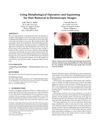
This study presents a new approach to automatically remove hair artifacts from dermoscopic images, which reportedly performed well compared to existing methods like DullRazor using the PH2 datasets.
2 citations
,
October 1962 in “Archives of Dermatology” This article discusses various dermatologic surgical methods for managing skin conditions but reports no clinical results; the authors note that some manifestations of senile skin are not amenable to these procedures.
 13 citations
,
February 2018 in “Plastic and Reconstructive Surgery”
13 citations
,
February 2018 in “Plastic and Reconstructive Surgery” The study found that a specific signaling pathway helps skin wounds heal faster but may lead to larger scars.
10 citations
,
September 1994 in “International Journal of Dermatology” This case report describes three Iranian men with gradual reddish-brown pigmentation on their cheeks and preauricular areas since childhood, unresponsive to sunblocks and topical steroids.
 10 citations
,
May 2009 in “Journal of The American Academy of Dermatology”
10 citations
,
May 2009 in “Journal of The American Academy of Dermatology” This case report describes a dual transposition flap technique for closing large scalp defects post-Mohs surgery, achieving minimal alopecia and scar visibility, though it is based on a single patient.
64 citations
,
August 1977 in “PubMed” This article describes the skin changes seen in acute and chronic graft-vs-host reactions after bone marrow transplantation, highlighting the potential for early recognition due to the visibility of these changes, but reports no new clinical results.
1 citations
,
August 2023 in “International Journal of Surgery Case Reports” In this study, free flaps, specifically the ALT-free tissue transfer, were found to be safe and reliable for reconstructing large scalp defects requiring both scalp and skull repairs, with consistent results observed in clinical applications.
 3 citations
,
April 2022 in “Cutis”
3 citations
,
April 2022 in “Cutis” This article reviews central centrifugal cicatricial alopecia, particularly in women of African descent, and explains its progression and symptoms but provides no new clinical findings.
 September 2023 in “Cosmoderma”
 This abstract describes a rare case of a young Kashmiri woman with neglected scarring alopecia due to favus, a type of tinea capitis more commonly observed in Kashmiri children.
 9 citations
,
December 2022 in “Antibiotics”
9 citations
,
December 2022 in “Antibiotics” This study found that coconut seed extract may effectively treat scabies in rabbits by improving infection signs and causing high mite mortality, suggesting its potential as a cost-effective herbal alternative.
 March 2018 in “John Wiley & Sons, Ltd eBooks”
 This chapter reviews classification and techniques of surgical therapies for treating stable, recalcitrant vitiligo, highlighting their role alongside non-surgical methods for small, specific cases.