20 citations
,
April 2023 in “Frontiers in Public Health” This study found that psychological and social reporting after trauma with scarring can indicate a person's reaction and susceptibility to psychopathology.
 12 citations
,
April 2016 in “PLoS ONE”
12 citations
,
April 2016 in “PLoS ONE” This study found that the Chinese version of the Polycystic Ovary Syndrome Quality of Life Questionnaire (Chi-PCOSQ) is sensitive to clinical changes and effectively assesses health-related quality of life in Chinese women with PCOS.
1 citations
,
January 2025 in “JEADV Clinical Practice” This study reported that the AAPPO tool effectively distinguishes between patients with alopecia areata based on scalp hair loss severity, whereas the EQ‐5D‐5L may underestimate the specific disease burden, particularly in psychological and social aspects.
September 2009 in “MedEdPORTAL” This resource outlines a structured oral examination approach for internal medicine students using a case study of systemic lupus erythematosus, highlighting its convenience and effectiveness based on student feedback.
June 1985 in “Journal of the American Academy of Dermatology”  July 2024 in “Medical alphabet”
 This study found that the SBN system effectively evaluates and describes the severity and clinical variant of alopecia areata using a standardized scale, aiding in patient management and disease course prediction.
40 citations
,
October 2017 in “Acta Dermato Venereologica” This study found that illness perception, as measured by the Revised Illness Perception Questionnaire, was significantly associated with health-related quality of life in patients with primary cutaneous T- and B-cell lymphomas.
13 citations
,
April 2021 in “Value in Health” This review categorizes 59 modifications of the Dermatology Life Quality Index across multiple studies, highlighting the need for further validation of these customized health-related quality of life tools in dermatology.
 8 citations
,
August 2018 in “Anais Brasileiros De Dermatologia”
8 citations
,
August 2018 in “Anais Brasileiros De Dermatologia” Researchers translated and validated the WAA-QoL questionnaire into Brazilian Portuguese, finding it to be a reliable tool for assessing quality of life in women with female pattern hair loss.
44 citations
,
October 2020 in “Arthritis Care & Research” This review summarizes various indices used to assess disease activity and damage in systemic lupus erythematosus, highlighting challenges in universal consensus and their practical applications in research and clinical settings.
 15 citations
,
October 2015 in “PLOS ONE”
15 citations
,
October 2015 in “PLOS ONE” This study developed the Chi-PCOSQ, a culturally adapted Chinese assessment tool for measuring health-related quality of life in women with polycystic ovary syndrome, showing promising reliability and validity.
July 2026 in “Journal of the American Academy of Dermatology” December 2025 in “Journal of Skin and Sexually Transmitted Diseases”  9 citations
,
January 2014 in “Postepy Dermatologii I Alergologii”
9 citations
,
January 2014 in “Postepy Dermatologii I Alergologii” This study evaluated the Polish version of Skindex-29, demonstrating its reliability and validity as a tool to measure quality of life in dermatology patients.
3 citations
,
November 2023 in “BMC Public Health” In this study, EQ-5D-5L and SF-6DV2 showed suitable measurement properties in assessing health utility among Chinese university staff and students, though they reported differences in sensitivity and cannot be used interchangeably.
2 citations
,
October 2023 in “Frontiers in Public Health” This study found that in Hidradenitis Suppurativa patients, the psychosocial subscale of Skindex-17 is most relevant for assessing quality of life across different severity levels, with irritation and pain becoming more pertinent as severity progresses.
June 1985 in “Journal of the American Academy of Dermatology”  September 2019 in “Journal of Investigative Dermatology”
 This study found that the clinical severity of hidradenitis suppurativa, evaluated through Hurley staging, VAS, PGA, and SAHS, significantly affects patients' work absenteeism and presenteeism, with presenteeism being more prevalent.
1 citations
,
June 2020 in “British Journal of Dermatology” This article reviews the psychological impact of alopecia areata on patients, including lower self-esteem and poorer quality of life, and reports no new clinical results.
 September 2015 in “Dermatologic Surgery”
 In this study, the researchers developed a computer-aided imaging system to quantitatively measure baldness in Chinese women with female pattern hair loss, potentially improving the precision of severity evaluation compared to traditional scales.
November 2022 in “Skin appendage disorders” In this study, the authors successfully translated, culturally adapted, and validated the Women's Androgenetic Alopecia Quality of Life questionnaire into Spanish, demonstrating it as a reliable tool for assessing female pattern hair loss.
2 citations
,
July 2024 in “Journal of Cosmetic Dermatology” The HAIR-Q is a reliable tool for assessing patient satisfaction with hair loss treatments.
 September 2019 in “Journal of Investigative Dermatology”
 This qualitative study found that healthcare professionals view psychosocial needs as a major reason for offering therapeutic education and self-management support for psoriasis, but efficacy remains uncertain.
 May 2018 in “Actas Dermo-Sifiliográficas”
 This study validated a Spanish version of the Hair Specific Skindex 29 scale for assessing quality of life in women with female androgenetic alopecia, showing similar psychometric properties to the original.
June 2016 in “Annals of the Rheumatic Diseases” This study identified early SLE symptoms reported by German patients, suggesting that patient-reported information can enhance the development of classification criteria for early diagnosis.
 5 citations
,
October 2021 in “Vlaams Diergeneeskundig Tijdschrift”
5 citations
,
October 2021 in “Vlaams Diergeneeskundig Tijdschrift” This study found that the skin and coat scoring protocol for dogs is most reliable when the same person assesses greasiness and glossiness over time.
 November 2023 in “The journal of investigative dermatology/Journal of investigative dermatology”
 This study developed a questionnaire based on Andersen’s behavioral model to explore psychological well-being and mental health help-seeking behaviors among alopecia areata patients from underserved communities, aiming to better understand factors influencing their mental healthcare utilization.
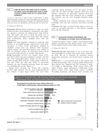
This study suggests that fatigue, joint pain, and light sensitivity are significant impacts for systemic lupus erythematosus patients, highlighting areas of unmet need in current treatment options.
 2 citations
,
February 2024 in “Journal of the European Academy of Dermatology and Venereology”
2 citations
,
February 2024 in “Journal of the European Academy of Dermatology and Venereology” This study resulted in a draft version of the Patient‐Reported Impact of Dermatological Diseases measure, PRIDD, which includes 27 items refined from patient consensus and is now undergoing psychometric testing.
 June 2021 in “Journal of The American Academy of Dermatology”
 This correspondence reports that some men with androgenetic alopecia can exhibit hair thinning patterns more typical of females, with variations observed between Australian and Korean populations.