6 citations
,
January 2020 in “Open Journal of Psychiatry” This study concludes that the Greek version of the Dysmorphic Concern Questionnaire is a reliable and valid tool for assessing body dysmorphic disorder-related concerns in both research and clinical settings.
November 2024 in “SKIN The Journal of Cutaneous Medicine” This study found that generic quality of life questionnaires, like the SF-36 and DLQI, are not sensitive enough to detect differences in health-related quality of life between patients with varying severity of alopecia areata.
6 citations
,
December 2021 in “Journal of Clinical Medicine” This study introduced the Lichen Planus Activity and Damage Index (LiPADI), which effectively assesses the severity and progression of lichen planus, aligning well with other clinical indicators.
 June 2021 in “Dermatologic surgery”
 This review discusses the measurement of patient satisfaction in acne scar treatment studies, highlighting the need for standardized satisfaction questions to enhance comparability and future research; it reports no new clinical results.
 3 citations
,
November 2017 in “The American Journal of Cosmetic Surgery”
3 citations
,
November 2017 in “The American Journal of Cosmetic Surgery” This study evaluated donor area scars in hair restoration using a new assessment scale and found that most patients had good quality scars, with average scores of 15 or less out of 40.
3 citations
,
October 2020 in “Arthritis Care & Research” This review discusses the advancement and validation of outcome measures for pediatric systemic lupus erythematosus to improve disease monitoring and treatment precision but reports no new clinical findings.
 September 2006 in “Plastic and Reconstructive Surgery”
 This study found a 31% decrease in antidepressant use following cosmetic surgery, suggesting that such procedures may influence medication use by improving self-esteem.
 16 citations
,
February 2017 in “Dermatology and Therapy”
16 citations
,
February 2017 in “Dermatology and Therapy” This study established and validated a visual scale to assess hair shedding in women with thick hair, finding it effective in distinguishing greater hair loss among women with female pattern hair loss compared to those without.
December 2021 in “Skin appendage disorders” This study developed and validated an objective dermoscopic severity score for evaluating female pattern hair loss, which may serve as a supplementary outcome measure in therapeutic trials.
9 citations
,
April 2024 in “The Oncologist” This study found that sacituzumab govitecan improved health-related quality of life in most areas for patients with HR+/HER2− metastatic breast cancer compared to chemotherapy, except for increased diarrhea, supporting its use as a treatment option.
1 citations
,
March 2025 in “Pediatric Dermatology” This review highlights the evolution of assessment tools for alopecia areata, revealing newer tools that evaluate beyond scalp hair loss, including psychosocial impact and disease chronicity, which can aid clinicians in developing individualized treatment strategies and enhance research in pediatric dermatology.
January 2010 in “Belarusian State Pedagogical University repository (Belarusian State Pedagogical University)” This question-based abstract lists potential survey questions regarding contraception, hormone therapy, and related health issues but presents no new research findings.
4 citations
,
November 2024 in “British Journal of Nursing” This article guides advanced clinical practitioners in performing dermatological assessments and examinations, addressing the common issue of feeling unprepared among these practitioners despite the high prevalence of skin problems they encounter.
April 2018 in “Clinical and Experimental Health Sciences” This study found that a school-based nutritional program improved adolescents' waist measurements, blood counts, and reduced rates of certain skin and mucosal conditions associated with vitamin deficiency.
May 2024 in “JEADV Clinical Practice” In this study, researchers found that among patients with severe alopecia areata, a change in SALT scores of 42 or 43 points represents meaningful improvement, highlighting the need to consider individual treatment goals beyond conventional low SALT score targets when assessing treatment benefits.
 1 citations
,
January 2023 in “Annals of Dermatology”
1 citations
,
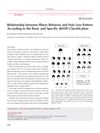
January 2023 in “Annals of Dermatology” The BASP classification helps predict patient behavior and improve treatment for hair loss.
 1 citations
,
February 2023 in “Clinical and Experimental Dermatology”
1 citations
,
February 2023 in “Clinical and Experimental Dermatology” This study validated the Women's Androgenetic Alopecia Quality of Life questionnaire as a reliable and valid measure of health-related quality of life in women with alopecia areata.
 39 citations
,
November 2017 in “Journal of The American Academy of Dermatology”
39 citations
,
November 2017 in “Journal of The American Academy of Dermatology” This review presents standardized methods for assessing and tracking hair loss in alopecia areata but reports no clinical results, with the authors noting time limitations in clinical practice.
September 2025 in “Middle East Fertility Society Journal” This study found that 10.3% of female high school students in Islamabad screened positive for PCOS, with associations including irregular menstrual cycles and higher BMI among those testing positive.
64 citations
,
October 2018 in “Thérapie” This report describes the enhancement of the French SNIIRAM/SNDS healthcare database through external data linkages, highlighting its potential use in medical research despite complexities in the integration process.
 125 citations
,
May 2007 in “Journal of The American Academy of Dermatology”
125 citations
,
May 2007 in “Journal of The American Academy of Dermatology” This study describes the development of the BASP classification system, providing a universal and systematic approach for classifying pattern hair loss in both men and women.
 November 2010 in “Value in Health”
 Using a call center to collect data in a trial for eye disease in diabetics led to high response rates and very little missing information.
1 citations
,
June 2019 in “Current Developments in Nutrition” This study found that after 12 weeks of taking 10 mg of S-equol daily, over 90% of participating perimenopausal and menopausal women reported improvements in symptoms like hot flashes, night sweats, and sleep disturbances.
 1 citations
,
February 2018 in “British Journal of Dermatology”
1 citations
,
February 2018 in “British Journal of Dermatology” The CWARTS tool is a promising method for assessing warts and could improve treatment and research.
 January 2025 in “Advances in Dermatology and Allergology”
 This study found that the Polish version of the AA-QLI questionnaire is a reliable and internally consistent tool for assessing health-related quality of life in Polish-speaking patients with alopecia areata.
 52 citations
,
March 2007 in “Dermatologic Therapy”
52 citations
,
March 2007 in “Dermatologic Therapy” This article describes the development and validation of a standardized instrument for measuring skin involvement in cutaneous lupus erythematosus, aiming to aid future clinical research and trials.
This study concluded that removing alopecia and mucous membrane components from the CLASI-A score limits the ability to capture crucial clinical information about cutaneous lupus erythematosus activity, recommending their retention.
5 citations
,
February 2023 in “Skin Health and Disease” In this study, the Swedish Hairdex-S was well-received by alopecia areata patients and demonstrated strong psychometric properties and consistency with the original version, supporting its use for patient quality of life evaluation and research.
 63 citations
,
November 2009 in “British journal of dermatology/British journal of dermatology, Supplement”
63 citations
,
November 2009 in “British journal of dermatology/British journal of dermatology, Supplement” This study found that the subtilisin protease Sub3 from Microsporum canis is essential for adherence to the feline epidermis but is not necessary for invading epidermal structures.
 29 citations
,
April 2020 in “Biomolecules”
29 citations
,
April 2020 in “Biomolecules” The study suggests that a 3D culture system using the RAD16-I peptide scaffold can help restore the original phenotype of hair follicle dermal papilla cells and support their osteogenic and adipogenic differentiation.