39 citations
,
November 2017 in “PubMed” This case series reported that low-dose naltrexone may benefit patients with lichen planopilaris by reducing scalp symptoms and slowing disease progression, with no adverse effects observed in the patients.
 1 citations
,
September 2021 in “Cureus”
1 citations
,
September 2021 in “Cureus” This study found that the rs1128977 SNP in the RXRG gene may be linked to altered clinical characteristics such as higher HDL-cholesterol levels and increased body mass index in individuals with dyslipidemia.
 July 2025 in “The Journal of Dermatology”
 This study identified common and unexpected adverse events associated with ritlecitinib in real-world use, providing insights into its safety profile for treating severe alopecia areata.
 January 2025 in “Medical Research Archives”
 This review discusses various applications of low level laser therapy and argues for a holistic evaluation of patients but reports no new clinical findings.
 December 2024 in “Surgery and Clinical Practice”
 This study suggests that Low-level Laser Therapy may improve pain and quality of life in women with Chronic Pelvic Pain Syndrome, though larger studies are needed to confirm these findings.
9 citations
,
February 2018 in “Journal of Patient-Reported Outcomes” This study developed two comprehensive patient-reported outcome measures for systemic lupus erythematosus to assess symptom fluctuations and impacts, following FDA guidelines, which may aid in clinical studies and practice.
 8 citations
,
September 2002 in “Genes to Cells”
8 citations
,
September 2002 in “Genes to Cells” This study suggests that label-retaining cells in the hair follicle contribute to follicular renewal, indicating a specific role in the hair cycle by proliferating during the late telogen phase.
 1 citations
,
March 2026 in “American Journal of Clinical Dermatology”
1 citations
,
March 2026 in “American Journal of Clinical Dermatology” In this Italian retrospective study, ritlecitinib 50 mg/day showed effectiveness and good tolerability for treating severe alopecia areata over 24 weeks, achieving significant hair regrowth particularly in adolescents, as well as improvements in eyebrows, eyelashes, nails, and quality of life, with mostly mild adverse effects.
 August 2016 in “Journal of Investigative Dermatology”
 This case report identifies a novel LIPH gene mutation linked to autosomal recessive woolly hair/hypotrichosis in a Japanese boy, expanding the spectrum of known mutations associated with this condition.
October 2025 in “Journal of the Endocrine Society” This case report documented the management of a 46-year-old female with Marine-Lenhart syndrome, combining antithyroids with minimally invasive sclerotherapy to achieve euthyroidism and reduce thyroid nodule size by 58%.
1 citations
,
January 2013 in “Lung India” This letter discusses how differentiating features in clinical and radiological findings can help distinguish pulmonary Langerhans cell histiocytosis and Birt-Hogg-Dube syndrome from lymphangioleiomyomatosis, noting overlapping symptoms but specific distinctive traits.
 5 citations
,
June 2001 in “Annals of Internal Medicine”
5 citations
,
June 2001 in “Annals of Internal Medicine” This report describes a case where rituximab provided durable remission in a patient with refractory aggressive diffuse B-cell lymphoma that was unresponsive to prior chemotherapy.
 August 2018 in “Journal of the American Academy of Dermatology”
 Reflectance confocal microscopy helped diagnose and manage a woman's hair loss without needing a biopsy.
 2 citations
,
June 2020 in “Dermatology and therapy”
2 citations
,
June 2020 in “Dermatology and therapy” In this case report, narrowband-UVB phototherapy successfully treated a rare instance of Graham Little-Piccardi-Lassueur syndrome, a variant of lichen planopilaris, as investigated through non-invasive imaging techniques.
 1 citations
,
April 2018 in “Rheumatology”
1 citations
,
April 2018 in “Rheumatology” This study found that 59.7% of lupus patients self-reported alopecia, which was linked to anti-Ro antibody presence and cutaneous SLE symptoms but not to age, ethnicity, or medication.
5 citations
,
April 2019 in “Veterinary Dermatology” In this case series, cats infested with Lynxacarus radovskyi developed self-induced alopecia similar to flea allergic dermatitis, primarily affecting the perianal area.
2 citations
,
June 2024 in “Dermatology” This study found that patients receiving active ritlecitinib doses reported greater satisfaction with hair growth compared to placebo, with high agreement observed between clinician evaluations of scalp hair improvement and patient satisfaction through week 48.

This review discusses loose anagen hair syndrome, a benign and self-limited condition predominantly affecting children, and highlights the importance of differentiating it from other hair disorders like telogen effluvium and trichotillomania, but reports no new results.
This chapter provides dermatology trainees with insights on managing lichen planopilaris, emphasizing treating active disease to prevent further hair loss and recommending a tapered course of oral steroids for disease stabilization.
 October 2025 in “Italian Journal of Dermatology and Venereology”
 This study reported that lichen planopilaris predominantly affects females over 60, with a registered prevalence rate of 0.02581%, and is often associated with autoimmune diseases like systemic lupus erythematosus, suggesting a need for further research to enhance treatment approaches.
 January 2017 in “Clinical approaches and procedures in cosmetic dermatology”
 This review explores clinical studies on low-level laser therapy (LLLT) for alopecia and suggests it may benefit patients unresponsive to conventional treatments, but larger studies are needed to confirm efficacy.

In this study involving 30 Kazakh women with systemic lupus erythematosus, the researchers found a strong correlation between disease activity (SELENA-SLEDAI scores) and organ damage (SLICC/ACR scores), which depended on disease duration and reliably reflected cumulative disease activity.
July 2025 in “Case Reports in Dermatology” This case report highlights that early signs like pili torti may precede lichen planopilaris in some patients, emphasizing the importance of timely intervention to prevent permanent hair loss.
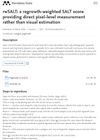 March 2026 in “Mendeley Data”
 In this study, researchers developed an open-source browser-based tool to enhance the reproducibility and accuracy of SALT score calculations from scalp photos, aimed particularly at assessing partial regrowth in alopecia areata patients on JAK inhibitor therapy.
January 2022 in “Faculty of 1000 Research Ltd” This case report documents digital gangrene as an unusual early sign of late-onset systemic lupus erythematosus in a 56-year-old man, which improved with rituximab treatment.
This study found that in early retinal neurogenesis in mice, the transcription factor Lhx2 regulates Sonic Hedgehog signaling by controlling expression of pathway genes like the co-receptors Gas1 and Cdon.
18 citations
,
January 2013 in “Evidence-based Complementary and Alternative Medicine” In this study, ALR was found to enhance both the proliferation and osteogenic differentiation of mouse bone marrow mesenchymal stem cells, potentially through specific signaling pathways.
 47 citations
,
June 2011 in “Movement Disorders”
47 citations
,
June 2011 in “Movement Disorders” The LRRK2-G2019S mutation in Parkinson's disease has a lifetime penetrance of 25-35%, and finasteride may help reduce symptoms in adult male Tourette syndrome patients.
July 2025 in “Journal of Investigative Dermatology” Scarring alopecia involves increased immune cells and specific gene changes near damaged hair follicles.
 February 2009 in “Journal of The American Academy of Dermatology”
 This study suggests that fractional infrared technology may effectively improve cervical skin laxity by enhancing dermal thickness without adverse effects in a small pilot group.