 408 citations
,
January 2017 in “Science”
408 citations
,
January 2017 in “Science” This study found that hair follicles in mice and humans can convert wound-related myofibroblasts into adipocytes, suggesting a potential pathway to reduce scar formation by activating BMP signaling.
315 citations
,
June 2001 in “Nature Genetics” 283 citations
,
February 2011 in “Cell stem cell” COL17A1 is crucial for preventing hair graying and loss by supporting hair and pigment stem cells.
 253 citations
,
March 1994 in “Developmental dynamics”
253 citations
,
March 1994 in “Developmental dynamics” This study suggests that programmed cell death plays a crucial role in shaping the structure of the human epidermis and its appendages during development.
 245 citations
,
January 1998 in “Genes & Development”
245 citations
,
January 1998 in “Genes & Development” This study found that Hoxc13 mutations in mice cause defects in hair, nail, and tongue structures, with the most noticeable issue being brittle hair leading to alopecia.
 237 citations
,
June 2013 in “Nature Medicine”
237 citations
,
June 2013 in “Nature Medicine” This study found that fibroblast growth factor 9, initially secreted by γδ T cells, plays a key role in modulating hair follicle regeneration in mice after skin wounds.
 218 citations
,
May 2014 in “Experimental Dermatology”
218 citations
,
May 2014 in “Experimental Dermatology” This review explores the evolution and development of skin-associated adipose tissue and proposes new nomenclature for the cells and adipose tissue underlying the reticular dermis, without reporting clinical results.
216 citations
,
May 2003 in “Journal of Investigative Dermatology” This study found that sebaceous-gland-derived glycerol significantly contributes to stratum corneum hydration in mice with sebaceous gland deficiencies.
195 citations
,
November 2001 in “The Journal of Cell Biology” This study found that desmocollin 1 is crucial for strong adhesion and barrier maintenance in the mouse epidermis, with its absence leading to skin and hair issues resembling chronic dermatitis.
188 citations
,
December 2020 in “Foods” This review explores the potential health benefits of food bioactive compounds, specifically polyphenols, as preventive agents against non-communicable diseases like cancer and cardiovascular disorders, while also addressing challenges like bioavailability and industrial applications.
 165 citations
,
September 2003 in “Toxicology and applied pharmacology”
165 citations
,
September 2003 in “Toxicology and applied pharmacology” This review discusses the pharmacology and toxicology of cyclooxygenase in skin, highlighting its role in inflammation, wound healing, and tumorigenesis, without presenting new clinical results.
 128 citations
,
August 2015 in “Cell Stem Cell”
128 citations
,
August 2015 in “Cell Stem Cell” The researchers reported that dsRNA from damaged skin activates TLR3, promoting hair follicle regeneration, while TLR3-deficient animals fail to initiate this process, suggesting potential therapeutic approaches for hair neogenesis.
 128 citations
,
January 1996 in “Journal of analytical toxicology.”
128 citations
,
January 1996 in “Journal of analytical toxicology.” This study suggests that while hair analysis using GC-MS is a sensitive method for detecting cocaine ingestion, it may not reliably indicate the amount, timing, or duration of drug use due to interindividual variability and multiple incorporation mechanisms.
 124 citations
,
June 2020 in “Cell Stem Cell”
124 citations
,
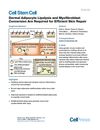
June 2020 in “Cell Stem Cell” This study found that in mice, dermal adipocytes initiate inflammation and aid repair after skin injury by releasing lipids, suggesting a role in managing inflammatory diseases and impaired wound healing.
99 citations
,
April 1998 in “The journal of investigative dermatology/Journal of investigative dermatology” This study found that human hair follicles serve as a crucial reservoir for Langerhans cells, which repopulate the epidermis depleted by ultraviolet B exposure.
98 citations
,
December 2015 in “The Journal of Cell Biology” In this study, researchers found that the absence of type I or type II keratins in mice leads to severe skin barrier defects, highlighting keratins' crucial role in epidermal structure and function.
97 citations
,
December 2021 in “Cells” This review outlines key considerations for designing fluorescence microscopy experiments in cell biology, discussing the importance of hardware availability, suitability of biological models, and imaging agents to achieve high-resolution and informative images.
 93 citations
,
April 2012 in “International Journal of Cosmetic Science”
93 citations
,
April 2012 in “International Journal of Cosmetic Science” This article discusses the role of stratum corneum disruption in dandruff and suggests that treatments improving scalp barrier integrity along with antifungal activity may be beneficial; it reports no new research findings.
88 citations
,
June 2019 in “Cell reports” This study found that activating autophagy with specific small molecules and drugs can stimulate hair growth by initiating the anagen phase in dormant hair follicles, suggesting a potential treatment for hair loss.
 87 citations
,
March 2014 in “Biochimica et Biophysica Acta (BBA) - Molecular and Cell Biology of Lipids”
87 citations
,
March 2014 in “Biochimica et Biophysica Acta (BBA) - Molecular and Cell Biology of Lipids” This paper discusses X-linked ichthyosis and its genetic causes, focusing on biochemical pathways and their role in epidermal differentiation and barrier function, but it presents no new clinical findings.
 85 citations
,
June 2008 in “Annals of the New York Academy of Sciences”
85 citations
,
June 2008 in “Annals of the New York Academy of Sciences” This article proposes a hypothesis that hyperandrogenemia is the final common pathway for developing adolescent PCOS and emphasizes the importance of reducing androgen levels to mitigate risks of metabolic syndrome, diabetes, and infertility in adulthood.
73 citations
,
January 2002 in “Journal of Investigative Dermatology” In this study, researchers found that connexin 43-negative cells in the basal layer of the epidermis could serve as markers for keratinocyte stem cells, aiding their identification and separation.
 64 citations
,
March 2017 in “Nature communications”
64 citations
,
March 2017 in “Nature communications” This study identified 63 genetic loci associated with male-pattern baldness, uncovering genes and pathways that may help develop treatments and suggesting its connection to other human conditions.
62 citations
,
July 2022 in “Science Immunology” This study discovered that TREM2 macrophages influenced by squalene play a role in acne's development by hindering the killing of Cutibacterium acnes, helping explain why benzoyl peroxide is effective in treatment.
 60 citations
,
February 2013 in “Cell reports”
60 citations
,
February 2013 in “Cell reports” This study demonstrates that c-MYC overexpression in sebaceous glands affects differentiation via a regulatory axis involving the androgen receptor and p53, influencing carcinoma formation outcomes.
 59 citations
,
November 2018 in “Psychoneuroendocrinology”
59 citations
,
November 2018 in “Psychoneuroendocrinology” This study suggests that cerebrospinal fluid levels of the neurosteroids allopregnanolone and pregnanolone correlate negatively with PTSD and negative mood symptoms, with potential sex-specific differences in synthesis enzyme blocks.
 54 citations
,
January 2016 in “Cell reports”
54 citations
,
January 2016 in “Cell reports” This study found that different epidermal stem cell populations contribute to the formation of various skin tumors and new hair follicles following β-catenin activation in the adult epidermis.
 52 citations
,
January 2005 in “International journal of experimental pathology”
52 citations
,
January 2005 in “International journal of experimental pathology” This study suggests that melatonin may have a radioprotective role against X-ray-induced skin damage in rats, as evidenced by milder injury markers in pretreated animals.
 50 citations
,
September 2014 in “Stem cell reports”
50 citations
,
September 2014 in “Stem cell reports” In this study, BLIMP1 was found to function in terminally differentiated epidermal cells to maintain homeostasis, rather than defining a sebocyte progenitor population.
50 citations
,
December 2000 in “Journal of Pharmaceutical Sciences” This study found that electroosmotic flow through hair follicles significantly contributes to solution flow during iontophoresis in hairless mouse skin.