 7 citations
,
October 1985 in “Genetics Research”
7 citations
,
October 1985 in “Genetics Research” This study found that in chimaeric mice models, the pigment distribution and pattern were influenced by the sash genotype, demonstrating the melanocyte-autonomous nature of the beige and leaden loci.
34 citations
,
March 2007 in “Biochemical and Biophysical Research Communications” This study suggests that decreased expression of thioredoxin reductase 1 in hair follicle cells may contribute to glucocorticoid resistance in some alopecia areata patients by affecting the intracellular redox system.
2 citations
,
July 2024 in “Bioengineering” This study found that platelet-rich fibrin lysates modulate chemokine expression, reducing inflammation in oral squamous carcinoma cells, but increasing expression in primary oral epithelial cells.
 January 2023 in “Annali di stomatologia”
 This review traces the development and application of Platelet-rich Plasma in regenerative medicine, emphasizing its role in tissue healing and bone regeneration, but reports no new clinical results.
7 citations
,
June 2017 in “Gene” This study found that ectopic expression of FGF5s in transgenic Chinese Merino sheep increased wool length and greasy fleece weight compared to non-transgenic controls.
8 citations
,
July 2015 in “International Journal of Dermatology” This study reports that a homozygous A1103G mutation in DSG 4 is responsible for localized autosomal recessive hypotrichosis in a 2-year-old Chinese girl, resulting in reduced DSG 4 expression and hair defects.
8 citations
,
March 2012 in “Mass spectrometry letters” This study observed that the isotope-dilution GC-MS technique can assess 5α-reductase activity more effectively than conventional methods in rat liver S9 fractions, particularly at low testosterone levels.
 April 2023 in “Research Square (Research Square)”
 This study found that lower GPX4 mRNA levels in polymorphonuclear neutrophils of systemic lupus erythematosus patients were negatively associated with disease activity and serological markers, suggesting a diagnostic value for GPX4 mRNA.
 1 citations
,
December 2019 in “Protetyka Stomatologiczna”
1 citations
,
December 2019 in “Protetyka Stomatologiczna” This review discusses the use of platelet-rich fibrin in medical fields, especially dentistry, and reports no new clinical results.
 3 citations
,
September 2022 in “Cureus”
3 citations
,
September 2022 in “Cureus” This review discusses the various applications of platelet-rich plasma in gynecology but presents no new experimental findings; the authors highlight its potential in managing conditions like Asherman’s syndrome and urinary incontinence.
August 1978 in “Archives of Dermatology” This case report details a rare instance of granulomatosis disciformis chronica et progressiva affecting both skin and lymph node tissue in a 31-year-old man.
 September 1998 in “Journal of The European Academy of Dermatology and Venereology”
 Phototrichogram helps assess hair loss severity.
July 2026 in “Journal of the American Academy of Dermatology” CRT is more effective than oral minoxidil alone for treating hair loss.
 January 2024 in “Frontiers in plant science”
 The zinc finger protein 3 in Arabidopsis thaliana reduces plant growth and root hair development.
 4 citations
,
February 2024 in “Dermatology and Therapy”
4 citations
,
February 2024 in “Dermatology and Therapy” The study found that a single autologous micrografting treatment using Rigenera® technology significantly improved the appearance of stretch marks in healthy women after three months, showing greater enhancements in skin properties compared to microneedling alone.
 14 citations
,
February 1994 in “Tetrahedron Letters”
14 citations
,
February 1994 in “Tetrahedron Letters” This study found that using anhydrous cerium(III) chloride with alkyl Grignard reagents significantly improved the addition to sterically hindered 17-ketosteroids, resulting in high yields and stereoselectivity.
5 citations
,
May 2023 in “Microbial Cell Factories” This study found that a newly produced version of KGF-1 with 135 residues maintained biological activity and could serve as an alternative to the standard 140-residue KGF-1.
February 2023 in “Materials today bio” In this study, researchers developed a promising transdermal agent using Triton X-100-modified polyethyleneimine that successfully delivered genetic material to hair follicle cells in mice, potentially alleviating hair loss due to androgenetic alopecia by promoting cell proliferation and inhibiting apoptosis.
June 2023 in “Zenodo (CERN European Organization for Nuclear Research)” In this study with rats, the researchers reported that both platelet-rich plasma and epidermal growth factor significantly improved wound healing and accelerated recovery in third-degree burn wounds when applied via specific injection methods.
June 2020 in “Zenodo (CERN European Organization for Nuclear Research)” This study suggests that the DNMT3B -579 G>T polymorphism may be a genetic risk factor for colorectal cancer in the Azerbaijani population.
56 citations
,
April 2019 in “The Plant Journal” This study found that CNGC 6, CNGC 9, and CNGC 14 are crucial for maintaining calcium oscillations necessary for normal root hair growth in plants, with mutations leading to defects like swelling and bursting.
 September 2022 in “British Dental Journal”
 Platelet-rich fibrin is becoming popular for medical and cosmetic uses like hair growth and natural fillers.
 128 citations
,
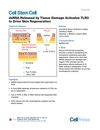
August 2015 in “Cell Stem Cell”
128 citations
,
August 2015 in “Cell Stem Cell” The researchers reported that dsRNA from damaged skin activates TLR3, promoting hair follicle regeneration, while TLR3-deficient animals fail to initiate this process, suggesting potential therapeutic approaches for hair neogenesis.
 1 citations
,
July 2016 in “Livestock science”
1 citations
,
July 2016 in “Livestock science” This study suggests that nerve growth factor may support hair follicle growth in Liaoning cashmere goats through pathways involving its receptor, TrkA, particularly during the anagen phase.
 31 citations
,
October 2010 in “Progress in lipid research”
31 citations
,
October 2010 in “Progress in lipid research” This review discusses the role of LPA(3) in embryo implantation and its genetic connection with prostaglandin signaling, but reports no new clinical results.
 3 citations
,
January 2005 in “Biological & Pharmaceutical Bulletin”
3 citations
,
January 2005 in “Biological & Pharmaceutical Bulletin” This study reports that the peptide GPIGS, found in Bacillus sp. M18 conditioned medium, may promote hair growth through the PI-3K/Akt pathway and accelerate hair regrowth in mice.
 13 citations
,
January 2020 in “Experimental Dermatology”
13 citations
,
January 2020 in “Experimental Dermatology” This pilot clinical trial suggests that platelet-rich plasma (PRP) treatment may increase hair density in patients with androgenetic alopecia, though outcomes varied between patients.
1 citations
,
November 2024 in “EMBO Reports” In this study, researchers observed that deleting the Gpr54 gene accelerated the hair cycle and enhanced hair regeneration in mice by modifying the NAFTc3-SFRP1-Wnt signaling pathway, suggesting Gpr54 as a potential target for hair loss treatments.
October 2025 in “Journal of the Endocrine Society” In this case study, a 68-year-old woman with hyperandrogenism and presumed ovarian origin responded well to GnRH agonist therapy, normalizing testosterone levels and stabilizing blood pressure, suggesting its effectiveness as a non-surgical treatment option.
1 citations
,
July 2025 in “Journal of Investigative Dermatology”