January 2024 in “Updates in clinical dermatology” Frontal fibrosing alopecia is a scarring hair loss condition mainly affecting postmenopausal women, with unclear causes.
 3 citations
,
September 2019 in “Skin appendage disorders”
3 citations
,
September 2019 in “Skin appendage disorders” This study found that females with frontal fibrosing alopecia had more preauricular lines than age-matched controls, indicating a potential new clinical marker for the condition.
 7 citations
,
March 2024 in “Scientific Reports”
7 citations
,
March 2024 in “Scientific Reports” This study reports that the new neighborhood face index (NFI) demonstrates a remarkably high correlation with the physiochemical properties of benzenoid hydrocarbons, highlighting its potential as a predictive tool.
1 citations
,
January 2020 in “International Journal of Agriculture and Biology” In this study, researchers identified known and novel miRNAs in Liaoning Cashmere goat skin and found differences in miRNA expression linked to cashmere fineness, providing new insights into LCG goat skin biology.
 November 2022 in “The journal of investigative dermatology/Journal of investigative dermatology”
 This study found that cPPARγ and dnPPARγ isoforms are differentially expressed in healthy human skin, suggesting that PPARγ modulators may have compartment-specific effects depending on isoform presence.
 16 citations
,
September 2014 in “International Journal of Biological Markers”
16 citations
,
September 2014 in “International Journal of Biological Markers” This study found that the less common CAG-rs4045402 and GGN-rs3138869 polymorphisms were more frequent in patients with post-finasteride syndrome and androgenetic alopecia, suggesting a genetic predisposition to AGA development.
 1 citations
,
June 2022 in “International Journal of Dermatology”
1 citations
,
June 2022 in “International Journal of Dermatology” FFA in men shows unique features and treatment results vary widely.
8 citations
,
August 2017 in “Skin appendage disorders” Red dots on the upper chest may be an early sign of certain types of hair loss.
This study highlights the successful design of recombinant fortilin constructs for potential drug development targeting atherosclerotic plaque formation in cardiovascular disease.
 10 citations
,
October 2016 in “Journal of Biomolecular NMR”
10 citations
,
October 2016 in “Journal of Biomolecular NMR” This study reported that using 2D solid-state NMR techniques on extensively labeled mouse fur improves resolution in detecting chemical shifts and secondary structure features, potentially aiding the analysis of the effects of commercial or therapeutic treatments on specific amino acids.
 April 2025 in “Journal of Skin and Stem Cell”
 This review discusses the potential of polydeoxyribonucleotide (PDRN) for various dermatological treatments and highlights its significant effects on wound healing, anti-aging, acne scars, and hair loss, but emphasizes the need for further clinical studies.
 November 2023 in “The journal of investigative dermatology/Journal of investigative dermatology”
 This study found that engineered high-affinity soluble CD200R agonists, including ARQ-234, showed superior efficacy in reducing immune responses in various preclinical models of inflammatory conditions, suggesting potential as a therapeutic for atopic dermatitis and other related diseases.

This study found that the FER/MLO signaling module plays a crucial role in calcium oscillations and ROS production in root hair tip growth, with the MLO15 protein regulating these processes and restoring disrupted growth and signaling in fer mutant root hairs.
 August 2019 in “Stem cells”
 This paper reviews the role of miRNAs in stem cell therapies and hair follicle growth, reporting no new findings but highlighting recent insights into fertility treatment and wound healing.
2 citations
,
December 2024 in “Microscopy Research and Technique” This study introduced a novel microscopy system using an Er3 + −doped femtosecond fiber laser, achieving detailed imaging of biological structures in plant and skin samples with improved spatial resolution for various applications, including in vivo imaging.
 April 2026 in “Biosensors”
 In this study, red-light irradiation significantly increased hair follicle numbers and ATP levels in a mouse model, highlighting low-level laser therapy's potential to enhance hair regeneration and alter the skin metabolic microenvironment.
 October 2020 in “International Journal of Research in Dermatology”
 This review discusses the possible immune-mediated and environmental factors contributing to frontal fibrosing alopecia but reports no new clinical findings, emphasizing the need for standardized treatment evaluations.
January 2026 in “SSRN Electronic Journal”  6 citations
,
August 2020 in “JCRPE”
6 citations
,
August 2020 in “JCRPE” This report presents a case of familial male-limited precocious puberty with a novel LHCGR gene mutation, where a boy responded well to treatment with bicalutamide and anastrozole.
 1 citations
,
May 2020 in “Beilstein Journal of Organic Chemistry”
1 citations
,
May 2020 in “Beilstein Journal of Organic Chemistry” This study developed a novel smart deoxyribozyme-based fluorescent sensor that efficiently detects androgen receptor mRNA with high selectivity and can be adapted to target various nucleic acid sequences.
3 citations
,
August 2017 in “Clinical case reports” A rare skin condition causes red and dark patches on the face and limbs.
 1 citations
,
October 2023 in “Journal of the Pakistan Medical Association”
1 citations
,
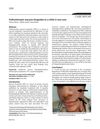
October 2023 in “Journal of the Pakistan Medical Association” This source describes a case of a 12-year-old male diagnosed with folliculotropic mycosis fungoides, presenting with an asymptomatic, erythematous plaque. Histology and immunohistochemistry confirmed FMF, which is typically rare in children and marked by follicular infiltration by CD4+ lymphocytes.
50 citations
,
March 2018 in “BMC Genomics” This study expands knowledge of non-coding RNAs in goats and other mammals, enhancing understanding of their roles in hair follicle growth and regression.
November 2023 in “Biology” This study investigated m6A RNA modification in hair follicle development, finding that Hycole rabbits displayed longer hair, higher primary hair follicle ratios, and thicker skin compared to Rex rabbits, while also identifying key differential genes and pathways involved in hair growth.
April 2026 in “Current Opinion in Genetics & Development” This mini-review explores how both endogenous and damage-released RNAs serve as instructional signals that influence cell identity and plasticity during tissue maintenance and repair, highlighting RNA's role as a regulator of cellular flexibility in various regenerative contexts.
51 citations
,
September 2020 in “Nucleic Acids Research” This article introduces signatureSearch, a software package designed for gene expression signature searching and functional enrichment analysis, but reports no new clinical results.
1 citations
,
January 2012 In this study, the researchers cloned and analyzed the CRABP I gene in Inner Mongolian cashmere goats, finding its highest mRNA expression at 90 days in embryo skin compared to later stages.
 13 citations
,
June 2020 in “BMC genomics”
13 citations
,
June 2020 in “BMC genomics” This study found that chi-miR-30b-5p was more expressed in the telogen phase than in the anagen phase and inhibited dermal papilla cell proliferation by targeting CaMKIIδ.
 16 citations
,
January 2005 in “The International Journal of Developmental Biology”
16 citations
,
January 2005 in “The International Journal of Developmental Biology” This study found that Hex gene expression patterns in chick embryo dorsal skin during feather bud development suggest a significant role in initiating feather morphogenesis.
April 2023 in “Journal of Investigative Dermatology” This study found that overexpression of the lncRNA AL136131.3 may inhibit hair shaft growth and promote hair follicle apoptosis in androgenetic alopecia by influencing key metabolic pathways.