17 citations
,
February 2021 in “Journal of Social Philosophy” This study discusses how beauty standards contribute to structural injustice by imposing rising demands and increasing body image anxiety across various demographics.
14 citations
,
June 2012 in “Stem Cells” This study found that depletion of TACE in mouse hair follicles led to impaired stem cell maintenance and hair loss, implicating TACE and EGFR signaling in hair follicle stem cell homeostasis.
 12 citations
,
June 2019 in “Psychoneuroendocrinology”
12 citations
,
June 2019 in “Psychoneuroendocrinology” This study found that in rodent models, the ability of D1 dopamine receptor activation to impair sensory gating is facilitated by 5α-reductase type 1, which produces allopregnanolone.
11 citations
,
March 2021 in “Molecular Carcinogenesis” This study found that deleting the transcription factor Twist1 in keratinocytes significantly reduced UVB-induced skin carcinogenesis in mice, suggesting a potential target for preventing cutaneous squamous cell carcinoma.
8 citations
,
March 2010 in “The journal of investigative dermatology/Journal of investigative dermatology” This study found that weakened anchorage of hair shafts, associated with the abnormal expression of 14-3-3σ, may contribute to alopecia in Er/+ mice.
 7 citations
,
March 2020 in “PloS one”
7 citations
,
March 2020 in “PloS one” This study demonstrates that α-parvin is crucial for epidermal morphogenesis and hair follicle development by mediating integrin-dependent adhesion and actin organization in keratinocytes.
 6 citations
,
April 2019 in “Nutrients”
6 citations
,
April 2019 in “Nutrients” This study found that biotin deficiency in mice led to reduced zinc levels, disappearance of epidermal Langerhans cells, and increased ATP production, resulting in prolonged irritant contact dermatitis.
4 citations
,
March 2024 in “Developmental Dynamics” In this study, researchers used conditional mouse models to show that inactivation of the Alx4 gene in specific cell lineages leads to craniofacial and limb defects without affecting postnatal survival, providing insights into Alx4's role in development and disease.
4 citations
,
May 2023 in “Pigment Cell & Melanoma Research” In this study, researchers found that deleting the Bmi1 gene in murine melanocytes caused premature hair greying and loss of melanocyte lineage cells, highlighting BMI1's role in protecting melanocyte stem cells from stress and oxidative damage.
 3 citations
,
July 2021 in “Life science alliance”
3 citations
,
July 2021 in “Life science alliance” This study observed that disrupting the Pnkp gene in adult mice resulted in a premature aging-like phenotype, suggesting PNKP's vital role in maintaining normal growth and survival of certain progenitor cell populations.
 1 citations
,
June 2021 in “bioRxiv (Cold Spring Harbor Laboratory)”
1 citations
,
June 2021 in “bioRxiv (Cold Spring Harbor Laboratory)” This study found that in wild-type Arabidopsis plants, root hair growth is suppressed with increased nutrient availability, with RHD6 subfamily genes down-regulated and GTL1 and DF1 genes influencing root hair morphology under these conditions.
 1 citations
,
August 2020 in “Journal of The American Academy of Dermatology”
1 citations
,
August 2020 in “Journal of The American Academy of Dermatology” This letter discusses the variability in platelet-rich plasma preparation for androgenetic alopecia treatment and highlights that different methods yield varied platelet concentrations but not significant differences in growth factor secretion per platelet.
July 2026 in “The Journal of Immunology” This study in a murine model of alopecia areata found that IFNg is crucial while perforin is not necessary for CD8 T cell-mediated disease development.
 January 2025 in “International Journal of Trichology”
 This study surveyed hair loss practitioners and found that while most view androgenetic alopecia as having pathological features, opinions vary on whether it is a disease or requires treatment.
 May 2024 in “The journal of investigative dermatology/Journal of investigative dermatology”
 In this study, researchers found that both Wnt/β-catenin and Hedgehog signaling pathways must be activated in wound fibroblasts to promote hair follicle neogenesis in mice, suggesting these pathways are crucial for regenerative healing strategies.
 March 2023 in “Scientific reports”
 This study presents evidence that hair matrix progenitors and the enzyme Stearoyl CoA Desaturase 1 may play a role in maintaining the dermal papilla niche via autocrine Wnt and paracrine Hedgehog signaling in mice.
 July 2022 in “The journal of investigative dermatology/Journal of investigative dermatology”
 This study found that a mathematical model predicts signaling heterogeneity in epithelial outer root sheath cells is necessary for hair follicles to maintain size and grow long hair fibers, supported by molecular experiments.
April 2019 in “Journal of Investigative Dermatology” Gut microbiota influences the development of alopecia areata.
 August 2018 in “Journal of Investigative Dermatology”
 This study found that centrosomes, unlike cilia, are essential for proper epidermal and hair follicle development in mice, with these effects being dependent on the presence of p53.
August 2016 in “Journal of Investigative Dermatology” In this ex vivo study, inhibiting Ezh2 with a small molecule slowed human hair growth by decreasing proliferation and increasing apoptosis in the outer root sheath.
 184 citations
,
September 2006 in “PLoS Genetics”
184 citations
,
September 2006 in “PLoS Genetics” This study found that loss of Apc due to K14-cre-mediated gene recombination in mice led to aberrant growth in ectodermally derived squamous epithelia, implicating its critical role in specifying epithelial cell fates during embryonic development.
 170 citations
,
July 2012 in “Journal of Investigative Dermatology”
170 citations
,
July 2012 in “Journal of Investigative Dermatology” In this study, researchers showed that Wnt ligands secreted by hair follicle epithelium are crucial for hair follicle regeneration and may be significant for treating hair disorders like alopecia.
 140 citations
,
March 2013 in “The journal of immunology/The Journal of immunology”
140 citations
,
March 2013 in “The journal of immunology/The Journal of immunology” This study found that IL-7 is crucial for the survival of memory regulatory T cells in the skin of mice, whereas IL-2 is essential for their initial generation but not for their maintenance.
 140 citations
,
April 2004 in “The journal of investigative dermatology/Journal of investigative dermatology”
140 citations
,
April 2004 in “The journal of investigative dermatology/Journal of investigative dermatology” This study found that mice lacking the 1αOHase enzyme, which is responsible for producing a key vitamin D metabolite, showed impaired epidermal differentiation and delayed recovery of skin barrier function after disruption.
 124 citations
,
June 2020 in “Cell Stem Cell”
124 citations
,
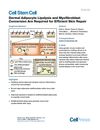
June 2020 in “Cell Stem Cell” This study found that in mice, dermal adipocytes initiate inflammation and aid repair after skin injury by releasing lipids, suggesting a role in managing inflammatory diseases and impaired wound healing.
100 citations
,
August 2008 in “American Journal Of Pathology” This study found that epidermal VEGF is crucial for maintaining skin barrier function in mice and may help explain psoriasis development following skin trauma due to its effects on angiogenesis and hyperplasia.
93 citations
,
March 2017 in “Molecular Plant” This study concluded that CNGC14 is a calcium-permeable channel crucial for polarized tip growth in Arabidopsis root hairs, but other channels may also influence the observed calcium influx.
 67 citations
,
December 2008 in “Developmental Biology”
67 citations
,
December 2008 in “Developmental Biology” This study found that the transcription factors Msx2 and Foxn1 are crucial for maintaining Notch1 expression in the hair follicle matrix, which is necessary for proper hair differentiation.
 63 citations
,
April 2010 in “Development”
63 citations
,
April 2010 in “Development” This article discusses the bi-compartmental organization of hair follicle stem cell niches for balancing stem cell cycling and organ growth and proposes similar structures may exist in other adult stem cell niches but reports no new experimental results.
56 citations
,
September 2014 in “Molecular Endocrinology” This study found that the absence of unliganded vitamin D receptor significantly impairs cWnt and hedgehog signaling pathways necessary for hair cycle initiation in VDR-null mice.