 March 2011 in “European Urology Supplements”
 Blood tests for tumor cells could improve prostate cancer diagnosis and treatment; hair loss severity linked to a gene affecting prostate conditions.
December 2002 in “대한피부과학회지” This study found that androgen receptors were more highly expressed in bald scalp areas compared to non-bald areas, suggesting a link between local androgen activity and hair loss in androgenic alopecia.
 10 citations
,
December 2021 in “Frontiers in cell and developmental biology”
10 citations
,
December 2021 in “Frontiers in cell and developmental biology” This study used single-cell RNA sequencing to map the cellular composition of sheep hair follicles, revealing differentiation pathways and potential molecular mechanisms for wool curvature, which may inform sheep breeding.
June 2026 in “Health Science Reports” This study examined the genetic basis of alopecia areata by analyzing gene expression differences between patients and healthy controls, identifying critical pathways, hub genes, transcription factors, and miRNAs implicated in the disease, and suggesting potential targets for treatment.
November 2025 in “Journal of Investigative Dermatology” Keloid fibroblasts cause itch and pain by releasing more histamine.
 December 2024 in “Tropical Journal of Natural Product Research”
 This study evaluated the anti-alopecia effects of Petroselinum crispum leaf extracts in a rabbit model and through molecular docking analysis, finding that two ethyl acetate fractions promoted hair growth, with effects comparable to minoxidil, suggesting potential for alopecia treatment development.
September 2023 in “Animals” In this study, researchers used proteomic and metabolomic analyses to explore hair follicle development in embryonic cashmere goats, identifying significant roles for the oxytocin signalling pathway and associated networks in this process.
 September 2023 in “Medicine”
 This study found increased infiltration of specific immune cells, such as γδ T cells and CD8+ T cells, in the bald scalp of male androgenetic alopecia patients, and identified four key immune-related genes potentially involved in hair loss development through interferon-γ signaling pathways.
 January 1995 in “Adolescent and pediatric gynecology”
 This article reviews genetic and phenotypic aspects of androgen insensitivity syndromes, emphasizing the diversity of mutations that complicates molecular screening and the importance of genotype-phenotype correlations.
4 citations
,
September 2016 in “World Rabbit Science” This study observed that gene expression differences in Rex rabbits with varying wool densities suggest the involvement of specific genes and signaling pathways, including Shh and Eph, in hair follicle development.
 May 2024 in “British journal of dermatology/British journal of dermatology, Supplement”
 The researchers reported increased ubiquitination of proteins such as the insulin receptor in CYLD cutaneous syndrome skin tumors, suggesting that CYLD dysfunction may affect protein secretion and signaling processes.
 September 2023 in “Frontiers in Medicine”
 This study observed that in the bald scalps of male patients with androgenetic alopecia, there was a significant downregulation of the PPAR signaling pathway, suggesting reduced adipogenesis potentially influencing hair cycling processes.
 April 2024 in “Journal of pharmacy & pharmacognosy research”
 This study used in silico analysis to identify 4-[2-(4-nitrophenyl)ethylcarbamoyl]benzenesulfonyl as a potential inhibitor of the EGFR mutant associated with NSCLC, highlighting the need for further in vitro and in vivo validation.
 April 2023 in “The journal of investigative dermatology/Journal of investigative dermatology”
 This study reported significant transcriptomic changes in keratinocyte and immune cell populations in a mouse model with EGFR-deficient epidermis, suggesting possible targets for mitigating adverse skin events in EGFR-targeted cancer therapy.
 57 citations
,
May 2014 in “Molecular Phylogenetics and Evolution”
57 citations
,
May 2014 in “Molecular Phylogenetics and Evolution” This study utilized a sequence-structure alignment approach to improve the characterization of Class A Rhodopsin GPCR superfamily, including orphan and unclassified receptors, through evolutionary analysis.
 6 citations
,
November 2017 in “Scientific reports”
6 citations
,
November 2017 in “Scientific reports” This study found that a novel R343H mutation in the vitamin D receptor gene impairs its transcription activity, contributing to hereditary vitamin D-resistant rickets and alopecia in the affected family.
 4 citations
,
January 2021 in “Journal of Clinical Medical Research”
4 citations
,
January 2021 in “Journal of Clinical Medical Research” This review provides an in-depth analysis of the structure and function of c-kit activation, and its role in both normal physiological and pathological conditions, with no new research findings reported.
 20 citations
,
September 2005 in “Endocrinology”
20 citations
,
September 2005 in “Endocrinology” This study identified novel selective androgen receptor modulators with enhanced in vivo pharmacological activity through structure-activity relationship analysis in castrated rats.
1 citations
,
November 2024 in “Expert Opinion on Drug Safety” In this retrospective pharmacovigilance study, researchers analyzed over 7,900 adverse event reports related to aromatase inhibitors, identifying common side effects and toxicological mechanisms to highlight potential safety concerns in treating postmenopausal hormone receptor-positive breast cancer.
10 citations
,
November 2017 in “Letters in drug design & discovery” This paper discusses a structure-based analysis to find new BRD4 inhibitors, identifying finasteride and amentoflavone as promising candidates for BET inhibition.
 2 citations
,
October 2020 in “Annals of Oncology”
2 citations
,
October 2020 in “Annals of Oncology” This analysis discusses the role of genetic factors, particularly male hormones and specific gene variants, in influencing sex differences and potential susceptibility to severe COVID-19 outcomes, but notes that conclusive evidence is lacking, highlighting the need for larger studies.
 40 citations
,
January 2013 in “Frontiers in Endocrinology”
40 citations
,
January 2013 in “Frontiers in Endocrinology” Finger length ratios are not linked to the number of specific gene repeats affecting testosterone sensitivity.
 1 citations
,
September 2023 in “Journal of Education Health and Sport”
1 citations
,
September 2023 in “Journal of Education Health and Sport” This study provides a comprehensive analysis of anabolic-androgenic steroids, reporting that their use enhances muscle mass but is associated with significant health issues including cardiac muscle hypertrophy, liver disease, and changes in gender characteristics, emphasizing the need for patient awareness of these risks.
This study provides a detailed analysis of cell subpopulations in a mouse model of wound-induced hair follicle regeneration, revealing specific cellular dynamics and heterogeneity that may influence hair follicle neogenesis.
November 2025 in “Journal of Complementary and Alternative Medical Research” In this study, researchers used molecular docking analysis to explore the potential of spearmint's phytochemicals in managing PCOS, identifying oleanolic acid as having the best binding affinity with proteins associated with the condition. However, these results are computational and require further laboratory experiments for validation.
 May 2024 in “Psychiatric News”
 In this study, analysis of electronic health records suggested that patients taking semaglutide were significantly less likely to experience suicidal ideation compared to those on non-GLP-1 obesity or diabetes medications.
 24 citations
,
July 2017 in “Structure”
24 citations
,
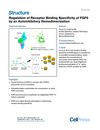
July 2017 in “Structure” In this study, researchers found that ligand homodimerization controls the receptor binding specificity of the FGF9 subfamily, preventing off-target activation of FGFR "b" isoforms.
September 2006 in “Pediatrics in Review” This case report highlights a 16-year-old girl with primary amenorrhea diagnosed with complete androgen insensitivity syndrome after chromosomal analysis revealed a 46,XY karyotype.
39 citations
,
January 2020 in “Frontiers in Genetics” This study found that stage-specific epigenetic changes, particularly involving the gene PDGFC, may affect wool fiber development in Zhongwei goats, potentially serving as a biomarker for fur goat selection.
23 citations
,
June 1992 in “PubMed” This study found that RAR-gamma 1 mRNA is present in multiple skin layers and structures, suggesting a role in maintaining and differentiating normal epidermis and skin appendages.