9 citations
,
January 2021 in “BioMed research international” This study describes a method to extract and characterize keratin particles from human hair, finding they can encapsulate the anticancer drug Paclitaxel with significant efficiency, releasing it in a pH-dependent manner potentially beneficial for targeted cancer treatment.
9 citations
,
February 2024 in “mBio” This study found that biliverdin beta and delta, metabolites of heme, play a critical role in Pseudomonas aeruginosa iron acquisition and cooperative behaviors, which are crucial for the bacterium's long-term infection in cystic fibrosis patients, suggesting potential targets for new therapies.
578 citations
,
May 1996 in “Plant Cell & Environment” This study found that Arabidopsis thaliana plants developed longer root hairs under low phosphorus conditions, suggesting auxin involvement in this adaptive response.
5 citations
,
January 2018 in “PubMed” This article discusses the ethical views of Polish physicians on performance-enhancing substances and emphasizes the need to improve their knowledge to better address related issues in their patients, but it reports no new results.
 80 citations
,
April 2017 in “Frontiers in Pharmacology”
80 citations
,
April 2017 in “Frontiers in Pharmacology” This review examines experimental and clinical evidence on PDRN, a drug derived from salmon DNA that acts via the adenosine A2A receptor and shows promise for tissue repair and treatment of diabetic foot ulcers in regenerative medicine.
November 2025 in “Journal of Complementary and Alternative Medical Research” In this study, researchers used molecular docking analysis to explore the potential of spearmint's phytochemicals in managing PCOS, identifying oleanolic acid as having the best binding affinity with proteins associated with the condition. However, these results are computational and require further laboratory experiments for validation.
 22 citations
,
December 2003 in “Veterinary clinical pathology”
22 citations
,
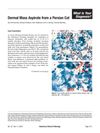
December 2003 in “Veterinary clinical pathology” This case study reported a diagnosis of dermatophytic pseudomycetoma in a Persian cat with dermal nodules, highlighting potential heritable predisposition and suggesting systemic antifungal therapy for fair prognosis.
 8 citations
,
July 2019 in “Pure and Applied Chemistry”
8 citations
,
July 2019 in “Pure and Applied Chemistry” This study identified natural compounds from Iris plants that showed potential as inhibitors of urease and carbonic anhydrase-II enzymes, suggesting their possible use in treating related disorders.
26 citations
,
August 2014 in “Veterinary Dermatology” This study found that sphynx cats exhibit hair follicle dysplasia with abnormal hair shaft production, but without a reduction in the number of follicles, similar to murine KRT 71 mutants.
 3 citations
,
July 2018 in “Biomedicine & pharmacotherapy”
3 citations
,
July 2018 in “Biomedicine & pharmacotherapy” This study suggests that paeoniflorin's protective effects on brain astrocytes may be mediated by TSPO and neurosteroids biosynthesis.
 15 citations
,
January 2020 in “RSC advances”
15 citations
,
January 2020 in “RSC advances” In this study, researchers developed a new Supported Ionic Liquid Phase palladium catalyst that showed effectiveness in aminocarbonylation reactions for synthesizing pharmaceutical compounds like CX-546 and a precursor of Finasteride, though results were sensitive to substrate variations and prompted palladium leaching concerns.
3 citations
,
January 2022 in “International Research Journal of Ayurveda & Yoga” This article reviews the traditional Ayurvedic uses and potential therapeutic properties of the Indian medicinal plant Psoralea corylifolia, attributed with various health benefits including anti-inflammatory, anti-cancer, and anti-diabetic effects, though specific study results are not reported.
 7 citations
,
May 2016 in “European Polymer Journal”
7 citations
,
May 2016 in “European Polymer Journal” This study found that biodegradable hyperbranched polyesters improved the solubility and loading capacity of hydrophobic drugs, with complete pyrene release achieved in 16 days under enzymatic conditions.
6 citations
,
April 1989 in “Nuclear Instruments and Methods in Physics Research Section B Beam Interactions with Materials and Atoms” Sulphur in hair follicles increases from the bulb and then levels off, while other elements vary in distribution.
23 citations
,
July 1994 in “Journal of Dermatological Science” This study found that the twisted hair shafts characteristic of pili torti may result from uneven outer root sheath cell development, leading to irregular hair shaft modeling and twisting.
 June 2024 in “ACTA SCIENTIAE VETERINARIAE”
 This study reported a case of equine ringworm infection in a 2-year-old horse caused by Nannizzia gypsea, confirmed through culture and SYBR-Green real-time PCR techniques, demonstrating that qPCR allows specific detection of dermatophytes more rapidly than conventional methods.
 17 citations
,
August 2007 in “Bioorganic & Medicinal Chemistry Letters”
17 citations
,
August 2007 in “Bioorganic & Medicinal Chemistry Letters” This study found that a specific amino-pyridine compound showed potent androgen receptor antagonist activity, stimulating hair growth in mice and reducing sebum production in a hamster model.
 February 2023 in “Research Square (Research Square)”
 This study reports that a new mouse model with a CARD14 mutation successfully mimics key human PRP symptoms, and anti-IL-17A antibody significantly reduces these symptoms.
 37 citations
,
March 2018 in “Trends in Plant Science”
37 citations
,
March 2018 in “Trends in Plant Science” This review discusses the role of reactive oxygen species in regulating oscillating apoplastic pH gradients and growth in plant root hairs and pollen tubes, reporting no new experimental results.
January 2014 in “cIRcle (University of British Columbia)” This research found that modifying brachytherapy seeds with contrast-enhancing materials in photoacoustic imaging increased signal-to-noise ratios and imaging depth, and demonstrated potential for tissue differentiation by analyzing temperature-induced changes in PA intensity.
29 citations
,
November 2015 in “Acta Biomaterialia” This study found that water-filtered infrared A radiation can induce the release of a model drug from gold nanoparticle-doped particles in hair follicles in an ex vivo porcine skin model, suggesting feasibility for follicular drug delivery systems.
 October 2021 in “Dermatology reports”
 The care model improved timely diagnosis and treatment for psoriasis and psoriatic arthritis.
3 citations
,
February 2002 This study suggests that low phosphorus and ethylene may influence root hair density through separate pathways, with ethylene manipulation affecting root hair growth in Arabidopsis thaliana.
 11 citations
,
July 2021 in “Physiologia Plantarum”
11 citations
,
July 2021 in “Physiologia Plantarum” In this study, the gene SlPHL1 was identified as a transcription factor in tomatoes that enhances phosphate starvation responses by upregulating specific genes.
 8 citations
,
July 2022 in “Frontiers in plant science”
8 citations
,
July 2022 in “Frontiers in plant science” This review outlines the current understanding of how pH contributes to root hair development and reports no new experimental findings.
1 citations
,
January 2010 in “Institutional Repository of Leibniz Universität Hannover (Leibniz Universität Hannover)” 18 citations
,
December 2002 in “European Journal of Biochemistry” This study found that the MsPG3-GFP fusion protein accumulates at the growing root hair tips in Medicago plants, suggesting its role in tip growth during symbiosis.
January 2011 in “Zhongguo nongye Kexue” This study successfully established a transgenic sheep fibroblast cell line expressing the spider dragline silk protein gene, laying groundwork for developing transgenic sheep with this capability in hair follicles.
11 citations
,
January 2018 in “Jaypee's international journal of clinical pediatric dentistry” This report describes the clinical presentation of Papillon-Lefèvre syndrome in two brothers and reviews the related literature, without providing new clinical outcomes.
7 citations
,
October 1992 in “PubMed” This study investigated peptidergic nerve fibers in sinus hair follicles of various mammals and found that CGRP fibers were more densely distributed than SP fibers across different regions of the follicles.