 59 citations
,
February 2003 in “Veterinary Dermatology”
59 citations
,
February 2003 in “Veterinary Dermatology” This narrative review discusses the use of cyclosporin for various skin diseases in small animals and notes minimal side effects at therapeutic doses, but reports no original clinical findings.
 34 citations
,
January 2005 in “Journal of the American Veterinary Medical Association”
34 citations
,
January 2005 in “Journal of the American Veterinary Medical Association” This study found that cyclosporine A treatment at 5 mg/kg/day may reduce inflammation and promote gland regeneration in dogs with sebaceous adenitis, though symptoms returned when treatment stopped.
 24 citations
,
May 2010 in “Veterinary dermatology”
24 citations
,
May 2010 in “Veterinary dermatology” This study found that both ciclosporin A and topical therapy were effective in reducing alopecia and scaling in dogs with idiopathic sebaceous adenitis, with evidence suggesting improved outcomes when both treatments are combined.
 23 citations
,
March 1989 in “The Veterinary clinics of North America. Food animal practice”
23 citations
,
March 1989 in “The Veterinary clinics of North America. Food animal practice” This review discusses dermatological issues in llamas, detailing common findings, parasites, and disorders, but reports no new clinical results; it highlights the need for recognizing normal skin variations and discusses potential treatments like zinc therapy for certain conditions.
 19 citations
,
February 2017 in “Journal of radiation research”
19 citations
,
February 2017 in “Journal of radiation research” This study found that high-dose radiation can induce accelerated cellular senescence, inflammation, and loss of epithelial stem cells in mouse and human skin, contributing to radiation dermatitis.
 19 citations
,
January 2008 in “The veterinary clinics of North America. Exotic animal practice”
19 citations
,
January 2008 in “The veterinary clinics of North America. Exotic animal practice” This review discusses adrenal gland disease in ferrets, exploring its signs, potential contributing factors, and current treatment options, but it reports no new clinical results.
 18 citations
,
October 2002 in “Veterinary dermatology”
18 citations
,
October 2002 in “Veterinary dermatology” This study observed that follicular dysplasia in Weimar Pointers produces histopathological features and hair abnormalities similar to color dilution alopecia, though less severe.
 15 citations
,
May 2011 in “Veterinary Dermatology”
15 citations
,
May 2011 in “Veterinary Dermatology” In this study, dogs with sebaceous adenitis were treated with oral vitamin A, but responses varied widely, showing improvements in some cases while others experienced no benefit.
 6 citations
,
May 2015 in “Veterinary Clinics of North America: Equine Practice”
6 citations
,
May 2015 in “Veterinary Clinics of North America: Equine Practice” This article reviews common skin diseases in horses, organized by clinical feature, and highlights the need for more comprehensive comparative research; no new clinical results are presented.
 4 citations
,
January 2017 in “Ciência Rural”
4 citations
,
January 2017 in “Ciência Rural” This case report highlights that equine multisystemic eosinophilic epitheliotropic disease should be considered in horses presenting with skin lesions and gastrointestinal symptoms, as illustrated by the progression in a 5-year-old horse despite treatment.
 2 citations
,
April 2021 in “Naukovì gorizonti”
2 citations
,
April 2021 in “Naukovì gorizonti” In this study, researchers observed that using a combination of medications, including Bravecto, Cefuroxime, Orungal, Apoquel, and Derinat, effectively treated pododermatitis in dogs, increasing therapy success from 28.6% to 66.7%, and reducing treatment duration while extending remission periods.
 June 2025 in “Veterinární Medicína”
 In this veterinary study, uveodermatological syndrome in dogs was reported to cause skin depigmentation, alopecia, and eye issues such as granulomatous panuveitis, which leads to complications like cataracts and glaucoma; while immunosuppressive therapy often helps, recurrence and treatment side effects challenging therapeutic management.
 May 2025 in “International Journal For Multidisciplinary Research”
 In this study, veterinary examinations of 150 domestic canines and felines revealed that M. canis was the predominant dermatophyte, affecting 9 cats and 9 dogs, with dogs showing more severe lesions and higher neutrophil counts in the cytological analysis.
 December 2024 in “World s Veterinary Journal”
 This case study from Ukraine describes a 5-year-old Akita dog diagnosed with sebaceous adenitis, presenting with pruritus, alopecia, and inflammation; treatment over 30 days led to complete restoration of affected areas, implicating potential heritability in Akitas.
 July 2024 in “Romanian Journal of Veterinary Sciences”
 This study found that cyclosporine treatment led to clinical improvements in dogs with sebaceous adenitis, with noticeable benefits within four months and more substantial outcomes after 12 months of continuous therapy.
 January 2021 in “ACTA SCIENTIAE VETERINARIAE”
 This case report describes a 1-year-old Daschund with canine eosinophilic folliculitis whose symptoms improved following immunosuppressive therapy with glucocorticoids.
 August 2020 in “Egyptian Veterinary Medical Society of Parasitology Journal (EVMSPJ)”
 In this study, 10.5% of sheep examined in Ismailia, Egypt, were infested with Sarcoptes scabiei, showing specific molecular and skin alterations.
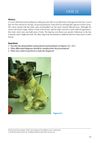 May 2019 in “Small Animal Dermatology”
 This chapter discusses a case of sebaceous adenitis in a Japanese Akita, providing educational material for students and practitioners but reports no new research findings.
This source outlines common health issues in weanling gerbils, including skin infections often tied to beta-hemolytic Staphylococcus aureus, and obesity-related conditions like diabetes, as well as respiratory infections and musculoskeletal problems, without detailing specific new study results.
 July 2014 in “Elsevier eBooks”
 The document concludes that various hypersensitivity diseases in horses can be diagnosed and treated with methods like immunotherapy and medication, and early aggressive treatment is crucial for severe diseases like equine cutaneous pythiosis.
31 citations
,
June 1997 in “International Journal of Dermatology” In this case report, a patient with Hodgkin's disease treated with ABVD chemotherapy became disease-free, and accompanying granuloma annulare skin lesions also improved.
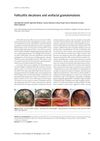 January 2018 in “Advances in Dermatology and Allergology”
 Treatment with dapsone, topical corticosteroids, and antibiotics improved the man's skin conditions.
 14 citations
,
September 2015 in “Ophthalmic plastic and reconstructive surgery”
14 citations
,
September 2015 in “Ophthalmic plastic and reconstructive surgery” This case report concludes that the presence of distinctive histiocytic responses in a Cambodian woman's eyelid lipogranulomas suggests surreptitious silicone injections despite her denial of prior procedures.
 2 citations
,
April 2022 in “PubVet”
2 citations
,
April 2022 in “PubVet” This case report discusses a 5-year-old Persian cat with feline eosinophilic granuloma complex, which responded positively to prednisone and topical corticosteroids, eliminating itching and promoting fur regrowth without relapse.
49 citations
,
July 2007 in “Ophthalmic Plastic and Reconstructive Surgery” This report describes a case of granulomatous reaction to injectable poly-L-lactic acid in the periorbital area and suggests surgical excision as an effective treatment for persistent nodules.
 January 2025 in “Indian Journal of Paediatric Dermatology”
 In this case report, researchers described a rare instance of granuloma annulare in a six-year-old child mimicking alopecia mucinosa, highlighting the importance of clinicopathologic correlation in diagnosing dermatological conditions. Treatment with topical mometasone furoate led to a satisfactory improvement and complete resolution within seven months.
January 2022 in “JAAD case reports” This article describes two new cases of granulomatous alopecia areata, a rare variant with few previously reported instances.
October 2015 in “The American Journal of Gastroenterology” This case report observed a unique presentation of microscopic colitis with granulomatous inflammation in a patient whose symptoms resolved with budesonide treatment, suggesting a possible drug reaction, potentially linked to allopurinol.
6 citations
,
June 2010 in “Dermatologica Sinica” In this study, researchers reported two cases of the rare and benign follicular tumor called panfolliculoma, highlighting its differentiation across all hair follicle components, which is distinct from similar conditions like trichofolliculoma.
 24 citations
,
November 1992 in “Journal of the American Academy of Dermatology”
24 citations
,
November 1992 in “Journal of the American Academy of Dermatology” This report on a case of cutaneous lymphomatoid granulomatosis underscores the pivotal role dermatologists have in its early diagnosis, which could potentially improve the otherwise poor prognosis.