6 citations
,
January 2021 in “Journal of Cosmetic Dermatology” This study found that combining follicular unit extraction with topical calcipotriol betamethasone dipropionate showed the best repigmentation results in treating stable nonsegmental vitiligo.
 19 citations
,
May 1992 in “International Journal of Dermatology”
19 citations
,
May 1992 in “International Journal of Dermatology” This article discusses less commonly used and experimental treatments for vitiligo, focusing on therapies other than psoralen, but does not report new clinical results.
10 citations
,
August 2019 in “European Journal of Dermatology” This abstract provides no new clinical results; it discusses the role of surgery and interventional radiotherapy in treating cutaneous squamous cell carcinoma.

In this case study, the researchers observed that a dermocosmetic formulation with encapsulated retinol led to complete regression of a chronic actinic keratosis lesion on the scalp, suggesting it may be a promising treatment approach.
 January 2015 in “Our Dermatology Online”
 This study found that intralesional triamcinolone was the most effective treatment for achieving over 50% hair regrowth in alopecia areata patients, especially those with single patches.
 17 citations
,
December 2013 in “Journal of Investigative Dermatology Symposium Proceedings”
17 citations
,
December 2013 in “Journal of Investigative Dermatology Symposium Proceedings” In this study, once-daily treatment with bimatoprost 0.03% solution significantly increased eyelash growth, thickness, and darkness in patients with chemotherapy-induced eyelash loss compared to placebo, and was well tolerated over one year.
 September 2024 in “Egyptian Journal of Dermatology and Venerology”
 This study found that intralesional injection of triamcinolone acetonide combined with latanoprost (a PGF2α analog) was more effective in treating localized alopecia areata, showing higher treatment response rates and greater reduction in severity scores compared to other treatments.
19 citations
,
January 2020 in “Journal of Biophotonics” This study found that using a PEG-400/oleic acid mixture as an optical clearing agent enhanced the detection depth of particles in skin without causing dehydration, based on tests in rats and further testing in vivo.
In this phase 2 trial, STS01 1% significantly improved hair regrowth in patients with mild to moderate patchy alopecia areata compared to placebo, with a manageable skin irritation side effect profile.
 7 citations
,
July 2018 in “Journal of Functional Biomaterials”
7 citations
,
July 2018 in “Journal of Functional Biomaterials” This study evaluated a new anti-baldness product, IPSTiC patch hair, designed to treat androgenetic alopecia, and reported that it effectively inhibits NO radical and 5α-reductase activity while maintaining safety and stability, suggesting its potential for topical use.
January 1985 in “Clinical research” This study found that topical alpha-terthienyl combined with UVA radiation rapidly induced dose-dependent cutaneous photosensitization in guinea pigs, suggesting potential for photochemotherapy in skin disorders without future carcinogenic risks.
 January 2022 in “Clinical Cases in Dermatology”
 This review describes lichen planopilaris diffuse pattern and recommends topical corticosteroids as a first-line treatment, but reports no new clinical results.
This study observed that liposomes encapsulating minoxidil and PEP penetrate the skin at a slower rate but may reach deeper layers compared to a foam formulation.
 6 citations
,
November 2018 in “Photodiagnosis and Photodynamic Therapy”
6 citations
,
November 2018 in “Photodiagnosis and Photodynamic Therapy” This study found that using a wearable low-level light therapy device for photodynamic therapy significantly reduced actinic keratosis lesions and improved quality of life in patients with AK of the scalp.
1 citations
,
January 2021 in “Journal of clinical and diagnostic research” In this study, adding topical calcipotriol 0.005% to topical clobetasol 0.05% significantly improved treatment efficacy for Alopecia Areata compared to using clobetasol alone, as evidenced by a greater reduction in SALT scores over 24 weeks.

In this study, no significant difference was found between the efficacy of betamethasone dipropionate cream and placebo in treating alopecia areata in children, regardless of atopic status.
 January 2015 in “Przegla̧d dermatologiczny”
 This study observed that excimer light therapy, intralesional triamcinolone, and topical 5% minoxidil all had differing levels of effectiveness in treating alopecia areata, with variable results noted among treatments.
 3 citations
,
March 2019 in “Fayoum University Medical Journal/Fayoum University Medical Journal ”
3 citations
,
March 2019 in “Fayoum University Medical Journal/Fayoum University Medical Journal ” In this study, topical calcipotriol was found to be more effective than oral vitamin D for improving mild to moderate alopecia areata, with a 68% improvement rate and no correlation between serum vitamin D levels and treatment efficacy.
January 2024 in “Journal of the American Academy of Dermatology” Gabapentin helps with scalp itch, dutasteride works for frontal fibrosing alopecia, and more research is needed for better PCA treatments.
9 citations
,
October 1947 in “The Lancet” 1 citations
,
November 1947 in “The Lancet” December 1990 in “PubMed” This study found that topical application of 17 alpha-propylmesterolone significantly increased proliferative activity in hair matrix cells in men with androgenetic alopecia.
 1 citations
,
November 2018 in “Dermatologic Therapy”
1 citations
,
November 2018 in “Dermatologic Therapy” This report describes the use of compounded topical preparations to treat two severe psoriasis patients and calls for further studies on their regulation, protocol, and stability evaluation.
July 2022 in “Dermatologic Therapy” This study reported that both topical methotrexate 1% gel and minoxidil 5% gel were effective in treating localized alopecia areata, with no significant differences in efficacy between the two treatments.
This study found that platelet-rich plasma therapy led to greater improvements in hair density and patient satisfaction compared to topical 5% Minoxidil in androgenetic alopecia patients over 12 weeks.
 August 2018 in “Journal of The American Academy of Dermatology”
 A 5-year-old girl with a rare skin disorder was effectively treated with skin creams instead of oral medication.
69 citations
,
April 2010 in “Clinical ophthalmology” This article reviews the use of bimatoprost for eyelash hypotrichosis and reports its effectiveness in promoting eyelash growth but highlights uncertain efficacy in cases of eyelash alopecia areata.
 15 citations
,
November 2009 in “Clinical and Experimental Dermatology”
15 citations
,
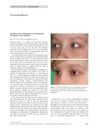
November 2009 in “Clinical and Experimental Dermatology” This case study describes a 16-year-old girl with alopecia areata affecting her eyelashes and eyebrows, who showed very limited response to treatment with topical mometasone furoate and subsequent partial hair loss upon stopping the treatment.
 1 citations
,
April 2018 in “The journal of investigative dermatology/Journal of investigative dermatology”
1 citations
,
April 2018 in “The journal of investigative dermatology/Journal of investigative dermatology” This study found that topical patidegib gel significantly shrank basal cell carcinomas in Gorlin syndrome patients without causing the systemic side effects common with oral hedgehog inhibitors.
 1 citations
,
March 2023 in “Frontiers in Medicine”
1 citations
,
March 2023 in “Frontiers in Medicine” This meta-analysis found that topical prostaglandin analogs could significantly improve hair length and density in patients with hair loss, compared to placebo, without notable safety differences.