5 citations
,
January 2024 in “JID Innovations” In this study, researchers identified significant differences in protein expression patterns in scalps affected by central centrifugal cicatricial alopecia, notably upregulation of immune pathways and fibrosis markers and downregulation of metabolic proteins, suggesting unique disease mechanisms and potential therapeutic targets.
 5 citations
,
February 2019 in “PloS one”
5 citations
,
February 2019 in “PloS one” This study found that structural defects in the hair shafts of sighthounds with bald thigh syndrome are related to a downregulation of genes and proteins essential for hair shaft formation.
4 citations
,
January 2023 in “Proteomes” This review explores the complex, context-dependent roles of tumor-secreted proteins and suggests that some proteins traditionally seen as tumor-promotive may act as tumor-suppressors in different environments, emphasizing the influence of cell fitness and treatment exposure.
 4 citations
,
January 2015 in “Journal of microbial & biochemical technology”
4 citations
,
January 2015 in “Journal of microbial & biochemical technology” In this study, the researchers observed that biotin administration in biotin-deficient children with alopecia eliminated certain membrane proteins from their blood, suggesting that biotin might regulate these proteins' expression.
 3 citations
,
October 2022 in “Frontiers in Surgery”
3 citations
,
October 2022 in “Frontiers in Surgery” This review discusses the role of proteomics in understanding skin diseases such as cancers and psoriasis, with findings suggesting cell death and metabolism as major areas of focus, but reports no new experimental results.
2 citations
,
February 2025 in “PLoS ONE” This study used TMT-based quantitative proteomics to analyze the development of secondary hair follicles in fetal sheep, revealing increased follicle density and key proteins involved, such as COL1A1 and THBS4, indicating their potential role in wool quality traits.
 May 2023 in “Clinical, Cosmetic and Investigational Dermatology”
 In this study, human dermal fibroblast-conditioned medium was found to contain numerous proteins involved in wound repair and hair regeneration, with identified proteins forming interaction networks linked to key signaling pathways like epidermal growth factor receptor and transforming growth factor-β.
 May 2026 in “Stem Cell Research & Therapy”
 In this study, researchers identified KRT6A as a potentially important gene in mesenchymal stem cell-derived treatments for alopecia areata, revealing its role as a diagnostic marker, predictor of disease severity, and a protective factor, with overexpression alleviating hair loss in experimental models.
 November 2024 in “International Journal of Cosmetic Science”
 In this study, varying pH levels from 3 to 12 were found to impact hair structure and proteins, with optimal hair health observed between pH 5 and pH 7, while extreme acidic or alkaline conditions notably affected hair morphology and proteome.
January 2024 in “Pharmacokinetics and Pharmacodynamics” This review discusses peptide "biogenic stimulants" from human placenta extracts, highlighting their potential wide-ranging clinical applications across multiple diseases, and reports no new clinical results.
 December 2023 in “Animal research and one health”
 This study investigated circRNA expression in Zhongwei goat skin at different growth stages and found that certain circRNAs, such as circRNA8782 and circRNA3173, may play roles in regulating wool curvature by affecting signaling pathways and fibroblast proliferation.
October 2021 in “Experimental Dermatology” This study explores the use of in silico methods to identify potential diagnostic biomarkers for primary cicatricial alopecia, revealing significant interactions among genes and proteins related to disease pathogenesis.

This study identified CD28 as a promising drug target for treating alopecia areata, using a multi-omics approach to highlight its role in immune regulation and linking it to favorable safety profiles, thus offering a strategy for autoimmune target discovery.

This study identified CD28 as a potential drug target in treating alopecia areata by linking immune signaling pathways to local inflammation, highlighting belatacept as a promising treatment option due to minimal adverse effects and providing insights into autoimmune target discovery.
 March 2025 in “medRxiv (Cold Spring Harbor Laboratory)”
 This study found that hair proteomics may serve as a promising, non-invasive biomarker source for stress-associated psychopathology, showing high accuracy in distinguishing patients with non-suicidal self-injury disorder from healthy controls.
 21 citations
,
January 2005 in “Pediatric Dermatology”
21 citations
,
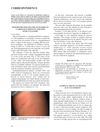
January 2005 in “Pediatric Dermatology” An 8-year-old girl with vitiligo developed extra hair growth on her knee after using tacrolimus ointment.
11 citations
,
January 2009 in “Acta Dermato Venereologica” In this case report, a 37-year-old man with discoid lupus erythematosus experienced around 80% hair regrowth after treatment with a combination of oral and topical therapies.
 1 citations
,
January 2013 in “The Journal of Dermatology”
1 citations
,
January 2013 in “The Journal of Dermatology” A skin condition called pyodermatitis vegetans was found in a patient with multiple myeloma for the first time.
 November 2021 in “International journal of life science and pharma research”
 This study reported that a solid lipid nanoparticle-based gel formulation, specifically optimized for psoriasis, improved drug loading capacity and release properties using high-pressure homogenization, suggesting its potential efficacy as a topical treatment.
 January 2015 in “Journal of evolution of medical and dental sciences”
 In this study, topical tacrolimus 0.03% cream showed good to excellent response in treating alopecia areata in 70% of participants, with no cutaneous or systemic side effects observed.
 21 citations
,
April 2014 in “PLoS ONE”
21 citations
,
April 2014 in “PLoS ONE” In this study, researchers identified a novel KRT74 gene mutation associated with autosomal recessive pure hair and nail ectodermal dysplasia in a Pakistani family, expanding the known genetic causes of the disorder.
8 citations
,
July 2020 in “BMC genomics” In this study, ceruloplasmin and keratin 4 were identified as markers that differentiate between growing and resting phases in cashmere goat hair follicles, with keratin 4 being a potential marker for the onset of a new hair cycle.
 4 citations
,
January 2025 in “Frontiers in Pharmacology”
4 citations
,
January 2025 in “Frontiers in Pharmacology” This review discusses the role of multiomics in understanding skin repair and regeneration mechanisms and reports no new results; the authors suggest it may lead to personalized medicine advancements and improved treatments.
1 citations
,
January 2025 in “Advances in Wound Care” This study identified dual epithelial and mesenchymal traits in dermal sheath cells during wound repair, suggesting they could be targeted to enhance healing.
 1 citations
,
July 2023 in “Forensic science international. Genetics”
1 citations
,
July 2023 in “Forensic science international. Genetics” In this study, researchers used proteomics to analyze hair samples from diverse ethnic populations, finding that hair protein profiles could potentially distinguish individuals based on ethnicity, sex, and age, offering a new method for human identification in forensic science.
1 citations
,
April 2023 in “Animals” This study utilized EDAR gene-targeted cashmere goats to identify 732 differentially expressed genes and 140 proteins associated with abnormal hair growth, providing insights into the regulatory mechanisms of cashmere follicle development.
 July 2026 in “Veterinary Sciences”
 This study explored the decline in cashmere production in Inner Mongolian cashmere goats through RNA-seq analysis, finding that AKT1 expression and related signaling pathways are age-dependent, with peak AKT1 upregulation at 12 months aligning with peak cashmere production.
 February 2026 in “International Journal of Molecular Sciences”
 In this study, researchers identified 47 proteins associated with male pattern baldness severity and prioritized five candidate genes, including druggable CD38, suggesting new non-hormonal targets for therapeutic development.
January 2026 in “Veterinary Sciences” In this study, researchers found that significant transcriptomic changes occur in the skin of Dezhou donkey foals as they age from newborns to one year old, involving gene expression shifts that may enhance skin barrier function and hair follicle development, while reducing collagen synthesis.
Results are not reported in this abstract, which notes that while Janus kinase inhibitors like baricitinib show therapeutic benefits for alopecia areata, the mechanisms and reliable predictors of response remain unclear.