 January 2026 in “Springer Link (Chiba Institute of Technology)”
 In this study, researchers synthesized silver nanoparticles using an extract from Mitracarpus scaber and found them to have significant hepatoprotective and anti-hyperplastic effects in rats, suggesting potential for treating liver injury and benign prostatic hyperplasia.
 228 citations
,
February 2003 in “Urology”
228 citations
,
February 2003 in “Urology” This article discusses the side effects of androgen deprivation therapy for nonmetastatic prostate cancer, highlighting the need for clinical trials to systematically study these effects.
 December 2023 in “International Journal of Molecular Sciences”
 In this study, researchers found that young men with androgenic alopecia exhibited significantly higher mRNA levels of 5α-reductase isozymes and changes in prostate cancer-related genes, which could explain varying responses to treatment and guide future therapies.
12 citations
,
October 2018 in “Aging male/The aging male” This study found that prostate cancer aggressiveness in men with obesity is associated with changes in age, BMI, testosterone, and estradiol levels, and that adipocyte-secreted molecules increase cancer cell aggressiveness in vitro.
 3 citations
,
January 2018 in “Reproduction, Fertility and Development”
3 citations
,
January 2018 in “Reproduction, Fertility and Development” This study concluded that cyproterone acetate alone produced antiandrogenic effects on the female gerbil prostate, while ethinyloestradiol alone stimulated estrogenic activity, and their combination led to prostatic lesions.
 8 citations
,
August 2011 in “Journal of Medicinal Food”
8 citations
,
August 2011 in “Journal of Medicinal Food” In this study, D-004 did not affect androgen-dependent development in rats exposed in utero, while finasteride caused significant changes in male offspring's androgen-dependent tissues.
 January 2026 in “E3S Web of Conferences”
 This study found that silver nanoparticles synthesized using Mitracarpus scaber extract showed potential hepatoprotective and anti-hyperplastic effects in rats, suggesting novel therapeutic strategies for managing liver injury and benign prostatic hyperplasia.
 23 citations
,
May 1984 in “Journal of the American Geriatrics Society”
23 citations
,
May 1984 in “Journal of the American Geriatrics Society” Benign Prostatic Hyperplasia may be caused by changes in how the body processes male hormones.
 18 citations
,
April 2001 in “Bioorganic & Medicinal Chemistry Letters”
18 citations
,
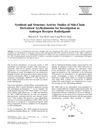
April 2001 in “Bioorganic & Medicinal Chemistry Letters” This study identified the N-(iodopropenyl) derivative 13 as a promising candidate for development as a radioiodinated androgen receptor ligand due to its binding affinity.
 8 citations
,
December 2016 in “Revista Medica De Chile”
8 citations
,
December 2016 in “Revista Medica De Chile” This article reviews the safety of finasteride by examining existing literature and does not report new findings, highlighting the ongoing controversies regarding its adverse effects.
 May 2024 in “Journal of molecular structure”
 This study found that a novel thiohydantoin derivative, 3a, effectively inhibited androgen receptor activity in LNCaP cells and showed promising in vivo results by reducing testosterone-induced prostate changes, outperforming finasteride in mitigating prostate index and histopathological alterations.
This study observed that intrauterine and early postnatal exposure to finasteride affected prostatic development in Mongolian gerbils, with significant sex-based differences, particularly higher alterations in female prostates.
 December 2018 in “Actas urológicas españolas”
 This study reported that cognitive biopsy diagnosed prostate cancer in 44% of patients with at least one previous negative biopsy, with higher detection rates in lesions classified as PI-RADS 4 and 5.
 26 citations
,
December 2019 in “Neurobiology of Stress”
26 citations
,
December 2019 in “Neurobiology of Stress” This review discusses adverse effects of 5 alpha-reductase inhibitors, particularly persistent side effects such as post-finasteride syndrome, and highlights the need for further investigation.
 3 citations
,
March 2018 in “BMC Cancer”
3 citations
,
March 2018 in “BMC Cancer” This study found that androgenic alopecia was associated with a decreased risk of testicular germ cell tumors but a potential increased risk of high-grade prostate cancer.
 20 citations
,
April 2012 in “Fertility and Sterility”
20 citations
,
April 2012 in “Fertility and Sterility” In this laboratory study with rats, treatment with finasteride reduced dihydrotestosterone levels and fertility parameters, with a 30-day recovery period proving insufficient to fully restore sperm function and fertility.
 72 citations
,
January 2003 in “American Journal of Pathology”
72 citations
,
January 2003 in “American Journal of Pathology” This study found that the co-activator CBP enhances the agonistic action of hydroxyflutamide on androgen receptors, suggesting a mechanism for therapy resistance in prostate cancer.
 93 citations
,
February 2009 in “Annals of the New York Academy of Sciences”
93 citations
,
February 2009 in “Annals of the New York Academy of Sciences” This review describes the roles of 5α-reductase isozymes in prostate development and pathology and reports no new clinical results.
 72 citations
,
April 2008 in “The Journal of urology/The journal of urology”
72 citations
,
April 2008 in “The Journal of urology/The journal of urology” This study found that 1-year use of 5alpha-reductase inhibitors, dutasteride or finasteride, significantly lowered dihydrotestosterone levels without adversely affecting bone density, lipids, or hemoglobin in normal men.
 56 citations
,
February 2006 in “American journal of physiology. Cell physiology”
56 citations
,
February 2006 in “American journal of physiology. Cell physiology” This study observed that in hormone-starved prostate cancer cells, the androgen 5alpha-dihydrotestosterone rapidly induces matriptase activation and shedding, which involves androgen receptor signaling and requires both transcription and protein synthesis.
 18 citations
,
March 2009 in “Medical Hypotheses”
18 citations
,
March 2009 in “Medical Hypotheses” This review discusses the potential link between long-term transdermal exposure to sex hormones from antiperspirants and increased breast and prostate cancer rates, calling for further research to confirm this theory.
 17 citations
,
September 2020 in “Journal of Endocrinological Investigation”
17 citations
,
September 2020 in “Journal of Endocrinological Investigation” This study found that the gut microbiota composition in patients with post-finasteride syndrome differs significantly from healthy controls, with reduced diversity and specific microbial changes, suggesting a potential diagnostic marker and therapeutic target.
 17 citations
,
November 2012 in “Cancer Epidemiology, Biomarkers & Prevention”
17 citations
,
November 2012 in “Cancer Epidemiology, Biomarkers & Prevention” This study observed that men with vertex androgenetic alopecia at age 40 had a higher risk of early-onset prostate cancer, suggesting a potential link between the conditions.
 9 citations
,
September 2010 in “Dermatologic Therapy”
9 citations
,
September 2010 in “Dermatologic Therapy” This article concludes that finasteride is a safe treatment for androgenetic alopecia and does not increase the risk of high-grade prostate cancer, despite past concerns from the Prostate Cancer Prevention Trial.
 4 citations
,
June 2015 in “Journal of Genetics/Journal of genetics”
4 citations
,
June 2015 in “Journal of Genetics/Journal of genetics” This abstract reports funding sources for ongoing research and does not present any study results.
 2 citations
,
January 2011 in “Andrologia”
2 citations
,
January 2011 in “Andrologia” This study concluded that 16β-methyl-17α-benzoyloxypregnen-4-en-3,20-dione may be a promising treatment for androgen-dependent diseases and epilepsy due to its antioxidant effects and impact on GABAergic and serotonergic metabolism in rats.
 2 citations
,
January 2011 in “Clinical medicine insights”
2 citations
,
January 2011 in “Clinical medicine insights” The authors concluded that dutasteride is effective and generally safe for managing benign prostatic hyperplasia and may reduce prostate cancer risk.

This study identified 193 plasma proteins associated with prostate cancer risk, validating 20 high-risk proteins including KLK3, and pinpointed potential drug targets like HSPB1, RRM2B, and PSCA through genetic analysis, offering new insights for biomarkers and treatments.
 October 2023 in “The Egyptian Journal of Hospital Medicine ”
 This review discusses the potential use of prostate specific antigen as a diagnostic marker for hyperandrogenism in polycystic ovary syndrome but reports no new clinical results and calls for further research.
 August 2023 in “Malaysian Journal of Medicine and Health Sciences/Malaysian journal of medicine and health sciences”
 This study found that aqueous extract of Pueraria mirifica, when administered to a rat model, significantly reduced prostate weight, prostatic index, and serum dihydrotestosterone levels, while also improving prostate histomorphology, suggesting its potential as an anti-BPH treatment.