123 citations
,
November 2003 in “Neuroscience Letters” In this study, TRPV4 channels were found in specific mechanosensory endings in mice skin, suggesting a role in pressure sensation transmitted through A- and C-fibers.
 9 citations
,
March 2011 in “Clinical and experimental dermatology”
9 citations
,
March 2011 in “Clinical and experimental dermatology” This paper discusses the concept of "coudability," a characteristic of alopecia areata, and provides a historical perspective, but it reports no new clinical results.
 April 2016 in “Journal of Investigative Dermatology”
 This study found that secreted factors from skin-derived precursors, especially those pre-treated with jasmine extract, enhanced keratinocyte growth and influenced reconstructed human epidermis thickness in lab experiments.
1 citations
,
October 2019 This study found that skin-infiltrating neutrophils play a crucial role in triggering chronic itch in atopic dermatitis by promoting skin hyperinnervation and enhanced expression of itch signaling molecules in a mouse model.
 April 2017 in “IOSR journal of dental and medical sciences”
 This abstract discusses Netherton Syndrome, a genetic disorder with a characteristic triad of symptoms caused by SPINK5 gene mutation, and reports no new clinical findings or treatment advances.
April 2023 in “Journal of Investigative Dermatology” Trichohyalin in hair can trigger immune attacks in alopecia areata.
This study found that bursts of ERK activation in the epidermis of mice were linked to cell division, supporting synchronized cell proliferation and transient ERK activity in living tissues.
 5 citations
,
June 2015 in “British Journal of Dermatology”
5 citations
,
June 2015 in “British Journal of Dermatology” This article discusses the role of lysophosphatidic acid-induced histamine release in generalized pruritus among patients with primary sclerosing cholangitis and reports no new clinical results.
 3 citations
,
August 2014 in “Journal of The American Academy of Dermatology”
3 citations
,
August 2014 in “Journal of The American Academy of Dermatology” This article discusses the role of filaggrin gene mutations in understanding atopic dermatitis and their link to allergic sensitization but does not report new clinical results.
May 2010 in “Faculty Opinions – Post-Publication Peer Review of the Biomedical Literature” A mutation in the KRT74 gene causes woolly hair by affecting hair texture.
11 citations
,
July 2015 in “Journal of Anatomy” This review summarizes a 15-year collaboration on the role of synaptic-like vesicles in mechanosensory nerve terminals and suggests potential therapeutic implications for conditions like hypertension and muscle spasticity.
2 citations
,
July 2024 in “Bioengineering” This study found that platelet-rich fibrin lysates modulate chemokine expression, reducing inflammation in oral squamous carcinoma cells, but increasing expression in primary oral epithelial cells.
1 citations
,
January 2015 This study found that bursts of ERK activation in the skin, termed SPREADs, are linked to increased cell division and help synchronize cell cycle progression in living mice.
3 citations
,
January 2019 in “Indian Journal of Drugs in Dermatology” This study reports two cases of PRIDE complex in nonsmall cell lung cancer patients treated with erlotinib and gefitinib, highlighting cutaneous reactions like papulopustules and paronychia.
December 2016 in “Experimental and Molecular Pathology” This study found that the wild-derived mouse strain Mus pahari has fragile skin that separates at subdermal levels under moderate force, potentially due to altered extracellular matrix development.
April 2009 in “The FASEB Journal” This study demonstrated that a keratin gel promotes nerve regeneration across critical defects in rabbit models, showing improved nerve conduction and muscle action potential compared to control treatments.
5 citations
,
March 2017 in “Gene” This study found that the transcription factor CAP1 negatively regulates KRT83 expression in Tan sheep, possibly influencing their curly hair phenotype.
30 citations
,
November 1992 in “The Journal of Dermatology” This review discusses the roles of filaggrin and trichohyalin in keratinocyte differentiation and reports no new results; the authors introduce possible hybrid granules in tongue epithelia.
1 citations
,
November 2025 in “Science Advances” This research identified two genetic variants that influence the white-spotted coat patterns in Holstein-Friesian cattle, involving regulatory changes in the MITF and KIT genes, confirmed through mouse models, along with possible effects on coat patterns in other cattle breeds.
22 citations
,
March 1999 in “International Journal of Clinical Practice” This review discusses the use of topical immunotherapy for severe alopecia areata and resistant viral warts, highlighting diphencyprone's advantages and the need for careful handling to avoid staff sensitisation; it reports no new clinical results.
In this study, researchers found that substance P and calcitonin-gene-related peptide have distinct roles in the regulation of hair growth in mice, suggesting potential therapeutic targets for hair growth manipulation.
January 2009 in “Nova Science Publishers (Nova Science Publishers, Inc.)” This study observed that human skin exhibits acute and chronic histological changes due to tick bites, including inflammation and changes in hair follicles, influenced by tick saliva and possible infections.
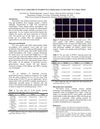
This study examined the use of keratin gel as a filler in nerve guides for peripheral nerve regeneration in a rat sciatic nerve injury model.
This study found that neutrophils are crucial for initiating chronic itch in atopic dermatitis and suggest that targeting neutrophils may help alleviate symptoms in this condition.
 263 citations
,
February 2011 in “Journal of Controlled Release”
263 citations
,
February 2011 in “Journal of Controlled Release” This study found that medium-sized particles (643 and 646 nm) penetrated deeper into porcine hair follicles in vitro than smaller or larger particles, suggesting size-selective targeting within follicular sites.
 19 citations
,
December 2015 in “Journal of Investigative Dermatology”
19 citations
,
December 2015 in “Journal of Investigative Dermatology” This study found that keratin 17 expression is initially down-regulated and later strongly up-regulated by ionizing radiation in a rat model, with p53 repressing early transcription.
8 citations
,
August 1993 in “Colloid & Polymer Science” This study argues that the reported "toughening" transition in keratin is a misinterpretation, actually representing the evaporation peak of residual water in the fibers.
October 2024 in “Cosmetics” In this study, subthermal RF-CRET currents were found to alter key molecular mechanisms in dermal papilla cells, promoting proliferation and survival while enhancing markers associated with hair growth and maintenance, suggesting potential benefits for hair regeneration.
June 2020 in “Faculty Opinions – Post-Publication Peer Review of the Biomedical Literature” This study found a specific T cell receptor that may be key in carbamazepine-induced Stevens-Johnson syndrome and toxic epidermal necrolysis, suggesting potential therapeutic targets.
 1 citations
,
November 2023 in “Contact dermatitis”
1 citations
,
November 2023 in “Contact dermatitis” In this study, sensitization to ethylhexyl salicylate was found in 27.3% of patients with frontal fibrosing alopecia, suggesting it may be a potential contact allergen for this condition.