 182 citations
,
October 2003 in “British Journal of Dermatology”
182 citations
,
October 2003 in “British Journal of Dermatology” These guidelines for alopecia areata management, prepared by the British Association of Dermatologists, provide evidence-based treatment recommendations and insights into the condition's epidemiology, diagnosis, and investigation.
 88 citations
,
December 2012 in “Journal of The European Academy of Dermatology and Venereology”
88 citations
,
December 2012 in “Journal of The European Academy of Dermatology and Venereology” This study found that interfollicular injection of autologous CD34+ cell-containing PRP preparation improved hair count and thickness in patients with pattern hair loss, with better results than placental extract treatment.
 24 citations
,
May 2015 in “Schizophrenia Research”
24 citations
,
May 2015 in “Schizophrenia Research” This study found that inhibiting the enzyme 5α-reductase with finasteride counteracted stress-induced prepulse inhibition deficits in socially isolated rats by altering neuroactive steroid concentrations in the brain.
 21 citations
,
February 2017 in “Dermatologic surgery”
21 citations
,
February 2017 in “Dermatologic surgery” In this study, different donor and recipient site preparation techniques for melanocyte-keratinocyte suspension were associated with similar repigmentation outcomes in stable vitiligo, but efficacy varied by body site.
 18 citations
,
January 2006 in “Analytical Sciences”
18 citations
,
January 2006 in “Analytical Sciences” This study found that the FIA-amperometric method for minoxidil quantification in pharmaceutical preparations provided accurate results comparable to the conventional UV technique, indicating no systematic errors.
16 citations
,
January 1998 in “Dermatology” This study observed that vellus hairs and empty spaces are present in prepubertal children's scalps, but they likely do not indicate androgenetic alopecia, suggesting a natural 'true resting' phase of scalp hair.
15 citations
,
April 2025 in “Journal of Clinical Medicine” This review reports that platelet-rich plasma may be more effective for musculoskeletal conditions when prepared with high platelet doses and low leukocyte content, but further trials are needed to confirm optimal formulations.
 10 citations
,
November 2015 in “Elsevier eBooks”
10 citations
,
November 2015 in “Elsevier eBooks” This review outlines the development and functional requirements of modern wound dressing materials and describes preparation methods and product performance, but reports no new clinical findings.
 4 citations
,
January 2022 in “Journal of nanomaterials”
4 citations
,
January 2022 in “Journal of nanomaterials” In this study, silver nanoparticles prepared using Ziziphus nummularia fruit extract showed higher hair growth activity and were more effective against Gram-positive bacteria compared to other extracts.
 3 citations
,
February 2023 in “International Journal of Molecular Sciences”
3 citations
,
February 2023 in “International Journal of Molecular Sciences” This review discusses the composition, preparation, and applications of autologous platelet and extracellular vesicle-rich plasma, highlighting its potential benefits and the need for further research, but it reports no new clinical findings.
 3 citations
,
June 2017 in “PubMed”
3 citations
,
June 2017 in “PubMed” In this study, autologous platelet-rich plasma prepared with Merisis One Step Gel Separation Technology improved hair counts, thickness, root strength, and overall alopecia in five patients without major adverse effects over three months.
 3 citations
,
October 2015 in “International Journal of Dermatology”
3 citations
,
October 2015 in “International Journal of Dermatology” This study found that the vertex/occiput ratios of hair density and diameter in prepubertal children may serve as reference values to identify androgenetic alopecia with high probability.
1 citations
,
August 2016 in “Journal of nature and science” This study observed light flashes and repulsion effects in a single-slide preparation of human hair with a special solution, suggesting potential electromagnetic field emissions from the hair.
 April 2026 in “Mathematics”
 This study used a probabilistic framework to show that platelet-rich plasma preparation results in significant variability in platelet dose due to factors like injected volume and concentration factor.
 February 2026 in “Zenodo (CERN European Organization for Nuclear Research)”
 This review article summarizes the phytochemistry, preparation methods, applications, and potential therapeutic benefits of fenugreek-based hair oil, suggesting its use as a natural remedy for hair growth, scalp health, and conditioning, while also noting its safety and future potential in cosmetic and pharmaceutical formulations.
 February 2026 in “Zenodo (CERN European Organization for Nuclear Research)”
 This review outlines the phytochemistry, preparation methods, and potential therapeutic benefits of fenugreek-based hair oil, suggesting its use for hair growth and scalp health, while emphasizing its safety and future prospects in cosmetics and pharmaceuticals.
 April 2025 in “Jurnal Analis Farmasi”
 This study evaluated hair tonic formulations containing Ambon banana peel extract and found that the preparation, particularly at an 8% concentration, significantly promoted hair growth compared to other formulations, though it still differed from the control group's effectiveness.

In this study, researchers describe a technique for preparing mesenchymal stem cells to optimize hair transplantation for androgenetic alopecia, highlighting future plans to assess stem cell characteristics and hair density improvements through flow cytometry and trichoscopy.
February 2024 in “Asian Journal of Pharmaceutical and Clinical Research” This study found that human platelet lysate, prepared from expired platelet concentrate, maintained stable growth factor levels for up to six months and improved healing in second-degree burn wounds compared to standard silver sulfadiazine treatment at three weeks.
 January 2024 in “Wiadomości Lekarskie”
 This research discusses the author's findings on methods for harvesting and preparing fat tissue for transplantation, highlighting rare but serious complications reported in animal studies and the use of conditioning devices.
January 2024 in “Journal of Health Study and Medicine” This review discusses the types, preparation, and current applications of platelet-rich plasma in medicine, particularly focusing on its use in gynecology and obstetrics, but presents no new clinical results.
April 2022 in “SDÜ Tıp Fakültesi Dergisi” In this study, sodium benzoate at the No Adverse Effect Level dose adversely affected kidney and liver function and increased oxidative stress and genotoxicity in prepubertal rats.
 January 2022 in “Healthy Tadulako Journal”
 This study found no difference in the physical stability of hair tonic preparations made from sansevieria leaves extract, regardless of whether maceration or soxhletation methods were used.
 April 2019 in “National Journal of Research in Ayurved Science”
 This source reports that triphala, an Ayurvedic herbal preparation made from three fruits, is widely used as a safe and effective laxative and colon cleanser, with potential anti-cancer properties and additional health benefits like improving digestion and detoxifying the body.
 January 2018 in “International journal for pharmaceutical research scholars”
 In this study, topical application of tonic preparations containing 5% ethanol extract of Phyllanthus niruri to shaved mice showed potential as a hair growth enhancer, as indicated by observations of increased hair length and weight over a 21-day period.
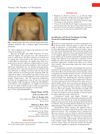 May 2015 in “Plastic and Reconstructive Surgery”
 This article introduces a novel, inexpensive hair preparation technique using glove-finger sheaths to secure and protect hair during calvarial surgery, reducing procedure time and hair damage without the need for full scalp shaving.
January 2013 in “Вестник Томского государственного университета. История” This study suggests that the presence of vellus hairs and empty spaces in prepubertal scalps may reflect a natural resting phase of hair growth rather than indicating early androgenetic alopecia.
 June 2010 in “Chin J Postgrad Med”
 In this study, prednisone and zinc preparation combined with 2% minoxidil significantly improved curative rates for androgenetic alopecia after 9 to 12 months compared to prednisone and zinc preparation alone.
 227 citations
,
December 2021 in “ACS Nano”
227 citations
,
December 2021 in “ACS Nano” This review discussed the potential of multifunctional photoresponsive hydrogels for wound regeneration, highlighting various types prepared with diverse photosensitizers and photothermal/photodynamic agents, and explored their role in modulating bacterial microenvironments to inhibit infection and promote healing.
20 citations
,
August 1960 in “PubMed” This study investigated the effects of selenium sulfide suspension on hair roots after noticing higher abnormal hair root proportions in individuals using the preparation.