 48 citations
,
October 2011 in “Sports Medicine”
48 citations
,
October 2011 in “Sports Medicine” This review covers dermatological conditions experienced by ice-skating athletes due to cold exposure, infections, and inflammation, providing no new clinical findings and emphasizing diagnosis and treatment strategies.
4 citations
,
April 2024 in “Animals” This study reported allergic dermatitis in Brazilian donkeys linked to Culicoides insect bites, characterized by severe itching and skin lesions. The potential treatment with copaiba oil and multivitamin emulsion was explored, revealing its promise for managing this condition.
 22 citations
,
December 2003 in “Veterinary clinical pathology”
22 citations
,
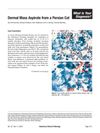
December 2003 in “Veterinary clinical pathology” This case study reported a diagnosis of dermatophytic pseudomycetoma in a Persian cat with dermal nodules, highlighting potential heritable predisposition and suggesting systemic antifungal therapy for fair prognosis.
April 2025 in “Digital Commons - East Tennessee State University (East Tennessee State University)” In a mice model of atopic dermatitis, this study reported that a formulated cromolyn sodium oleate gel significantly reduced scab size and provided better healing than dexamethasone, with fewer adverse effects.
11 citations
,
January 2015 in “JOURNAL OF HEALTH SCIENCE” This case report details a 12-year-old boy with Lichen Spinulosus and plantar keratoderma, who responded well to topical treatments including lactic acid, urea, and betamethasone valerate.
April 2018 in “Blackwell's Five‐Minute Veterinary Consult Clinical Companion” This chapter discusses atypical endocrinopathies affecting the hair and skin in small animals and provides treatments but does not present new research results.
 August 2024 in “Journal of Marine Medical Society”
 This case report highlighted the use of dermoscopy not only for diagnosing skin disorders but also as an educational tool to inform patients about the harmful effects of unqualified medical advice, particularly highlighting the quackery issue in dermatology.
36 citations
,
January 2000 in “British journal of dermatology/British journal of dermatology, Supplement” This case study reports on a mother and daughter with ichthyosis follicularis, alopecia, and photophobia, noting consistent keratotic eruptions during the mother's pregnancies that improved postpartum.
38 citations
,
November 2006 in “Pediatric dermatology” This study reports four infants with necrotic caput succedaneum leading to alopecia and persistent scalp lesions, which partially improved with topical corticosteroids, indicating erosive pustular dermatosis of the scalp.
 August 2025 in “International Journal of Research in Dermatology”
 This case report highlights an atypical presentation of acrodermatitis enteropathica in an 18-year-old male, exhibiting symptoms like erythrokeratoderma variabilis with a positive response to high-dose oral zinc, underscoring the importance of considering zinc deficiency in unusual skin conditions.
In this study, a two-year-old black Dobermann pinscher with progressive dorsal hair loss and folliculitis showed a partial response to prolonged omega-3/omega-6 fatty acid treatment.
 October 2015 in “Reactions Weekly”
 A woman got a scalp condition from using latanoprost, but it improved after stopping the drug and starting other treatments.
52 citations
,
February 2009 in “Journal of the American Academy of Dermatology” This case study identified erosive pustular dermatosis of the scalp following methylaminolaevulinate photodynamic therapy, noting improvement with steroid treatment and partial resolution of atrophy after three months.
4 citations
,
January 2009 in “Veterinary Dermatology” In this case report, two cats developed symmetrical hair loss and dry skin after exposure to diesel oil but fully recovered without treatment.
3 citations
,
November 2023 in “The Journal of Dermatology” 3 citations
,
January 2020 in “Acta veterinaria indonesiana” In this case study, a Persian cat with dermatophytosis showed a reduction in skin lesions after being treated with oral itraconazole and topical ketoconazole.
September 2023 in “Journal of the American Academy of Dermatology” Bullous pemphigoid can look like erythema multiforme, so awareness is needed for proper treatment.
 11 citations
,
September 2021 in “Anais Brasileiros de Dermatologia”
11 citations
,
September 2021 in “Anais Brasileiros de Dermatologia” This article reviews how skin manifestations can aid in diagnosing various systemic diseases, focusing primarily on their association with rheumatologic conditions while also addressing vascular, granulomatous, and other disease impacts, aiming to provide dermatologists with practical diagnostic insights.
 22 citations
,
April 2000 in “International Journal of Dermatology”
22 citations
,
April 2000 in “International Journal of Dermatology” This case report describes a 78-year-old farmer with idiopathic pulmonary fibrosis who developed cutaneous Alternaria alternata infections, which improved with reduced prednisolone and itraconazole treatment, with no recurrence after two years.
13 citations
,
June 2011 in “PubMed” This case report describes a man with Touraine-Solente-Golé syndrome who achieved substantial improvement of tufted hair folliculitis after treatment with amoxicillin, clavulanic acid, and topical nadifloxacin.
19 citations
,
November 1985 in “Archives of Dermatology” This case study documented a black male newborn developing large bullae that healed with hypopigmentation, suspecting proteolytic enzymes in keratinocytes caused the collagenolysis responsible for the condition.
 September 2025 in “Dicle Medical Journal / Dicle Tip Dergisi”
 In this retrospective study, researchers found that fungal infections, xerosis, eczematous dermatitis, and seborrheic dermatitis were the most common dermatological findings among patients with Parkinson's disease, Multiple Sclerosis, and Amyotrophic Lateral Sclerosis, with significant intergroup differences observed.
 172 citations
,
December 2004 in “Journal of The American Academy of Dermatology”
172 citations
,
December 2004 in “Journal of The American Academy of Dermatology” In this study, demodicoses were found to be relatively common among immunocompetent patients, with a notable overlap with papulopustular rosacea.
April 2025 in “Indian Dermatology Online Journal” This study describes how avian-inspired imagery is used in dermatology to help clinicians and patients identify and communicate skin conditions, using familiar terms like "chicken skin" and "fried egg" to capture specific visual patterns and clinical features.
1 citations
,
January 1989 in “Carcinogenesis” This study found that dexamethasone treatment inhibited the inflammatory response and the induction of ornithine decarboxylase activity in mouse skin after TPA application, although the effect on ODC was weaker during the hyperplastic stage.

In this study, pruritus was the most frequent skin disorder observed in hemodialyzed patients, particularly among those undergoing long-term dialysis.
6 citations
,
February 1985 in “Archives of Dermatology” This report describes a case where a 23-year-old woman with juvenile rheumatoid arthritis developed generalized ichthyosiform eruption due to sarcoidosis after long-term use of systemic corticosteroids.
This review discusses the role of vitamin D in various diseases, including its involvement in dermatoses, and reports on vitamin D status in patients with seborrheic dermatitis without new clinical results.
 1 citations
,
November 1953 in “Archives of Dermatology”
1 citations
,
November 1953 in “Archives of Dermatology” This case presentation by Dr. Howard Fox describes a persistent skin eruption in a woman following sun exposure and the use of a specific lotion, highlighting diagnostic challenges between Lupus Erythematosus and Erythema Perstans but reports no definitive diagnosis.
March 2026 in “Buletin Veteriner Udayana” In this case report, a 3-month-old puppy with Malassezia dermatitis showed substantial improvement and complete recovery from pruritus, skin lesions, and hair loss after four weeks of treatment with Sebazole® shampoo, apple cider vinegar, virgin coconut oil, and diphenhydramine.