 6 citations
,
April 1996 in “Journal of histochemistry and cytochemistry/The journal of histochemistry and cytochemistry”
6 citations
,
April 1996 in “Journal of histochemistry and cytochemistry/The journal of histochemistry and cytochemistry” This study suggests that TGF-alpha may function in an autocrine or juxtacrine manner rather than promoting cell proliferation during hair growth cycles in ferrets and sheep.
 5 citations
,
May 2023 in “Frontiers in immunology”
5 citations
,
May 2023 in “Frontiers in immunology” This review discusses how environmental factors like lifestyle, nutrition, and vitamin deficiencies may influence autoimmune diseases such as MS, SLE, and AA, highlighting associations with vitamin D levels and dietary interventions, but notes a lack of conclusive evidence for their roles in disease pathogenesis.
 5 citations
,
May 2023 in “European Journal of Human Genetics”
5 citations
,
May 2023 in “European Journal of Human Genetics” This study found that mutations in the TULP3 gene are associated with progressive degeneration of the liver, kidney, and heart in adults, highlighting the importance of early detection and management.
 5 citations
,
January 2021 in “iScience”
5 citations
,
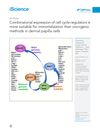
January 2021 in “iScience” Using a combination of specific cell cycle regulators is better for safely keeping hair root cells alive indefinitely compared to cancer-related methods.
 5 citations
,
March 2019 in “Journal of lipid research”
5 citations
,
March 2019 in “Journal of lipid research” This study reports new fluorogenic ceramidase substrates and highlights RBM14C24:1 as an efficient substrate for neutral ceramidase, while RBM15C18:1 is the best probe for measuring ACER1 and ACER2 activities, potentially aiding high-throughput screening for ceramidase inhibitors.
 4 citations
,
October 2021 in “Scientific Reports”
4 citations
,
October 2021 in “Scientific Reports” This study found that NKIRAS2 expression affects skin tumor suppression and HRAS-driven transformation in mice, indicating its role in carcinogenesis depends on expression level and cellular context.
 4 citations
,
January 2021 in “International Journal of Medical Sciences”
4 citations
,
January 2021 in “International Journal of Medical Sciences” This study suggests that miR-182 may play an essential role in hallux valgus development by regulating FGF9 expression, indicating a potential therapeutic target for its treatment.
 4 citations
,
September 2020 in “Annals of Translational Medicine”
4 citations
,
September 2020 in “Annals of Translational Medicine” This study found that concentrated nanofat, used alone or with decellularized nanofat, may enhance hair growth in mice by activating dermal papilla cells and the anagen phase.
 3 citations
,
December 2020 in “Scientific reports”
3 citations
,
December 2020 in “Scientific reports” This study found that mitochondrial oxidative phosphorylation in epithelial cells is necessary for proper enamel formation and odontoblast differentiation in developing incisor teeth in K320E-Twinkle Epi mice.
 3 citations
,
January 2011 in “Female pelvic medicine & reconstructive surgery”
3 citations
,
January 2011 in “Female pelvic medicine & reconstructive surgery” This review discusses the impact of hormones on female sexual function and dysfunction, highlighting the complexity and gaps in basic research, and reports no new clinical findings.
 3 citations
,
July 2024 in “Frontiers in Pharmacology”
3 citations
,
July 2024 in “Frontiers in Pharmacology” This study demonstrates that Puerariae Lobatae Radix may regulate skin lipid metabolism by inhibiting sebaceous gland growth and reducing triglyceride secretion, highlighting its therapeutic potential for sebaceous gland-related conditions.
 3 citations
,
February 2022 in “Frontiers in cell and developmental biology”
3 citations
,
February 2022 in “Frontiers in cell and developmental biology” This study found that the circular RNA circCOL1A1 influences the formation of superior-quality brush hair in white goats by regulating hair follicle stem cell behavior and interacting with the miR-149-5p/CMTM3/AR axis.
 3 citations
,
June 2017 in “Methods”
3 citations
,
June 2017 in “Methods” This study used computational modeling to identify key genes and miRs involved in cardiac aging, finding a strong relationship supported by literature and some experimental validation in aged mouse hearts.
 3 citations
,
January 2005 in “Biological & Pharmaceutical Bulletin”
3 citations
,
January 2005 in “Biological & Pharmaceutical Bulletin” This study reports that the peptide GPIGS, found in Bacillus sp. M18 conditioned medium, may promote hair growth through the PI-3K/Akt pathway and accelerate hair regrowth in mice.
 2 citations
,
December 2020 in “bioRxiv (Cold Spring Harbor Laboratory)”
2 citations
,
December 2020 in “bioRxiv (Cold Spring Harbor Laboratory)” This study found that SYP123 and VAMP727 are involved in the secretion and transport of inner cell wall components, which is crucial for hardening the root hair shank in Arabidopsis.
 2 citations
,
November 2025 in “Journal of Ovarian Research”
2 citations
,
November 2025 in “Journal of Ovarian Research” This study found that in a mouse model of PCOS, high androgen levels caused pyroptosis in ovarian granulosa cells and increased ER stress in oocytes, reducing oocyte maturation rates, while treatment with CPA and DMF improved these rates.
 2 citations
,
June 2023 in “Journal of cell science”
2 citations
,
June 2023 in “Journal of cell science” In this study, researchers found that specific mutations in iRhom2 in mice lead to skin and hair abnormalities which depend on the presence of the protein ADAM17, suggesting a complex role for iRhom2 in tissue development and potential implications for treating tylosis with oesophageal cancer.
 2 citations
,
May 2022 in “Research Square (Research Square)”
2 citations
,
May 2022 in “Research Square (Research Square)” This study demonstrates that the amino-terminally shortened KGF-1 variant with 135 residues maintains biological activity, suggesting it may serve as an alternative to the original KGF-1 for certain therapeutic applications.
 2 citations
,
January 2020 in “BioMed Research International”
2 citations
,
January 2020 in “BioMed Research International” This study found that Phaeodactylum tricornutum extract enhanced hair follicle cell proliferation, indicated by increased keratin and ERK1/2 signaling, suggesting its potential for hair care applications.
 2 citations
,
August 2019 in “BMC Complementary and Alternative Medicine”
2 citations
,
August 2019 in “BMC Complementary and Alternative Medicine” This study found that ethanolic asiasari radix extract may induce apoptosis in G361 melanoma cells through ROS-dependent regulation of p53, suggesting potential as a medicinal option for melanoma.
 2 citations
,
January 2019 in “Medizinische Genetik”
2 citations
,
January 2019 in “Medizinische Genetik” Among families with pediatric brain disease, this study identified over 200 novel genetic causes, revealing potential treatment points using drug repurposing or nutritional supplementation.
 2 citations
,
August 2018 in “Korean Journal of Plant Resources”
2 citations
,
August 2018 in “Korean Journal of Plant Resources” This study found that oregonin, isolated from Alnus japonica, demonstrated strong antioxidant activity and apoptosis modulation in hair follicle cells, suggesting its potential as a natural ingredient for preventing hair loss in cosmetic products.
 2 citations
,
January 2012 in “InTech eBooks”
2 citations
,
January 2012 in “InTech eBooks” This chapter provides an overview of chemotherapy-induced alopecia, discussing its biological and clinical aspects, current experimental models and treatments, and calls for improved understanding to prevent and manage it.
 1 citations
,
September 2023 in “eLife”
1 citations
,
September 2023 in “eLife” This study found that TLR2 expression in hair follicle stem cells is crucial for hair follicle maintenance and regeneration, with TLR2-dependent activation potentially offering new therapeutic approaches for hair loss prevention through mechanisms involving immune pathways and CEP administration.
 1 citations
,
October 2013 in “Our Dermatology Online”
1 citations
,
October 2013 in “Our Dermatology Online” This study found that individuals in this Egyptian cohort carrying the leucine (L) allele of the 5-α reductase type II enzyme had a higher risk of developing androgenetic alopecia, which may be associated with oxidative stress.
 1 citations
,
October 2001 in “Journal of Wood Science”
1 citations
,
October 2001 in “Journal of Wood Science” This study found that extracts from the fungus YL161, Agaricus blazei, and the bark of Camptotheca cuminata promoted dermal papilla cell growth more effectively than pentadecanoic acid, suggesting potential for stimulating hair growth.
 1 citations
,
September 2024 in “Frontiers in Cell and Developmental Biology”
1 citations
,
September 2024 in “Frontiers in Cell and Developmental Biology” Pigs are a good model for studying human hair growth and disorders.
 1 citations
,
April 2022 in “Cell Death Discovery”
1 citations
,
April 2022 in “Cell Death Discovery” This study found that SMAD2 overexpression in human hair follicle stem cells promoted differentiation and apoptosis while inhibiting proliferation, and Smurf2 upregulation limited mouse wound healing by suppressing the SMAD2/NANOG/DNMT1 axis.
![Integrating Multi-Omics Analyses of Nonomuraea Dietziae to Reveal the Role of Soybean Oil in [(4′-OH)MeLeu]4-CsA Overproduction](/images/assets/0eba9759-3aa4-4a06-a70a-2d9c46be53f3/small/23018.jpg) 1 citations
,
July 2017 in “Microbial Cell Factories”
1 citations
,
July 2017 in “Microbial Cell Factories” This study found that supplementing soybean oil significantly increased the production of the cyclosporine A derivative [(4'-OH)MeLeu]4-CsA by 55.6%, offering potential enhancements for its clinical application.
 1 citations
,
March 2017 in “European Journal of Cancer Prevention”
1 citations
,
March 2017 in “European Journal of Cancer Prevention” This study found that self-reported use of finasteride or oral contraceptives did not reduce the incidence of renal cancer in participants of the PCLO trial.