 February 2022 in “Research Square (Research Square)”
 This study demonstrated that LGR5 is a marker of hair follicle stem cells across species using a transgenic pig model and noted similarities and differences in expression patterns compared to humans.
May 2023 in “Pharmaceuticals” In this in silico study, researchers analyzed nonsynonymous SNPs in the LIPH gene linked to hypotrichosis and identified three potentially harmful variants (W108R, C246S, and H248N) out of 215 total, using sequence- and architecture-based bioinformatics techniques to differentiate between harmful and benign SNPs.
 51 citations
,
March 2019 in “Journal of cellular physiology”
51 citations
,
March 2019 in “Journal of cellular physiology” This review discusses the use of platelet lysate and its growth factors in treating diseases and regenerative medicine but reports no new clinical findings.
November 2022 in “Journal of Investigative Dermatology” This study provides evidence that ILC1-like cells can induce alopecia areata in previously healthy human hair follicles, challenging the view that it is solely an autoantigen-dependent autoimmune disease.
 13 citations
,
March 2020 in “Genes”
13 citations
,
March 2020 in “Genes” This study found that FGF5-/- rabbits exhibited a significant long hair phenotype by prolonging the anagen phase, suggesting FGF5 acts as a negative regulator of hair growth.
July 2024 in “Journal of Investigative Dermatology” Linalool in fragrances may harm hair follicles and contribute to hair loss.
11 citations
,
September 2023 in “Nature Communications” In this study, researchers found that the cell surface protein Lrig1 plays a crucial role in regulating the suppressive function of regulatory T cells, suggesting it as a potential target for treating autoimmune diseases, as evidenced by experiments in mouse models.
 20 citations
,
May 2013 in “International Journal of Molecular Medicine”
20 citations
,
May 2013 in “International Journal of Molecular Medicine” This study identified a novel missense MAFB variant in a family with some unaffected members, suggesting incomplete penetrance and the potential influence of modifier genes, epigenetic mechanisms, or environmental factors on MCTO phenotype.
 3 citations
,
December 2016 in “Springer eBooks”
3 citations
,
December 2016 in “Springer eBooks” This study found that activating Toll-like receptor 3 in periodontal ligament stem cells enhanced their stem cell and immunosuppressive properties, potentially supporting effective periodontal tissue regeneration.
 16 citations
,
January 2017 in “Anais brasileiros de dermatologia/Anais Brasileiros de Dermatologia”
16 citations
,
January 2017 in “Anais brasileiros de dermatologia/Anais Brasileiros de Dermatologia” This case study discusses a postmenopausal woman's frontal fibrosing alopecia and lichen planus pigmentosus, controlled with corticosteroids and finasteride, highlighting diagnostic and therapeutic challenges in scarring alopecia.
 138 citations
,
June 2019 in “Stem Cells and Development”
138 citations
,
June 2019 in “Stem Cells and Development” This review explores the potential of periodontal ligament stem cells for regenerative therapy in periodontium, despite challenges due to their rarity, and reports no clinical results.
February 2026 in “Indian Dermatology Online Journal” This study reports that oral tofacitinib treatment in a patient with refractory lichen planus pigmentosus and frontal fibrosing alopecia resulted in near-complete resolution of hyperpigmentation and cessation of hairline recession over 18 months, and suggests it may be a promising therapy for these challenging conditions.
April 2021 in “The journal of investigative dermatology/Journal of investigative dermatology” This study examined clinical characteristics of lichen planopilaris and frontal fibrosing alopecia in 24 men, revealing common scalp symptoms, frequent beard involvement, and limited association with thyroid disease.
13 citations
,
June 2014 in “Molecular therapy” This study found that a lentiviral array of reporters can identify lineage-specific promoters and pathways in mesenchymal stem cell differentiation, aiding in the prediction of signaling pathway effects.
July 2026 in “Research Square”  March 2026 in “Revista Ibero-Americana de Humanidades, Ciências e Educação”
 In this study, L-PRF was associated with successful osseointegration and tissue healing when used with biomaterial for dental implants in a patient with an atretic bone ridge.

This study found that Plakophilin 1 regulates innate immune responses in keratinocytes by controlling RNA helicase activity, balancing inflammation during epidermal immune challenges.
 May 2025 in “Animal Bioscience”
 This study found that inhibiting prolactin secretion during the telogen phase can reduce the number of activated secondary hair follicles and the width of hair bulbs.
 105 citations
,
December 2009 in “Archives of dermatology”
105 citations
,
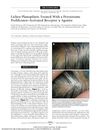
December 2009 in “Archives of dermatology” This overview discusses primary cicatricial alopecias, focusing on lichen planopilaris, and highlights the challenges in treatment and the progressive nature of hair loss despite symptom management, without providing new clinical results.
 93 citations
,
April 2003 in “Proceedings of the National Academy of Sciences of the United States of America”
93 citations
,
April 2003 in “Proceedings of the National Academy of Sciences of the United States of America” This study identified an unexpected critical role for the FATP4 protein in skin and hair development in mice, linking it to a potential candidate gene for restrictive dermopathy in humans.
This study found that home use of low-level light therapy reduced inflammation and symptoms like itching and burning in women with frontal fibrosing alopecia over six months.
 September 2016 in “Journal of Dermatological Science”
 This study identified that in Japanese patients with autosomal recessive woolly hair/hypotrichosis, the c.736T > A LIPH mutation is associated with a mild phenotype, while the c.742C > A mutation may lead to severe baldness.
 9 citations
,
December 2002 in “Novartis Foundation Symposium”
9 citations
,
December 2002 in “Novartis Foundation Symposium” In this research, LEF1 was identified as a crucial transcription factor for submucosal gland development in mouse and ferret tracheas, though it requires other factors to induce gland formation.
 6 citations
,
August 2020 in “JCRPE”
6 citations
,
August 2020 in “JCRPE” This report presents a case of familial male-limited precocious puberty with a novel LHCGR gene mutation, where a boy responded well to treatment with bicalutamide and anastrozole.
 38 citations
,
February 2012 in “British Journal of Dermatology”
38 citations
,
February 2012 in “British Journal of Dermatology” This study suggests that the AR/EDA2R locus may contribute to early-onset female pattern hair loss, but no association was found with the 20p11 locus.
 January 2024 in “Brazilian Journal of Hair Health”
 Combining low-level laser therapy with topical corticosteroids effectively improved Lichen Planopilaris symptoms.
20 citations
,
January 2015 in “Biochimica and biophysica acta. Molecular and cell biology of lipids” This review discusses lysophosphatidic acid's role in neuropathic pain and cholestatic itch, highlighting its complex signaling pathways, but reports no new clinical results.
 November 2023 in “Journal of cosmetic dermatology”
 This report describes three cases of erythromelanosis follicularis faciei et colli showing significant improvement in facial telangiectasia following treatment with a 595-nm pulsed dye laser, with minimal recurrence observed during follow-up.
13 citations
,
July 2019 in “PLoS ONE” This study found that deleting podoplanin in mouse keratinocytes promoted hair follicle growth during regeneration, suggesting it may regulate hair cycling pathways that could aid in treating hair loss conditions.

This study found a significant discordance between clinical symptoms and dermatoscopic signs with histopathological inflammation in patients with LPP and AFF, affecting diagnostic and therapeutic approaches.