 September 2021 in “CRC Press eBooks”
 This review discusses the clinical and trichoscopic features of lichen planopilaris and notes its potential underdiagnosis prior to hair transplant, but it reports no new findings.
2 citations
,
August 2025 in “Pharmaceutics” This review compares DNA-derived biopolymers, PN and PDRN, in dermatology, emphasizing their distinct molecular characteristics and roles, and reports no new clinical results.
February 2026 in “JEADV Clinical Practice” This report describes a rare case of scarring alopecia, diagnosed as lichen planopilaris (LPP), affecting solely the limbs, highlighting the necessity for thorough evaluation of LPP beyond the scalp.
September 2024 in “Dermatologica Sinica” This study reported a rare case of pityriasis rubra pilaris-like skin reaction in an 18-year-old woman after starting ponatinib treatment for relapsed Philadelphia chromosome-positive acute lymphoblastic leukemia, which resolved after treatment adjustment and did not recur over 15 months.
 51 citations
,
March 2019 in “Journal of cellular physiology”
51 citations
,
March 2019 in “Journal of cellular physiology” This review discusses the use of platelet lysate and its growth factors in treating diseases and regenerative medicine but reports no new clinical findings.
1 citations
,
March 2026 in “Scientific Reports” This study found that among patients with discogenic low back pain, intradiscal injection of platelet-rich plasma over six months resulted in significant symptom improvement, with 79.3% achieving a clinically important reduction in pain and disability scores, and showed promising safety without treatment-related complications.
 January 2025 in “Advances in Clinical Medicine”
 This review summarizes research on the use of Platelet-Rich Plasma for treating discogenic low back pain, showing potential therapeutic benefits but indicating varied results across studies and a need for more objective evaluation methods.
297 citations
,
December 2005 in “Journal of controlled release” This study found that POD-loaded solid lipid nanoparticles using 0.5% poloxamer 188 and 1.5% soybean lecithin (P-SLN) improved epidermal targeting and POD accumulation in porcine skin compared to traditional tincture.
 105 citations
,
December 2009 in “Archives of dermatology”
105 citations
,
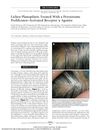
December 2009 in “Archives of dermatology” This overview discusses primary cicatricial alopecias, focusing on lichen planopilaris, and highlights the challenges in treatment and the progressive nature of hair loss despite symptom management, without providing new clinical results.
 4 citations
,
November 2016 in “Journal of Cutaneous Pathology”
4 citations
,
November 2016 in “Journal of Cutaneous Pathology” This letter discusses three plasmacytoid dendritic cell-related parameters that may help differentiate lupus alopecia from lichen planopilaris, but it reports no new study results.
 September 2021 in “Physiology News”
 This abstract contains only graphic design specifications and reports no new research findings.
 October 2022 in “International journal of medical science and clinical research studies”
 In this study, the combination of Poly-D,L-Lactic Acid and Platelet-Rich Plasma was reported to be effective for improving wrinkle severity and skin brightness in a 45-year-old woman.
3 citations
,
January 2025 in “PubMed” This study compared the effectiveness of different thread types in improving collagen profiles in UVB-exposed aging model rats, finding that PCL threads were more effective than PDO and PLLA in enhancing dermal collagen characteristics.

This study evaluated the effect of intralesional injections of lyophilized Platelet Derived Growth Factors in 42 patients with Peyronie's disease and found significant reductions in penile curvature and plaque size, along with improvements in Peyronie's Disease Questionnaire scores, suggesting a potential treatment role.
 July 2024 in “New Phytologist”
 This study suggests that the transcription factor PDF2 in Arabidopsis may link lipid sensing with growth responses to phosphate starvation by acting as a sensor for lyso-PCs through its START domain.
 2 citations
,
July 2015 in “Case Reports in Dermatology”
2 citations
,
July 2015 in “Case Reports in Dermatology” In this case study, DDS treatment for LABD was complicated by hemolytic anemia and alopecia, suggesting the need for careful monitoring of these potential side effects.
8 citations
,
January 2019 in “Journal of cosmetic dermatology” This study found that six sessions of a modified phenol peel effectively reduced hyperpigmentation in patients with Lichen Planus Pigmentosus, with 76% of treated individuals experiencing at least a 25% improvement, and no serious side effects reported.
7 citations
,
August 2017 in “Genetic testing and molecular biomarkers” This report suggests that patients with primary spontaneous pneumothorax should be evaluated for FLCN mutations, as they may indicate Birt-Hogg-Dube syndrome and associated cancer risks.
November 2020 in “Acta Medica Bulgarica/Acta medica Bulgarica” This case report details two patients with Graham-Little-Piccardi-Lassueur syndrome who showed marked skin lesion improvement with corticosteroid treatment, though cicatricial scalp alopecia remained unresponsive.
 1 citations
,
April 2019 in “Journal of Investigative Dermatology”
1 citations
,
April 2019 in “Journal of Investigative Dermatology” This study examined the safety and efficacy of dupilumab in adolescents with moderate-to-severe atopic dermatitis, finding that it was well tolerated and significantly improved symptoms over 52 weeks, with its safety profile similar to that in adults.
 1 citations
,
January 2022 in “Open Access Macedonian Journal of Medical Sciences”
1 citations
,
January 2022 in “Open Access Macedonian Journal of Medical Sciences” This study observed that PRP treatment resulted in greater improvement in hair thickness and density in alopecia areata patients compared to LLLT, with benefits sustained over 12 weeks.
June 2026 in “British Journal of Dermatology” This case study documented the first known instance of biopsy-confirmed lichen planopilaris occurring after hairline-lowering surgery in a patient without prior history, highlighting a potential complication where surgical trauma may trigger immune-mediated hair loss.
 January 2025 in “International Journal of Trichology”
 This study found that adding PRP to DPCP treatment for severe alopecia areata did not enhance effectiveness compared to DPCP alone.
 June 2026 in “Homo Politicus (Academy of Humanities and Economics in Lodz)”
 The effectiveness of ingredients in anti-hair loss products varies, and clinical trials are crucial to determine their success.
 January 2026 in “Dermatology Practical & Conceptual”
 This study reported that diffuse lichen planopilaris significantly impairs quality of life in Moroccan patients, with trichodynia and hair quality changes most affecting daily functioning and leisure activities.
1 citations
,
December 2020 in “Medical lasers” The laser therapy device effectively increased hair growth in people with androgenetic alopecia.
 2 citations
,
October 1990 in “The Lancet”
2 citations
,
October 1990 in “The Lancet” Some people have a genetic variation that makes them less effective at breaking down drugs.
 December 2024 in “Livers”
 This case report highlights a female patient with familial partial lipodystrophy who showed significant improvement in liver stiffness after starting leptin replacement therapy.
 September 2021 in “Hair transplant forum international”
 In this study, the P&P Hairline Laser, a hands-free laser-assisted device, was found to produce smoother and more symmetrical hairlines compared to traditional handheld laser devices.
 November 2022 in “Journal of Investigative Dermatology”
 In this study, analysis of over 800 Iranian patients with epidermolysis bullosa identified 15 with pathogenic PLEC variants, highlighting a correlation between variant locations and phenotypic manifestations of plectinopathies.