28 citations
,
September 2013 in “European Journal of Histochemistry” This study demonstrates a varied distribution of keratins in the epidermis of the Malayan pangolin, suggesting evolutionary adaptations related to their distinctive scales.
92 citations
,
April 1999 in “The journal of investigative dermatology/Journal of investigative dermatology” This study suggests that keratin 9 expression in nonpalmoplantar keratinocytes can be induced by signals from palmoplantar fibroblasts, potentially enabling the use of nonpalmoplantar epidermis to treat palmoplantar wounds.
 January 2023 in “The Egyptian Journal of Hospital Medicine”
 This review discusses the potential of platelet-rich plasma as a new and promising treatment for striae distensa, noting its lack of associated risks like hyperpigmentation or infection, but reports no clinical results.
This study found that encapsulating dermal papilla spheroids in alginate hydrogel with extracellular matrix proteins increased alkaline phosphatase activity, suggesting an enhanced manipulation of dermal papilla activity.
 2 citations
,
September 2020 in “Biomedical materials”
2 citations
,
September 2020 in “Biomedical materials” This study found that recombinant human hair keratin proteins K31 and K81 show greater potential for inducing skin cell differentiation compared to natural keratin coatings.
January 2022 in “Aesthetic Plastic Surgery” 238 citations
,
October 1994 in “Current opinion in genetics & development” This article reviews the role of epidermal proteins and regulatory mechanisms in skin diseases, emphasizing recent insights but reports no new experimental results.
19 citations
,
November 2016 in “Developmental Biology” December 2000 in “日本組織細胞化学会総会プログラムおよび抄録集” 5 citations
,
December 1996 in “Biochemical and Biophysical Research Communications” In this study, keratin genes mHa1 and mHb4 were unable to form an extensive keratin network in one cell line, altering endogenous keratin distribution, but showed better integration in another cell line.
 16 citations
,
January 2021 in “International Journal of Medical Sciences”
16 citations
,
January 2021 in “International Journal of Medical Sciences” This study found that gelatin microspheres loaded with platelet-rich plasma enhanced wound healing in rats by improving inflammatory and angiogenic responses compared to untreated wounds or PRP alone.
18 citations
,
January 2018 in “BMC dermatology” This paper describes a case of epidermolysis bullosa simplex with muscular dystrophy associated with a novel PLEC mutation and diffuse alopecia, highlighting a potential genetic link that remains uncertain.
 31 citations
,
February 2014 in “Journal of dermatological science”
31 citations
,
February 2014 in “Journal of dermatological science” This study found that placental growth factor (PlGF) enhanced hair shaft elongation and accelerated hair follicle growth, suggesting its potential as a therapeutic target for alopecia.
25 citations
,
October 2002 in “The journal of investigative dermatology/Journal of investigative dermatology” This study characterized the mouse profilaggrin gene, finding it structurally identical to its human counterpart, and noted differences in protein-coding regions that could impact epidermal differentiation.
14 citations
,
April 2024 in “Periodontology 2000” This review discusses the cellular and molecular composition of platelet-rich plasma and its potential applications in dentistry and other medical fields, but reports no new clinical results.
 15 citations
,
March 2014 in “Biochimica and biophysica acta. Molecular and cell biology of lipids”
15 citations
,
March 2014 in “Biochimica and biophysica acta. Molecular and cell biology of lipids” This review discusses the role of acyl-CoA binding protein (ACBP) in the epidermal barrier, noting that its disruption in mice is linked to skin and fur abnormalities; it reports no new clinical results.
 November 2022 in “The journal of investigative dermatology/Journal of investigative dermatology”
 In this case study, a 26-year-old female with PLEC mutations and features of muscular dystrophy and myasthenia gravis showed significant improvement in symptoms following steroid treatment.
 1 citations
,
August 2023 in “Journal of Dentomaxillofacial Science”
1 citations
,
August 2023 in “Journal of Dentomaxillofacial Science” This study found that freeze-dried homologous platelet-rich plasma (FD HPRP) increased osteocalcin levels in cultured osteoblasts, suggesting its potential to support bone regeneration in periodontal treatment.
April 2016 in “한국고분자학회 학술대회 연구논문 초록집” 17 citations
,
June 2003 in “The journal of investigative dermatology. Symposium proceedings/The Journal of investigative dermatology symposium proceedings” This study found that genes in the human keratin-associated protein 1 family may have evolved mainly through gene duplication of cysteine-repeat motifs.
 November 2022 in “The journal of investigative dermatology/Journal of investigative dermatology”
 This study found that hemoglobin α is upregulated in epidermal keratinocytes after UV exposure and may function as an antioxidant, particularly for hair follicle stem cells.
 92 citations
,
January 2012 in “International Journal of Biological Sciences”
92 citations
,
January 2012 in “International Journal of Biological Sciences” This article proposes an updated naming system for keratin-associated proteins and genes, aiming to improve data storage and retrieval by including species information and genetic variation.
This study found that platelet-rich plasma significantly enhanced the viability, as well as the expression of alkaline phosphatase and versican, in human hair dermal papilla cells compared to controls.
62 citations
,
August 2006 in “Journal of Chromatography B” This article reviews the challenges in studying keratin proteins and emphasizes the potential of modern proteomic techniques to advance their research, but it reports no new findings.
 3 citations
,
February 2019 in “Animal biotechnology”
3 citations
,
February 2019 in “Animal biotechnology” In this study, the PLP2 gene was found to promote secondary hair follicle development in Liaoning cashmere goats, with its expression negatively regulated by melatonin and potentially affecting follicle development via the BMP pathway.
January 2024 in “Pharmacokinetics and Pharmacodynamics” This review discusses peptide "biogenic stimulants" from human placenta extracts, highlighting their potential wide-ranging clinical applications across multiple diseases, and reports no new clinical results.
 8 citations
,
May 2019 in “Indian Journal of Plastic Surgery/Indian journal of plastic surgery”
8 citations
,
May 2019 in “Indian Journal of Plastic Surgery/Indian journal of plastic surgery” In this controlled study on hair transplantation, using autologous plasma as a graft holding solution resulted in better hair follicle cell survival, hair count, and density compared to Ringer's lactate, suggesting plasma's potential to enhance hair graft outcomes.
 9 citations
,
December 2024 in “Nano Research”
9 citations
,
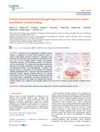
December 2024 in “Nano Research” In a study on diabetic mice, researchers developed a protein-based hydrogel that leverages zinc ions and the natural compound phellopterin to promote cutaneous nerve regeneration, angiogenesis, and tissue remodeling in diabetic wounds, highlighting its potential for advanced wound therapy.
52 citations
,
May 2006 in “Journal of Structural Biology” This study identified two key pentapeptide quasi-repeats in human keratin-associated proteins, which are similar to motifs found in sheep wool.
 2 citations
,
November 2023 in “Curēus”
2 citations
,
November 2023 in “Curēus” This review explores platelet-rich plasma's role in wound healing and discusses its potential as a broadly applicable therapeutic option, but it reports no new clinical results.