29 citations
,
September 2018 in “Journal of the American Heart Association” This study found that EP 2 signaling is crucial for macrophage recruitment and inflammatory regulation in the injured heart, impacting cardiac repair processes.
1 citations
,
June 2019 in “Journal of Cutaneous Immunology and Allergy” This report describes two cases where topical squaric acid dibutylester application in alopecia totalis patients led to severe pustular lesions, necessitating systemic prednisolone treatment.
 61 citations
,
September 2020 in “Bioactive Materials”
61 citations
,
September 2020 in “Bioactive Materials” This study found that the multifunctional FEA-PCEI dressing significantly accelerated wound healing, reduced scar formation, and promoted hair follicle neogenesis while providing antibacterial and anti-inflammatory benefits.
November 2022 in “International Journal of Applied Pharmaceutics” This study found that phytosterols extracted from moringa seed oil may act as potential anti-alopecia agents by inhibiting the 5α-reductase enzyme, with ergostadienol showing particularly high affinity and stability in in silico simulations.
 160 citations
,
December 2016 in “Journal of biophotonics”
160 citations
,
December 2016 in “Journal of biophotonics” This review discusses the evolution and potential of photobiomodulation therapy, highlighting its transition from skepticism to recognition in medical research; it reports no new experimental findings.

This abstract introduces TrichoFoam™, a new foaming vehicle for compounding pharmacies, designed to be a gentle, non-irritating option for alopecia treatment, acknowledging that current topical treatments are limited and oral products may cause adverse effects.
 September 2018 in “Reactions Weekly”
 Two women had skin reactions from a hair loss treatment and got better after stopping use.
24 citations
,
July 2015 in “Molecular Medicine Reports” This study found that lysophosphatidic acid increases mesenchymal stem cell proliferation and migration through signaling pathways and reactive oxygen species, implicating potential applications in stem cell expansion.
11 citations
,
June 2005 in “Veterinary Dermatology” In this study, dermal fibroblasts in the head of beagle dogs metabolized the highest amount of progesterone, primarily into cortisol, while dermal papilla cells mainly produced 5α-pregnane-3,20-dione and cortisol.
9 citations
,
March 2018 in “International journal of molecular sciences” This study suggests that the progesterone metabolite allopregnanolone and progesterone regulate distinct gene sets involved in glioblastoma cell proliferation, with some overlapping effects modified by finasteride.
 August 2025 in “Frontiers in Pharmacology”
 This study identified three Ayurvedic compounds that may serve as potential treatments against the macrolide-resistant enzyme murE of *Tropheryma whipplei*, addressing challenges in treating Whipple disease.
 26 citations
,
March 2015 in “American journal of clinical dermatology”
26 citations
,
March 2015 in “American journal of clinical dermatology” This study found that systemic mycophenolate mofetil and topical clobetasol were equally effective at reducing lichen planopilaris activity over six months, but satisfaction differed between the treatments.
7 citations
,
March 1990 in “Pigment Cell Research” This animal study observed that while topical MBEH and intraperitoneal phenol induced hair graying in eumelanic mice, they had little effect on pheomelanic mice, and amcinonide reduced certain epidermal melanocytes in both.
January 2005 in “Life sciences” This review discusses the pathophysiologic role of lysophosphatidic acid in the skin and reports no clinical results, suggesting pharmacological inhibition as a potential treatment for various skin disorders.
 1 citations
,
April 2017 in “Journal of Investigative Dermatology”
1 citations
,
April 2017 in “Journal of Investigative Dermatology” This study found that cilostazol promoted hair growth in human dermal papilla cells and mouse models, suggesting its potential as a therapeutic target for alopecia treatment.
18 citations
,
December 2005 in “Journal of Medicinal Chemistry” In this study, novel substituted benzoyl benzoic acids and phenylacetic acids were potent and selective inhibitors of human steroid 5alpha-reductase type 2, with one compound showing promising bioavailability in rats for potential clinical evaluation.
 14 citations
,
July 2012 in “Journal of the American Academy of Dermatology”
14 citations
,
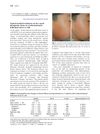
July 2012 in “Journal of the American Academy of Dermatology” This study found that topical tacalcitol improved roughness and scaling in erythromelanosis follicularis faciei et colli, although it was less effective for facial erythema.
 1 citations
,
February 2021 in “Cosmetics”
1 citations
,
February 2021 in “Cosmetics” This study found that the ethyl acetate extract of Fagraea berteroana fruits and its fraction FEAE-F0 promoted cell proliferation and modulated gene expression in hair follicle cells, suggesting potential for hair growth stimulation.
60 citations
,
December 1988 in “Journal of Biochemical Toxicology” In this study, TCDD administered to male rats down-regulated EGF receptor in liver plasma membranes and increased protein kinase activity, suggesting EGF receptor–mediated toxicological effects.
March 2019 in “Reactions Weekly”  9 citations
,
August 2005 in “Experimental Dermatology”
9 citations
,
August 2005 in “Experimental Dermatology” In this study, the researchers report that a modified epimorphin-derived peptide shows potential for hair follicle regeneration, especially when used with 1% minoxidil in mice.
4 citations
,
October 2021 in “International Journal of Cosmetic Science” This study found that C. japonicum flower extract significantly increased melanin content and cellular activity in human melanocytes and may improve follicular depigmentation and vitiligo through cAMP signaling.
 10 citations
,
May 2016 in “Journal of Dermatological Science”
10 citations
,
May 2016 in “Journal of Dermatological Science” This study found that PDGF-BB affects human melanocytes differently depending on their differentiation stage, stimulating melanoblast proliferation but inhibiting melanocyte proliferation while promoting their differentiation.
July 2024 in “Journal of Investigative Dermatology” ATR04-484 ointment shows promise for treating skin issues from cancer therapies.
14 citations
,
April 2022 in “Molecules” This study found that pulmonary delivery of cepharanthine significantly improved bioavailability and may provide protective effects against pulmonary fibrosis related to COVID-19 infection in a rat model.
25 citations
,
May 2016 in “Molecular biology of the cell” This study found that the AtSfh1 protein in Arabidopsis is essential for phosphatidylinositol-4,5-bisphosphate signaling crucial to polarized root hair growth, utilizing both phosphatidylinositol and phosphatidylcholine-binding activities.
2 citations
,
July 2024 in “Bioengineering” This study found that platelet-rich fibrin lysates modulate chemokine expression, reducing inflammation in oral squamous carcinoma cells, but increasing expression in primary oral epithelial cells.
13 citations
,
November 2005 in “Endocrinology” This study explored the secretion and cellular localization of different forms of follistatin and FST-like-3, revealing variable secretion kinetics and possible intracellular roles, particularly for nuclear FSTL3.
 May 2025 in “Research Square (Research Square)”
 This study found that conditioned medium from photobiomodulation-irradiated adipose-derived stromal cells enhanced hair growth in a mouse model of hair loss more effectively than non-irradiated medium, suggesting potential for treating alopecia by boosting growth factor secretion.
 April 2021 in “Journal of Investigative Dermatology”
 This study found that CD1a-restricted CD4+ T cells responsive to lysyl-phosphatidylglycerol were more frequent in the blood of atopic dermatitis patients, suggesting a potential role in the disease's Th2-mediated pathology.