 1 citations
,
January 2013 in “African Journal of Pharmacy and Pharmacology”
1 citations
,
January 2013 in “African Journal of Pharmacy and Pharmacology” This study found that ultrasound assisted microwave extraction was more efficient than other methods for extracting luteolin from Eclipta prostrata, reducing extraction time and simplifying the process.
 10 citations
,
March 2015 in “American journal of primatology”
10 citations
,
March 2015 in “American journal of primatology” This study found that ringtailed lemurs consuming leucaena in Berenty absorb mimosine, which causes alopecia without affecting body condition or organ toxicity; this may increase infant mortality due to alopecic mothers.
5 citations
,
July 1999 in “Journal of Anatomy” This study found that methylene blue staining may reveal anatomical details of intraepidermal nerve fibre endings in the rat mystacial pad with greater clarity than the zinc iodide-osmium tetroxide technique.
 April 2025 in “Journal of Applied Veterinary Science And Technology”
 In this veterinary case report, the treatment of a 3-year-old male cat named Chipmunk for scabiosis, otitis externa, toxocariosis, and ancylostomiasis using ivermectin, diphenhydramine, drontal, and additional medications was found to be clinically effective.
April 2025 in “Indian Journal of Paediatric Dermatology” This case report describes an 8-year-old male with tinea capitis and Trichorrhexis invaginata, who showed significant improvement after treatment with oral micronized griseofulvin.
 August 2016 in “Journal of Investigative Dermatology”
 This case report identifies a novel LIPH gene mutation linked to autosomal recessive woolly hair/hypotrichosis in a Japanese boy, expanding the spectrum of known mutations associated with this condition.
2 citations
,
June 2010 in “Medicina de Familia SEMERGEN” The girl's "dandruff" was actually harmless hair casts, not a hygiene issue.
January 2009 in “Xumu shouyi xuebao” In this study, researchers successfully established a stable transgenic sheep fibroblast cell line containing an artificially synthesized spider dragline silk protein gene.
 46 citations
,
July 2007 in “Journal of comparative neurology”
46 citations
,
July 2007 in “Journal of comparative neurology” This study found that Florida manatees have unique types of specialized nerve endings in their vibrissae, which assist in their sensory and manipulative functions in aquatic environments.
 3 citations
,
February 2019 in “Animal biotechnology”
3 citations
,
February 2019 in “Animal biotechnology” In this study, the PLP2 gene was found to promote secondary hair follicle development in Liaoning cashmere goats, with its expression negatively regulated by melatonin and potentially affecting follicle development via the BMP pathway.
 13 citations
,
September 2019 in “Scientific Reports”
13 citations
,
September 2019 in “Scientific Reports” In this study, high levels of the protein Flii in mice were associated with worsened symptoms and inflammation in ulcerative colitis, suggesting Flii may inhibit mucosal healing.
 1 citations
,
May 2025 in “The Journal of Rheumatology”
1 citations
,
May 2025 in “The Journal of Rheumatology” In this case report, researchers described a 48-year-old man with systemic lupus erythematosus who developed a fungus ball (aspergilloma) within a tuberculosis cavity, a complication rarely reported in such patients, emphasizing the role of CT scans in diagnosis and the potential need for surgical intervention.
July 2018 in “IP Indian Journal of Clinical and Experimental Dermatology” This case report describes a 52-year-old male with folliculitis decalvans, initially resembling lupus vulgaris, who was successfully treated with minocycline and clarithromycin.
32 citations
,
August 1982 in “Journal of the American Academy of Dermatology” This study reports two cases of follicular lichen planus, suggesting that GLPLS and LPP may be variants of this condition based on clinical and immunofluorescent findings.
1 citations
,
October 2010 in “2010 3rd International Conference on Biomedical Engineering and Informatics” This study successfully cloned and characterized the LEF-1 gene from Inner Mongolia Cashmere Goats, potentially aiding efforts to enhance cashmere production through genetic modification.
 December 2023 in “International journal of high dilution research”
 The study reported that mice receiving dynamized Melatonin 6 cH and Lissotriton 6 cH for 14 days exhibited improved coat health and increased endurance in forced swimming tests, with Melatonin-treated mice swimming 2.5 times longer and Lissotriton-treated mice 4 times longer than controls.
 April 2023 in “Research Square (Research Square)”
 This study found that melatonin-mediated lncRNA018392 accelerated cell proliferation and inhibited apoptosis in cashmere goat skin fibroblasts by upregulating the expression of the nearby gene CSF1R.
January 2013 in “Anti-infection Pharmacy” This review discusses the pharmacological and dermatological uses of Ligustri Lucidi Fructus and its components, such as anti-inflammation, anti-allergy, anti-dermatotumor effects, and hair growth promotion, but reports no new clinical results.
 December 2023 in “Journal of General Procedural Dermatology and Venereology Indonesia”
 The abstract highlights that lichen planus can manifest as cicatricial alopecia or lichen planopilaris, while discoid lupus erythematosus, a common form of lupus erythematosus, typically causes scarring alopecia. Results are not reported here.
 1 citations
,
July 2023 in “Cureus”
1 citations
,
July 2023 in “Cureus” This report describes a rare case of pili multigemini, where multiple hair shafts arise from a single follicle, discovered during an examination for folliculitis on a patient's abdomen.
December 2023 in “Plants” The researchers investigated the phytochemical content and pharmacological properties of Fissistigma oldhamii and found multiple compounds, primarily in roots and stems, that may contribute to the plant's traditional anti-inflammatory uses in China, including potential antioxidant, anticancer, and antimicrobial effects.
 June 2023 in “jurnal veteriner”
 In this study, Typhonium flagelliforme leaf-ethanolic extract combined with natural interferon was observed to stabilize body weight, inhibit tumor growth, and reduce mitosis, angiogenesis, and certain protein expressions in carcinogen-induced tumors in female mice, suggesting potential antitumor effects.
 1 citations
,
February 2018 in “Australasian journal of dermatology”
1 citations
,
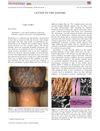
February 2018 in “Australasian journal of dermatology” Advanced imaging techniques are crucial for accurately diagnosing Monilethrix, a rare hair disorder.
62 citations
,
May 2016 in “British journal of dermatology/British journal of dermatology, Supplement” October 2025 in “Brazilian Journal of Veterinary Research and Animal Science” The researchers reported a case of a neotropical porcupine co-infected with Brazilian porcupine poxvirus and Toxoplasma gondii, suggesting the need for further investigation into the impact of this interaction.
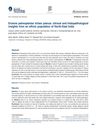 December 2025 in “Portuguese Journal of Dermatology and Venereology”
 In this study, researchers conducted a retrospective analysis of 16 cases of erosive palmoplantar lichen planus in North East India, finding a higher prevalence in pediatric and male patients, with common clinical features including plantar involvement and histopathological indicators such as basal cell degeneration.

This paper reviews delusional infestation, its characteristics, and treatment options, highlighting a case study of a man with a strong belief in a nonexistent lice infestation and recommending low-dose antipsychotics for primary cases.
 1 citations
,
May 2015 in “Journal of The American Academy of Dermatology”
1 citations
,
May 2015 in “Journal of The American Academy of Dermatology” Lichen planus pigmentosus and fibrosing frontal alopecia in Colombia are likely different stages of the same disease.
7 citations
,
October 1992 in “PubMed” This study investigated peptidergic nerve fibers in sinus hair follicles of various mammals and found that CGRP fibers were more densely distributed than SP fibers across different regions of the follicles.
April 2021 in “The journal of investigative dermatology/Journal of investigative dermatology” This study examined clinical characteristics of lichen planopilaris and frontal fibrosing alopecia in 24 men, revealing common scalp symptoms, frequent beard involvement, and limited association with thyroid disease.