 11 citations
,
January 2006 in “Drug development and industrial pharmacy”
11 citations
,
January 2006 in “Drug development and industrial pharmacy” In this study, adding TPGS to a minoxidil formulation improved local retention and reduced systemic absorption in certain solvent mixes, particularly with a balance of alcohol and PEG 400.
September 2020 in “Research Square (Research Square)” This study found that PD-MSCs overexpressing PRL-1 inhibited adipogenesis in orbital fibroblasts from Graves' ophthalmopathy patients by modulating key signaling pathways, suggesting a novel therapeutic approach for degenerative diseases.
 2 citations
,
December 2016 in “Experimental cell research”
2 citations
,
December 2016 in “Experimental cell research” This study reveals that CSPG4-positive basal cell keratinocytes show distinct global gene expression from CSPG4-negative cells, despite similar colony-forming efficiency.
April 2016 in “The journal of investigative dermatology/Journal of investigative dermatology” This study observed that sebaceous gland atrophy in psoriatic lesions correlates with the down-regulation of specific lipid biosynthetic gene modules, potentially affecting hair appearance without damaging follicles.
 September 2017 in “Journal of Investigative Dermatology Symposium Proceedings”
 This study found that prostaglandin D2 increases testosterone production in human keratinocytes through a mechanism involving ROS and REDOX potential, which could inform treatments for androgenic alopecia.
8 citations
,
January 2018 in “Journal of Analytical Methods in Chemistry” This study developed a reliable HPLC-UV/Vis method to determine aluminum phthalocyanine chloride in skin, supporting its use in skin permeation studies for photodynamic therapy of cutaneous tumors.
April 2023 in “Journal of Investigative Dermatology” This study identified TGFβ-2 as a potential driver of progenitor cell loss in hair follicles from early androgenetic alopecia scalps, suggesting its role in the condition's molecular disturbances.
 July 2024 in “Indian Journal of Dermatology Venereology and Leprology”
 This study found that specific PITX2 gene variants are significantly associated with higher risk of androgenetic alopecia in males, highlighting important genetic and environmental interactions influencing its development.
211 citations
,
February 1994 in “Proceedings of the National Academy of Sciences” This study found that overexpression of parathyroid hormone-related peptide in transgenic mice skin disrupted normal hair follicle development, suggesting a role for the peptide in the early stages of follicle formation.
May 2022 in “Journal of Cosmetic Dermatology” This study found that concentrated growth factor injections significantly improved hair density, hair follicle density, and hair diameter in 60 patients with androgenic alopecia, with a 93% patient satisfaction rate and no reported complications over a 6-month follow-up period.
 31 citations
,
February 2014 in “Journal of dermatological science”
31 citations
,
February 2014 in “Journal of dermatological science” This study found that placental growth factor (PlGF) enhanced hair shaft elongation and accelerated hair follicle growth, suggesting its potential as a therapeutic target for alopecia.
 1 citations
,
January 2018 in “Acta dermato-venereologica”
1 citations
,
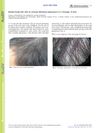
January 2018 in “Acta dermato-venereologica” A teenager's hair with alternating white and dark bands, known as Pili annulati, is a genetic condition that is usually harmless and often considered attractive.
 1 citations
,
March 2023 in “Science Translational Medicine”
1 citations
,
March 2023 in “Science Translational Medicine” The researchers reported that targeting glycoprotein 130's signaling site in animal models promoted tissue regeneration and reduced osteoarthritis progression through anti-inflammatory and protective effects.
 February 2018 in “InTech eBooks”
 This review discusses the role of platelet-rich plasma therapy in various cosmetic procedures, finding potential benefits in improving tissue homeostasis if harvesting standards are maintained, but reports no new clinical results.
 16 citations
,
March 2020 in “Facial Plastic Surgery Clinics of North America”
16 citations
,
March 2020 in “Facial Plastic Surgery Clinics of North America” The authors concluded that platelet-rich plasma (PRP) shows promising potential as a safe treatment for hair restoration in androgenic alopecia, though further research is needed to refine its use and confirm long-term effects.
 16 citations
,
May 2000 in “Endocrinology”
16 citations
,
May 2000 in “Endocrinology” This study identified a new gene, mrp4, in mice, which suggests it may have a unique role in the growth and development of hair follicles in the ears and tails.
 April 2023 in “Journal of Investigative Dermatology”
 This research reexamined transcriptomic data to study stem and progenitor cell proliferation in psoriasis, finding that the number of committed progenitor cells increased eight-fold in psoriatic skin without altering stem cell numbers, potentially identifying new therapeutic targets.
 March 2025 in “Authorea (Authorea)”
 This review discusses the use of platelet-rich plasma (PRP) in regenerative plastic surgery and dermatology for hair regrowth and skin revitalization, noting some potential side effects without reporting new clinical results.
In this study, Norwegian researchers followed over 350 patients with porphyria cutanea tarda for an average of 7 years and found that 25% experienced biochemical relapse, suggesting the importance of routine follow-up for early detection and management.
December 2024 in “Aesthetic Plastic Surgery” In this observational study, patients with androgenic alopecia or hair loss related to COVID-19 showed more significant hair regrowth when treated with combined pulsed electromagnetic field therapy and photobiostimulation therapy compared to photobiostimulation therapy alone, with a statistically significant increase in hair count.
 8 citations
,
March 2017 in “Journal of Cosmetic and Laser Therapy”
8 citations
,
March 2017 in “Journal of Cosmetic and Laser Therapy” In this study, researchers found that punch grafting was more effective than follicular hair transplantation for treating stable vitiligo; however, follicular hair transplantation was found to be cosmetically preferable for exposed areas like the face due to fewer side effects.
18 citations
,
January 2021 in “Theranostics” This study found that actively targeted AN2728-loaded nanocarriers reduced inflammation and improved skin condition in a mouse model of psoriasiform inflammation compared to free drug and non-targeted nanoparticles.
 June 2024 in “Journal of Ayub Medical College Abbottabad”
 This study concluded that adding 5% topical Procapil to PRP therapy provided better outcomes for androgenetic alopecia than PRP alone, as assessed by dermatologist evaluations and patient satisfaction.
24 citations
,
April 2008 in “Fertility and sterility” In this study, pioglitazone treatment in insulin-resistant PCOS patients decreased relative 5alpha-reductase activity without significantly affecting cortisol levels or urinary cortisol excretion.
 October 2024 in “SPIRE - Sciences Po Institutional REpository”
 This study highlights that human hair follicle dermal papilla cells and glypicans play crucial roles in regulating hair follicle stem cell differentiation.
 21 citations
,
November 2017 in “Scientific Reports”
21 citations
,
November 2017 in “Scientific Reports” This study found that prostaglandin D2 reduced proliferation in bulge resident K15+ stem cells but not in other K15+ progenitor cells, suggesting differential impacts on hair follicle stem cell niches.
 15 citations
,
November 1994 in “International Journal of Dermatology”
15 citations
,
November 1994 in “International Journal of Dermatology” This study found that while the combination of oral propranolol and intradermal injections in guinea pigs led to psoriasiform changes, it did not fully mimic psoriasis.
2 citations
,
August 2024 in “Indian Dermatology Online Journal” Premature graying of hair is mainly caused by genetics, stress, and environment, with potential treatments being explored.
253 citations
,
April 2009 in “Journal of Biological Chemistry” This study found that p2y5 functions as a novel LPA receptor involved in the G13-Rho signaling pathway, with implications for human hair growth, and proposes renaming it to LPA6.
This study found that isolated human scalp hair follicles express PGE2 genes and EP2 protein, suggesting PGE2 may play a crucial role in regulating hair growth.