 5 citations
,
April 2019 in “Journal of The American Academy of Dermatology”
5 citations
,
April 2019 in “Journal of The American Academy of Dermatology” This review discusses the complex nature of frontal fibrosing alopecia, suggesting it is a misnomer and possibly a subset of lichen planopilaris, but reports no new clinical results.
 19 citations
,
May 2007 in “Dermatologic therapy”
19 citations
,
May 2007 in “Dermatologic therapy” The document concludes that various treatments, including laser therapy, are effective for managing pseudofolliculitis barbae, especially in darker skin types.
 24 citations
,
January 2019 in “Theranostics”
24 citations
,
January 2019 in “Theranostics” This study found that loss of the Pten gene in Lgr5+ hair follicle stem cells promoted squamous cell carcinoma formation through the Akt/β-catenin signaling pathway.
 3 citations
,
September 2006 in “Hair transplant forum international”
3 citations
,
September 2006 in “Hair transplant forum international” This paper reflects on the challenges and progress in hair restoration, highlighting ongoing efforts for improvement but providing no new empirical findings.
 53 citations
,
May 2010 in “Dermatologic Surgery”
53 citations
,
May 2010 in “Dermatologic Surgery” This article appears to be a table of contents or navigation page for a journal, not presenting any new findings or research results.
 July 2015 in “Journal of the Dermatology Nurses’ Association”
 This review covers the clinical presentation and challenges in treating frontal fibrosing alopecia in postmenopausal women and concludes that more research is needed to understand its etiology and develop effective treatments.
 March 2023 in “Journal of the American Academy of Dermatology”
 This review summarizes evidence that pityrosporum folliculitis in immunocompromised patients responds well to topical antifungals and treatment of underlying conditions, based on a limited number of studies with small sample sizes.
 2 citations
,
November 2007 in “Hair transplant forum international”
2 citations
,
November 2007 in “Hair transplant forum international” This abstract introduces the concept of follicular units (FUs) in the human scalp but presents no new research findings.
 6 citations
,
June 2016 in “Experimental Dermatology”
6 citations
,
June 2016 in “Experimental Dermatology” This article reviews the pathogenesis of frontal fibrosing alopecia, highlighting the potential genetic and environmental contributions, particularly the use of sunscreens, and calls for further research into effective treatments.
 October 2020 in “International Journal of Research in Dermatology”
 This review discusses the possible immune-mediated and environmental factors contributing to frontal fibrosing alopecia but reports no new clinical findings, emphasizing the need for standardized treatment evaluations.
June 2023 in “Clinical Cosmetic and Investigational Dermatology” This report describes a 60-year-old female with pretibial pruritic papular dermatitis who showed significant improvement of skin lesions after one month of treatment with oral pentoxifylline. The authors highlight the unique clinical and histological features of PPPD and propose pentoxifylline as a potential therapy.
 166 citations
,
April 2012 in “Journal of The American Academy of Dermatology”
166 citations
,
April 2012 in “Journal of The American Academy of Dermatology” This study reviewed clinical data from 60 patients with frontal fibrosing alopecia and found increasing prevalence and generally poor response to treatment, with the cause remaining unclear.
1 citations
,
August 2024 in “Anais Brasileiros de Dermatologia” This review discusses the non-follicular skin manifestations of frontal fibrosing alopecia and how they affect diagnosis and treatment, but reports no new clinical results.
 8 citations
,
September 2011 in “European Journal of Dermatology”
8 citations
,
September 2011 in “European Journal of Dermatology” This study reports that most cases of frontal fibrosing alopecia did not show significant improvement with available treatments, and effective management remains unproven.
 1 citations
,
May 2024 in “Dermatology and Therapy”
1 citations
,
May 2024 in “Dermatology and Therapy” This review article examines the current understanding of frontal fibrosing alopecia, noting its prevalence in different demographics and the roles of genetic and environmental factors in its pathogenesis, while highlighting that treatment approaches remain varied and lack standardization.
 34 citations
,
August 2011 in “Journal of Natural Medicines”
34 citations
,
August 2011 in “Journal of Natural Medicines” This study found that Puerariae Flos extract inhibited testosterone 5α-reductase and promoted hair growth in mouse models, suggesting its potential use for treating androgenic alopecia.
This study found that ethanol extract of fragrant pandanus leaves inhibited the growth of the dandruff-causing fungus Pityrosporum ovale, with higher concentrations showing greater inhibitory effects.
 46 citations
,
January 2015 in “Journal of The American Academy of Dermatology”
46 citations
,
January 2015 in “Journal of The American Academy of Dermatology” This study suggests that trichoscopic features, such as perifollicular erythema and cicatricial white patches, are independently associated with pruritus and the severity of frontal fibrosing alopecia.
 8 citations
,
October 2019 in “International Journal of Dermatology”
8 citations
,
October 2019 in “International Journal of Dermatology” This study examined 56 Thai patients with frontal fibrosing alopecia, finding frontotemporal hairline recession and eyebrow loss were common, and reported better disease stabilization with combination treatments of topical corticosteroids with hydroxychloroquine or finasteride.
5 citations
,
April 2019 in “DOAJ (DOAJ: Directory of Open Access Journals)” This article discusses the characteristics and pathogenesis of pseudofolliculitis barbae, particularly its prevalence in men of African and Asian descent, but presents no new research findings.
 August 2021 in “Case Reports”
 This report describes a case where a woman with frontal fibrosing alopecia initially presented with symptoms resembling rosacea, but further investigation led to a diagnosis of FFA, resulting in a treatment change to oral finasteride and hydroxychloroquine.
 39 citations
,
July 2015 in “British Journal of Dermatology”
39 citations
,
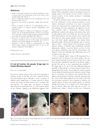
July 2015 in “British Journal of Dermatology” This article discusses the pseudo 'fringe sign' in frontal fibrosing alopecia, highlighting that it is not solely related to traction, and it reports no new clinical results.
18 citations
,
February 2018 in “Journal of the American Academy of Dermatology” This study reports no new clinical results but suggests a potential relationship between frontal fibrosing alopecia and cutaneous conditions such as rosacea, indicating a need for further research.
3 citations
,
December 2024 in “Journal of Animal Physiology and Animal Nutrition” In this study, researchers found that reducing FGF20 expression in dermal papilla cells of fine-wool sheep impedes the growth and differentiation of hair follicle stem cells, providing insights into wool trait improvement and regenerative medicine applications.
1 citations
,
March 2012 in “Actas dermo-sifiliográficas/Actas dermo-sifiliográficas” Dermoscopy helps diagnose frontal fibrosing alopecia by identifying specific scalp features.
April 2022 in “Actas Dermo-Sifiliográficas” This article discusses the case of a 59-year-old woman with a history of progressive facial hyperpigmentation and explores potential connections between her condition and her family history, but reports no clinical findings.
 69 citations
,
August 2008 in “Journal of The European Academy of Dermatology and Venereology”
69 citations
,
August 2008 in “Journal of The European Academy of Dermatology and Venereology” Oral dutasteride and topical pimecrolimus can safely and effectively treat Frontal Fibrosing Alopecia, leading to significant hair regrowth.
 7 citations
,
January 2009 in “Biological & pharmaceutical bulletin”
7 citations
,
January 2009 in “Biological & pharmaceutical bulletin” This study found that applying ferrous ferric chloride skin lotions to newborn mice stimulated skin cell proliferation and differentiation, increased hair growth, and inhibited alopecia-related hair loss.
4 citations
,
February 2023 in “Stem Cell Research & Therapy” This study found that papillary dermal fibroblast progenitors in newborn mouse skin can be isolated and cultured to generate male germline cell precursors, demonstrating their potential through differentiation into cells with meiotic capability.
 August 2015 in “Dermatología Argentina”
 This study reviewed 18 postmenopausal women with frontal fibrosing alopecia, noting frontotemporal hairline recession and eyebrow loss, often treated with steroids, triamcinolone, and other medications.