 1 citations
,
January 2019 in “Acta dermato-venereologica”
1 citations
,
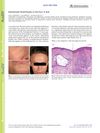
January 2019 in “Acta dermato-venereologica” The woman's skin and hair symptoms were confirmed as frontal fibrosing alopecia, and while facial papules are common in such cases, there's no effective local treatment, but systemic treatments can help.
2 citations
,
January 2016 in “Dermatology online journal” This case report describes a 46-year-old man diagnosed with frontal fibrosing alopecia, a condition primarily affecting postmenopausal women, highlighting its rare occurrence in men.
7 citations
,
July 2021 in “The Journal of Dermatology” This study in Asian females found that higher use of moisturizers and sunscreen among FFA patients may reflect appearance concerns rather than indicating a direct link to the disease mechanism.
 September 2013 in “Hair transplant forum international”
 This abstract describes frontal fibrosing alopecia, a type of cicatricial alopecia identified in post-menopausal women, and reports no new clinical findings.
 179 citations
,
December 2004 in “Journal of The American Academy of Dermatology”
179 citations
,
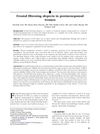
December 2004 in “Journal of The American Academy of Dermatology” This study observed that frontal fibrosing alopecia in postmenopausal women involves selective follicular inflammation, and finasteride treatment may slow disease progression, suggesting a potential androgen-related component.
 March 1996 in “Hair transplant forum international”
 This article discusses the introduction and market presence of the Italian hair product Kevis but presents no new clinical findings.
January 2024 in “Updates in clinical dermatology” Frontal fibrosing alopecia is a scarring hair loss condition mainly affecting postmenopausal women, with unclear causes.
20 citations
,
July 2005 in “Experimental dermatology” This study found that the fuzzy mutation in mice is linked to both structural hair defects and accelerated hair follicle cycling, influencing the regulation of hair cycle phases such as catagen and anagen.
 1 citations
,
April 2017 in “Journal of Investigative Dermatology”
1 citations
,
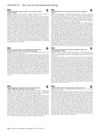
April 2017 in “Journal of Investigative Dermatology” In this study, D-OCT imaging revealed distinct structural and vascular changes in patients with frontal fibrosing alopecia, highlighting the technique's potential for diagnosing and monitoring the condition's activity.
 6 citations
,
January 2017 in “British Journal of Dermatology”
6 citations
,
January 2017 in “British Journal of Dermatology” This article reviews frontal fibrosing alopecia, exploring its characteristics, demographics, and associated conditions, and calls for controlled trials due to an increase in worldwide cases; it reports no new findings.
 14 citations
,
June 2021 in “British journal of dermatology/British journal of dermatology, Supplement”
14 citations
,
June 2021 in “British journal of dermatology/British journal of dermatology, Supplement” This paper presents consensus guidelines for standardized diagnostic criteria and assessment methods for frontal fibrosing alopecia to improve clinical research and data collection globally.
September 2023 in “Journal of the American Academy of Dermatology” This meta-analysis found a significant positive association between frontal fibrosing alopecia and both sunscreen and moisturizer use, with the moisturizer association significant only in males.
 November 2022 in “Research Square (Research Square)”
 This meta-analysis suggests a significant association between the use of facial sunscreen and moisturizer and frontal fibrosing alopecia, while finding no significant relationship with hair products or treatments.
28 citations
,
June 1995 in “The Journal of Dermatology” This study reports that flaky skin mice exhibit skin and nail features that closely resemble human psoriasis vulgaris, suggesting they may serve as a natural model for this condition.
January 2016 in “Indian dermatology online journal” This case report describes a 50-year-old woman with frontal fibrosing alopecia who showed no improvement despite multiple treatments, including intralesional triamcinolone and topical glucocorticoids.
1 citations
,
June 2025 in “Journal of Clinical Medicine” This study reported that frontal fibrosing alopecia predominantly affects postmenopausal women and identified potential risk factors like frequent β-blocker use and sunscreen application, indicating the need for further research.
54 citations
,
November 2007 in “Actas Dermo-Sifiliográficas” Early diagnosis of frontal fibrosing alopecia is crucial to prevent permanent hair loss.
 1 citations
,
December 2017 in “Anais Brasileiros de Dermatologia”
1 citations
,
December 2017 in “Anais Brasileiros de Dermatologia” This article discusses the DOAJ, a comprehensive index of international open access journals, and emphasizes its role in providing free quality content online without presenting new research findings.
 2 citations
,
July 2022 in “Frontiers in Medicine”
2 citations
,
July 2022 in “Frontiers in Medicine” This review discusses the current understanding of frontal fibrosing alopecia's pathogenesis, highlighting genetic susceptibility, immune response involvement, and possible links to steroid hormones, but reports no new clinical results.
January 2025 in “Biochemical Pharmacology” In this study, fibroblasts treated with the small molecule peficitinib were reprogrammed into dermal papilla cell-like cells capable of inducing hair growth, offering a new strategy for hair loss treatment.
 May 2024 in “International Seven Journal of Multidisciplinary”
 This review discusses fibrosing frontal alopecia, including its causes, mechanisms, and treatments, and emphasizes the need for further research to improve understanding and treatments; it reports no new clinical results.
This study reported that prompt diagnosis and treatment with 5-alpha-reductase inhibitors and topical immunomodulators are key to mitigating the effects of frontal fibrosing alopecia and preventing permanent hair loss.
19 citations
,
September 1971 in “Journal of Investigative Dermatology” The researchers reported that human foreskin fibroblasts isolated by enzyme digestion method proliferated faster and were purified more quickly than those isolated by the inverted tissue culture method; additionally, post-psoralen photoactivation therapy moderately repaired UVB-induced damage in these fibroblasts, suggesting potential clinical applications.
 1 citations
,
October 2008 in “Expert Review of Dermatology”
1 citations
,
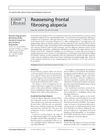
October 2008 in “Expert Review of Dermatology” This review discusses frontal fibrosing alopecia, noting its frequent misdiagnosis and highlighting the need for larger studies to better understand its epidemiology, causes, and treatment options; it reports no new clinical findings.
 December 2008 in “Dermatologic Surgery”
 This study found that the novel powered FUE (P-FUE) technique reduced harvesting time and graft transection rates in hair restoration compared to manual FUE, with broader patient applicability.
 January 2025 in “Indian Journal of Dermatology”
 This review discusses the various factors implicated in the etiology of frontal fibrosing alopecia and notes the need for effective treatments, reporting no new clinical findings.
September 2023 in “Journal of the American Academy of Dermatology” This study found a high concordance between subject-reported and clinician-reported Fitzpatrick Skin Phototypes, but 14% of subjects misjudged their skin type, often overestimating it.
 September 2024 in “Cutis”
 Sunscreen use may increase the risk of frontal fibrosing alopecia.
 5 citations
,
April 2019 in “Journal of The American Academy of Dermatology”
5 citations
,
April 2019 in “Journal of The American Academy of Dermatology” This review discusses the complex nature of frontal fibrosing alopecia, suggesting it is a misnomer and possibly a subset of lichen planopilaris, but reports no new clinical results.