 April 2023 in “JIVA : journal of Indian Veterinary Association Kerala/JIVA :Journal of Indian Veterinary Association, Kerala”
 This case study reported the successful recovery of a Doberman Pinscher with skin lesions, demodicosis, pyoderma, and malasseziosis following treatment with fluralaner, enrofloxacin, shampoos, immune boosters, and fatty acids.
 January 2023 in “Journal of Ravishankar University”
 This review discusses the role of oxidative stress and reactive oxygen species in the development of androgenic alopecia and reports no new clinical findings.
January 2023 in “Minds at UW (University of Wisconsin)” This study suggests that while DI water significantly impacts hair, the effects of citric acid, hydrogen peroxide, and sodium chloride in shampoo on hair remain unclear, requiring further investigation.
 December 2022 in “Korean journal of medicinal crop science/Han-gug yagyong jagmul hag-hoeji”
 This study found that polysaccharide extracts from ginseng, green tea, shiitake, and aloe vera effectively protected human follicle dermal papilla and keratinocyte cells by promoting cell proliferation or inhibiting apoptosis, suggesting potential for these extracts as ingredients in cosmetics or pharmaceuticals to prevent hair loss.
September 2022 in “Journal of the American Academy of Dermatology” The serum reduces acne and improves skin clarity.
 June 2022 in “International Journal of Research -GRANTHAALAYAH”
 This article discusses the role of the hair follicle as a miniorgan involved in bioelectricity and energy transfer in living organisms, but it reports no new research findings.
February 2022 in “Institutional Repositories DataBase (IRDB)” This case study describes a unique instance of unilateral steroid-induced rosacea-like dermatitis likely due to long-term localized use of topical corticosteroids, emphasizing the need for careful application and thorough histopathological analysis.
February 2022 in “DOAJ (DOAJ: Directory of Open Access Journals)” In this study, all-trans retinoic acid was found to protect against oxidative stress-induced apoptosis in cultured hair cell-like cells.
 January 2022 in “Yonago Acta Medica”
 This case report describes a Japanese woman with unilateral steroid-induced rosacea-like dermatitis attributed to long-term topical corticosteroid use, highlighting the significance of appropriate steroid application and histopathological evaluation for facial erythematous nodules.
November 2021 in “Anais brasileiros de dermatologia/Anais Brasileiros de Dermatologia” This article describes a case of pruritic folliculitis of pregnancy, a rare, benign skin condition that occurs in the later stages of pregnancy and resolves after delivery without affecting maternal or fetal health.
This article reviews a clinical case of pseudofolliculitis, highlighting its chronic nature, commonality in individuals with curly hair, and suggests management strategies, but reports no new clinical results.
 September 2019 in “Journal of Investigative Dermatology”
 This study found that a new formulation using short chain esters and ethanol can selectively deliver hydrogen peroxide to hair follicles during epilation, causing follicular damage without affecting epidermal keratinocytes.
 January 2019 in “ARC journal of pharmaceutical sciences”
 This review traces the historical understanding and treatment of acne across ancient Egyptian, Greek, and Roman civilizations, but provides no new clinical findings.
 October 2018 in “Springer eBooks”
 The document concludes that various topical medications are effective for skin conditions but often cause skin irritation as a side effect.
 September 2018 in “University of the Arts London Research Online (University of the Arts London)”
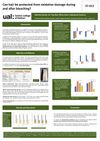
 This study assessed three materials—L-arginine, hydrolysed keratin, and cystine-silanol copolymer—ex vivo for their potential to reduce undesirable effects of hair bleaching, such as damage to hair proteins.
 April 2018 in “Journal of Investigative Dermatology”
 This study found that Mentha suaveolens aqueous extract activated Nrf-2 and increased detoxifying enzyme expression in keratinocytes, providing protection against oxidative stress without cytotoxicity.
 April 2018 in “The journal of investigative dermatology/Journal of investigative dermatology”
 This study observed that Ginseng and Albizia extracts, when used together, protected human dermal papilla cells from oxidative stress-induced senescence, and inhibited genes that suppress hair growth, indicating their potential in preventing age-related hair density reduction.
April 2017 in “Journal of Investigative Dermatology” Certain compounds can protect hair cells from aging and promote growth.
 March 2017 in “InTech eBooks”
 This source provides a comprehensive review of acne vulgaris, highlighting its pathophysiology, epidemiology, molecular mechanisms, and treatment options, emphasizing the significance of addressing acne's psychosocial burden for adolescents and beyond.
 January 2017 in “Journal of Dermatology and Venereology”
 This study found that Naringenin and Hesperetin significantly increased the proliferation of hair-related cells and suggested potential as natural hair growth-promoting agents.
September 2016 in “Springer eBooks” Gray hair is caused by oxidative stress damaging hair cells.
 January 2016 in “Springer eBooks”
 This article reviews causes and treatments of hyperandrogenism, including hirsutism and acne, but presents no new clinical findings.
This study found that fresh Aloe vera reduced lymphocyte levels in rat oral mucosa inflammation caused by hydrogen peroxide more effectively than distillate Aloe vera.
January 2015 in “프로그램북(구 초록집)” This study highlights that the combination of adapalene and benzoyl peroxide (Epiduo®) is an effective first-line treatment for acne, significantly inhibiting antibiotic-susceptible and antibiotic-resistant P. acnes strains.
 September 2014 in “Springer eBooks”
 Aging causes hair to gray and thin, with the timing of graying varying by race, and factors like oxidative stress and genetics can lead to hair loss.
June 2009 in “Pigment Cell & Melanoma Research” This review explores the role of oxidative stress and stem cell decline in hair graying, suggesting potential areas for future research but reports no new findings.
 April 2008 in “Medical & surgical dermatology”
 Certain hairstyles can cause scalp diseases, smoking is linked to hair loss, 5% minoxidil foam is effective for hair loss treatment, and various factors influence wound healing and hair growth.
May 2005 in “Molecular Carcinogenesis” This study found that mrp/plf-mRNA expression in murine skin increases in response to different tumor promoters, suggesting its potential as a short-term biomarker for chemical carcinogenesis.
January 2005 in “The Chinese Journal of Dermatovenereology” In this study, sodium fluoride at certain concentrations increased the MDA levels in cultured human hair follicles, while 0.01 mmol/L sodium selenite reduced this effect at lower fluoride concentrations.
 June 2002 in “International Journal of Cosmetic Surgery and Aesthetic Dermatology”
 This article is a book review published in the International Journal of Cosmetic Surgery and Aesthetic Dermatology and reports no new clinical findings.