41 citations
,
June 2023 in “Antioxidants” This review highlights that pomegranate exhibits promising beneficial effects in preclinical and clinical studies for cardiovascular and non-cardiovascular diseases, though further research is needed on its bioavailability and metabolites for effective therapeutic use.
37 citations
,
December 2020 in “PLANT PHYSIOLOGY” In this study, the researchers identified a temperature-sensitive mutant in Arabidopsis thaliana, showing disrupted root hair formation and altered responses to plant hormone treatments at elevated temperatures.
36 citations
,
April 2022 in “Nutrients” This review discusses the potential of Lansium domesticum as a herbal medicine, summarizing its traditional uses, nutritional value, bioactivities, and related nanoparticles and pharmaceutical formulations, but reports no new experimental results.
34 citations
,
July 2022 in “Gels” This review explores the potential of alginate as a promising alternative to donor tissue for corneal transplantation due to its adaptability, transparency, and low immunogenicity, and discusses how chemical modifications can enhance its properties for use in corneal tissue engineering.
17 citations
,
January 2009 in “Plant cell monographs” 11 citations
,
January 2025 in “Marine Drugs” This review highlights the need for standardized reporting on fucoidan extract properties to better understand the relationships between chemical structures and bioactivities, and to improve the quality and utility of fucoidan-related data.
 8 citations
,
May 2023 in “Gels”
8 citations
,
May 2023 in “Gels” This review discusses the advantages and progress of chitosan hydrogels in vascular regeneration for tissue engineering scaffolds, highlighting modifications to enhance their application and exploring future prospects.
6 citations
,
April 2025 in “Frontiers in Sustainable Food Systems” This review highlights the potential of valorizing vegetable waste by extracting valuable biomolecules for use in food, nutraceuticals, and energy, noting that while promising methods exist, several niche areas lack sufficient research on a global scale.
5 citations
,
January 2025 in “Pharmaceuticals” This review highlights the potential of Coffea arabica as an active ingredient in skincare, noting its bioactive compounds from leaves and beans show promising anticellulite, anti-inflammatory, antioxidant, and anti-aging properties, with unique phenolic concentrations in leaves offering enhanced skin benefits.
5 citations
,
January 2000  4 citations
,
October 2022 in “Nutrients”
4 citations
,
October 2022 in “Nutrients” This review discusses the impact of lifestyle interventions, including diet and probiotics, on weight and metabolic health in women with PCOS, but reports no new clinical results.
2 citations
,
February 2024 in “Pharmaceutics” This review highlights that while chitosan-based wound dressings with silver nanoparticles show promise for treating infected wounds due to enhanced antimicrobial activity, further studies are needed to address their in vivo toxicity and evaluate their efficacy in infectious animal models.
1 citations
,
November 2024 in “Sciences of Phytochemistry” This review assesses 191 studies and reports that bananas have numerous health benefits, including anti-inflammatory, cancer-reducing, and antihypertensive properties, while also supporting roles in treating diabetes and depression, highlighting the fruit's potential as both a functional food and medicinal plant.
1 citations
,
August 2008 in “Plant cell monographs”  August 2026 in “Pharmaceuticals”
 This review reports that biopolymer-based hydrogels show promise as wound dressings due to their biocompatibility, moisture retention, and ability to mimic the extracellular matrix, though challenges in mass production, safety, and clinical validation remain.

This review summarizes the composition, bioactive functions, and potential industrial applications of rice bran polysaccharides, focusing on how extraction methods and modifications impact their biological activities.
 January 2024 in “Journal of Ayurveda and integrative medicine”
 This paper discusses the potential of millets as a dietary intervention to help manage chemotherapy side effects in cancer patients, suggesting that their nutrient profile and various health benefits could support treatment without increasing medication burden.
 September 2022 in “Frontiers in Bioengineering and Biotechnology”
 This study reports that taxifolin from enzymatic hydrolysis effectively regulates dermal papilla cell apoptosis and promotes hair growth by increasing IGF-1 and reducing TGF-β1, though it shows less inhibition of DHT compared to minoxidil.
298 citations
,
June 2019 in “Marine Drugs” This review discusses the properties and bioextraction methods of chitin and chitosans, emphasizing their potential use in eco-friendly cosmetic manufacturing and reports no new experimental findings.
274 citations
,
June 2011 in “Science” In Arabidopsis thaliana, this study found that proper O-glycosylation of extensins is crucial for root hair elongation and self-assembly of the cell wall.
143 citations
,
May 2022 in “Pharmaceuticals” This review discusses alginate-based delivery systems for probiotics, highlighting recent advances, challenges, and future directions, but reports no new clinical findings.
97 citations
,
May 2019 in “Frontiers in Cell and Developmental Biology” This review examines the interaction between the extracellular matrix and immune cells in skin diseases and evaluates advanced therapies that target involved molecular mechanisms, reporting no new clinical findings.
19 citations
,
November 2022 in “Antioxidants” In this study, ginger peel polysaccharides modified with zinc reduced inflammation in zebrafish by altering cytokine expression, suggesting potential for treating chronic inflammation-related diseases.
19 citations
,
May 2022 in “International journal of molecular sciences” This study suggests that PRX01, PRX44, and PRX73 regulate extensin-mediated cell wall properties during root hair cell growth, influencing growth patterns, peroxidase activity, and cell wall thickness.
7 citations
,
August 2025 in “Plants” This review highlights the role of plant-derived organic selenium compounds, noting their high bioavailability and low toxicity, and provides a comprehensive overview of selenium's uptake in plants and metabolism in humans, offering a theoretical basis for future nutritional research.
 6 citations
,
February 2023 in “Biomaterials Research”
6 citations
,
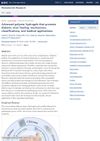
February 2023 in “Biomaterials Research” This review explores the different types of hydrogels used to repair diabetic ulcers, the mechanisms involved, and the limitations in developing these technologies for clinical use, but it reports no new clinical results.
2 citations
,
November 2025 in “International Journal of Molecular Sciences” This review reports that chitosan, a versatile polysaccharide, shows potential for various therapeutic applications due to its chemical modifications, notably in treating non-communicable diseases and wound healing, though further clinical study is needed to confirm these benefits.
1 citations
,
December 2025 in “International Journal of Molecular Sciences” This review reports that chitosan-based systems with metal nanoparticles and polyphenols may enhance wound healing by improving the bioavailability and stability of these compounds, suggesting a potential new approach for chronic and diabetic wounds.
 April 2026 in “Biomolecules”
 In this study, researchers synthesized biomedical polyurethanes incorporating curcumin and varying PEG content to enhance water solubility and control curcumin release, finding that higher PEG content improved hydrophilicity, swelling, and degradation, while maintaining excellent antioxidant and antibacterial activities, suggesting promise for biomedical applications.
 March 2026 in “Preprints.org”
 This study investigated the secretome of adipose mesenchymal stem cells and fibroblasts used in skin care products, finding 16 therapeutic pathways involving numerous signaling mechanisms, which may offer skin benefits through anti-inflammatory and regenerative effects.