 4 citations
,
July 2019 in “Children (Basel)”
4 citations
,
July 2019 in “Children (Basel)” This review discusses recent findings on pathogenic mechanisms, diagnostic criteria, and treatment options for PCOS but reports no new clinical results.
 November 2015 in “European Journal of Inflammation”
 This review discusses the potential pathogenic mechanisms of cicatricial alopecia and emphasizes the need for further research on treatment methods, but it reports no new clinical findings.
 April 2019 in “Journal of Medical Science And clinical Research”
 This study observed that grey patch is the most common variant of tinea capitis in northeastern India, with T. violaceum being the predominant fungal isolate.
 July 2024 in “Journal of Rare Diseases”
 This review describes the genetic and phenotypic diversity of Woodhouse-Sakati syndrome, highlighting new DCAF17 gene variants and their varying clinical implications.
 2 citations
,
September 2022
2 citations
,
September 2022 In this study, researchers found that a PER3 gene SNP may be pathogenic for a new subtype of dyschromatosis universalis hereditaria, especially when combined with a SASH1 mutation.
 August 2023 in “Acta Scientific Paediatrics”
 This case study reported a neonate of Indian descent with localized hypotrichosis type 1 due to a likely pathogenic deletion in the DSG4 gene, marking the first such case from India.
 3 citations
,
May 2019 in “BMJ case reports”
3 citations
,
May 2019 in “BMJ case reports” This report describes a rare case of severe combined immunodeficiency caused by a FOXN1 gene variant, complicated by Epstein-Barr virus infection and high-grade B-cell lymphoma, leading to the infant's death despite treatment efforts.
 93 citations
,
June 2001 in “The Journal of Clinical Endocrinology and Metabolism”
93 citations
,
June 2001 in “The Journal of Clinical Endocrinology and Metabolism” This study found that serum androgen levels in premenopausal women may be influenced by genetic variants of the androgen receptor and estrogen receptor β genes.
 July 2024 in “Medical alphabet”
 This study found that the SBN system effectively evaluates and describes the severity and clinical variant of alopecia areata using a standardized scale, aiding in patient management and disease course prediction.
 14 citations
,
January 2018 in “Endocrine”
14 citations
,
January 2018 in “Endocrine” This report describes a three-generation family with Cantú syndrome linked to a novel ABCC9 gene variant, featuring acromegaloid appearance and hypertrichosis without growth hormone abnormalities, and suggests a potential association with pituitary adenomas.
 February 2026 in “Frontiers in Medicine”
 In this case report, a three-generation family with Gorlin-Goltz syndrome showed a heterozygous PTCH1 splice-donor variant associated with the disease, and two affected relatives benefited from individualized, side-effect-guided dosing of the drug sonidegib, experiencing regression of basal cell carcinoma lesions.
 90 citations
,
June 2006 in “The American Journal of Dermatopathology”
90 citations
,
June 2006 in “The American Journal of Dermatopathology” This review outlines the classification, histopathologic presentation, and pathogenetic concepts of scarring and nonscarring alopecias, reporting no new clinical results and emphasizing the need for clinicopathologic correlation.
 4 citations
,
April 2021 in “Experimental and Molecular Medicine”
4 citations
,
April 2021 in “Experimental and Molecular Medicine” This review examines host factors like ACE2 and TMPRSS2 in SARS-CoV-2 infection, exploring how genetic variants and advanced cellular analyses might clarify COVID-19's severity and heterogeneity; it reports no new results.
In a case report, this study identified a new genetic variant in a six-year-old girl from Saudi Arabia with hypotrichosis and juvenile macular dystrophy, expanding the understanding of the genetic spectrum of this rare condition in the region.
 January 2024 in “Wiadomości Lekarskie”
 In this study, researchers analyzed the clinical phenotype and primary pathogenic links in patients who survive the acute phase of a critical illness and rely on prolonged intensive care, finding that these patients show persistent inflammation, nutritional deficiencies, and other chronic complications over time.
 February 2022 in “International journal of KIU”
 This review discusses genetic susceptibility and dietary factors influencing COVID-19 severity and summarizes the genetic variants linked to infection outcomes, but it reports no new clinical results.
 1 citations
,
July 2018 in “Elsevier eBooks”
1 citations
,
July 2018 in “Elsevier eBooks” This research focuses on alopecia areata, highlighting the psychological impact, especially of its variant alopecia areata incognita, and provides diagnostic and treatment tips, but does not report specific results.
 November 2024 in “Cureus”
 The authors reported a case of significant scalp edema accompanying lichen planopilaris in a middle-aged woman, suggesting a potential new variant of edematous scalp conditions as a reaction to scarring alopecia.
 38 citations
,
September 2021 in “Signal Transduction and Targeted Therapy”
38 citations
,
September 2021 in “Signal Transduction and Targeted Therapy” This review discusses genetic factors contributing to susceptibility and outcomes in COVID-19, including ACE, ACE2, TMPRSS2 variants, HLA genotype, and ABO blood group, but reports no new experimental results.
 38 citations
,
January 2016 in “Cell Death and Disease”
38 citations
,
January 2016 in “Cell Death and Disease” This review discusses the role of the TCL1 transgenic mouse model in understanding chronic lymphocytic leukemia biology and highlights the importance of exploring new pathogenetic and therapeutic targets.
 April 2021 in “Sohag Medical Journal”
 This review outlines the proposed theories behind the development of alopecia areata, emphasizing the autoimmune process involving lost immune privilege in hair follicles, and stresses the need to pinpoint specific pathogenic mechanisms for potential treatments.
 December 2020 in “Skin appendage disorders”
 This discussion highlights the evolving clinical spectrum of lichen planopilaris, noting atypical features and presentations in younger males that suggest potential different pathomechanisms from previously recognized variants.
 June 2006 in “British Journal of Dermatology”
 Lower adrenal hormone levels may cause hair loss in postmenopausal women, certain patterns help diagnose nail cancer, and a gene variant linked to higher skin cancer risk in kidney transplant patients suggests monitoring folate levels.
 14 citations
,
November 2020 in “International Journal of Biological Macromolecules”
14 citations
,
November 2020 in “International Journal of Biological Macromolecules” This study found that Flammulina velutipes polysaccharides-derived scaffolds greatly enhanced wound healing and hair follicle regeneration in a rat model, particularly with the FPS/NaOH variant showing the best results.
 60 citations
,
January 2007 in “Human Genetics”
60 citations
,
January 2007 in “Human Genetics” In this study, researchers found that while the SNP rs6152 is strongly associated with androgenetic alopecia, the GGN triplet repeat is not, suggesting the causative variant is likely a non-coding one.
 3 citations
,
January 2015 in “Journal of clinical and diagnostic research”
3 citations
,
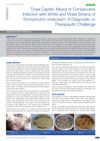
January 2015 in “Journal of clinical and diagnostic research” This case report described a seven-year-old with tinea capitis, which improved clinically after six weeks of griseofulvin treatment, changing the fungal strain from Trichophyton violaceum white variant to violet strain.
 2 citations
,
June 2020 in “Dermatology and therapy”
2 citations
,
June 2020 in “Dermatology and therapy” In this case report, narrowband-UVB phototherapy successfully treated a rare instance of Graham Little-Piccardi-Lassueur syndrome, a variant of lichen planopilaris, as investigated through non-invasive imaging techniques.
 January 2025 in “JCEM Case Reports”
 This report describes two cases of glucocorticoid resistance syndrome highlighting genetic diversity; one patient improved with low-dose dexamethasone despite negative genetic testing, while the other is monitored with a novel NR3C1 variant.
 1 citations
,
March 2023 in “Frontiers in Cardiovascular Medicine”
1 citations
,
March 2023 in “Frontiers in Cardiovascular Medicine” A specific gene variant is linked to heart disease, increased heart muscle, curly hair, and thick skin on palms and soles.
 January 2024 in “Genetics in Medicine Open”
 This case study of a patient with a variant in the extracellular region of IL6ST suggests a potential expansion of the phenotypic spectrum for autosomal dominant hyper-IgE syndrome, warranting further investigation.